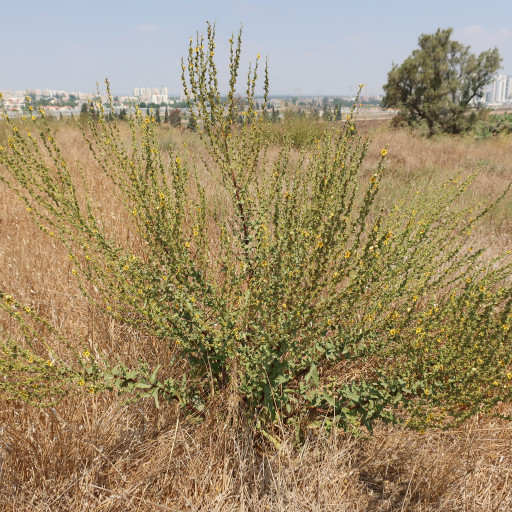
Plant Overview
Often called the Wavy-leaf Mullein, this Mediterranean native is a structural masterpiece of the dry landscape. With its silver-green foliage and tall, candelabra-like flowering spikes, it looks like a plant plucked straight from a sun-drenched Greek hillside. In folklore, various mullein species were known as "Hag’s Tapers" because their dried stalks were dipped in tallow to make torches.
🔍 How to Identify
- 〰️ The Foliage: The most striking feature is the rosette of leaves at the base, which are deeply "sinuate" (wavy or scalloped) and covered in a soft, felt-like down.
- 🟡 The Blooms: Bright yellow flowers appear on tall, branched stalks. Unlike other mulleins, the center of each flower is adorned with beautiful, fuzzy violet-purple hairs (filaments).
- 📏 Growth Habit: It typically spends its first year as a flat, velvety rosette and its second year shooting up a flower spike that can reach over three feet in height.
🏡 In Your Garden
- ☀️ Sun Seeker: This plant is a "pioneer species," meaning it thrives in the toughest spots where other plants fail—think dry, rocky soil, gravel pathways, and full, intense sun.
- 🦋 Pollinator Magnet: The purple-tufted centers of the flowers aren't just for show; they are designed to attract bees and butterflies, making it a fantastic addition to a wild or "xeriscape" (low water) garden.
- ✂️ Self-Seeding: Be aware that once the flowers fade, it produces thousands of tiny seeds. If you don’t want a Mullein forest next year, be sure to cut the stalks back before the seed pods dry out.
⚠️ Safety & Toxicity
- ✅ General Safety: Verbascum sinuatum is generally considered non-toxic to humans, cats, and dogs.
- ☁️ Skin Irritation: The tiny, star-shaped hairs that give the leaves their velvet texture can cause mild skin or eye irritation in sensitive individuals. It’s always best to wear gloves when handling the foliage.
- 🐟 Aquatic Warning: The seeds contain saponins, which were historically used to stun fish in still water. While not a risk to your dog, keep the seeds away from small garden ponds or fish tanks.
✨ Fun Fact
The flowers of the Wavy-leaf Mullein have a "sleep schedule." They typically open in the early morning to greet the first bees and often close or wilt by the time the afternoon heat becomes too intense, reopening again the following morning.

Detailed Care Instructions
| Humidity | Normal |
| Lighting | Full Sun |
| Difficulty | Easy |
| Hibernation | Cold Period |
To grow Verbascum sinuatum, also known as Welsh mullein or waved-leaved mullein, follow these steps:
- Planting: Choose a sunny location with well-drained soil. Prepare the soil by loosening it with a garden fork or tiller. Remove any weeds, rocks, or debris. Amend the soil with organic matter like compost or well-rotted manure.
- Sowing seeds: Sow the Verbascum sinuatum seeds either in early spring or fall. Press the seeds lightly into the soil and keep them slightly moist. You can also cover the seeds with a thin layer of soil or vermiculite.
- Watering: Keep the soil evenly moist but not waterlogged. Water the plant deeply when the top inch of soil feels dry. Avoid overwatering as it can lead to root rot.
- Mulching: Apply a layer of organic mulch around the plants to help retain moisture, suppress weeds, and regulate soil temperature.
- Fertilization: Verbascum sinuatum is not a heavy feeder, but you can apply a slow-release balanced fertilizer once or twice during the growing season. Follow the package instructions for application rates.
- Pruning: Deadhead spent flowers to promote continued blooming and prevent self-seeding. If the plant gets too tall or leggy, you can also prune it back lightly to encourage bushier growth.
- Pests and diseases: Verbascum sinuatum usually has good resistance to pests and diseases. However, keep an eye out for common garden pests like aphids, snails, or slugs. You can manually remove them or use organic pest control methods if necessary.
- Winter care: Verbascum sinuatum is a biennial plant, meaning it completes its lifecycle in two years. After blooming and setting seeds, it will die back naturally in its second year. If you want to save seeds, allow the seed pods to fully ripen and dry on the plant before collecting them.
By following these steps, you should be able to successfully grow Verbascum sinuatum. Happy gardening!

Place in a bright room that is sun drenched almost all day. Or directly in a south-facing window.

Verbascum Sinuatum is a flowering plant that requires frequent watering to maintain its health and vitality. To water this plant, you should use a watering can or hose with a gentle spray attachment to avoid damaging the delicate foliage.
When watering the plant, you should aim to provide enough moisture to thoroughly saturate the soil without causing waterlogging or excess moisture buildup. Be sure to water around the base of the plant, and avoid getting water on the leaves or flowers, as this can lead to fungal diseases and other issues.
In general, Verbascum Sinuatum should be watered at least once a week, or more frequently in hot, dry weather conditions. However, it's important to monitor the soil moisture levels carefully and adjust your watering schedule accordingly, as over or under-watering can be detrimental to the plant's health.
Finally, you should also be mindful of the plant's specific growing conditions and adjust your watering practices accordingly. For example, if the plant is growing in well-draining soil and receiving plenty of sunlight and air circulation, it may require less frequent watering than if it is growing in a shaded or poorly-draining area.
To fertilize this plant, use a balanced fertilizer during its active growing season. Apply the fertilizer every two to four weeks, depending on the strength of the fertilizer. Be sure to water the plant well before and after applying the fertilizer, as it may burn the roots if the soil is dry. Avoid over-fertilizing, as this can result in excessive foliage growth at the expense of flowers.
Verbascum Sinuatum plant prefers well-draining soil with a slightly acidic to neutral pH range. The soil should be light and sandy, with good aeration to encourage root development. The plant also benefits from fertile soil with adequate organic matter content. Adding compost or well-aged manure is recommended before planting. Avoid heavy and compacted soil as it can impede root growth and cause waterlogging, which can lead to root rot. Additionally, ensure that the soil is moist but not waterlogged, as the plant is drought-tolerant but not tolerant of wet feet.
There are a few ways to propagate this plant. One way is through seed propagation. To do this, collect mature seeds from the plant and place them in a container with a well-draining potting mix. Cover the container with plastic wrap to keep the soil moist and place it in a warm, bright location. Seeds should germinate in a few weeks.
Another way to propagate this plant is through stem cuttings. Take a cutting from the stem of the plant, making sure it is at least 4 inches long and has several leaves. Remove the bottom leaves and place the cutting in a container with well-draining potting mix. Keep the soil moist, but not waterlogged, and place the container in a warm, bright location. Roots should form in a few weeks.
Division is also a possible method of propagation. Dig up the plant and separate the root ball into smaller sections, making sure each section has several stems and roots. Replant each section in a container with well-draining potting mix and keep the soil moist. Place the containers in a warm, bright location. The plant should grow and establish itself in a few weeks.








