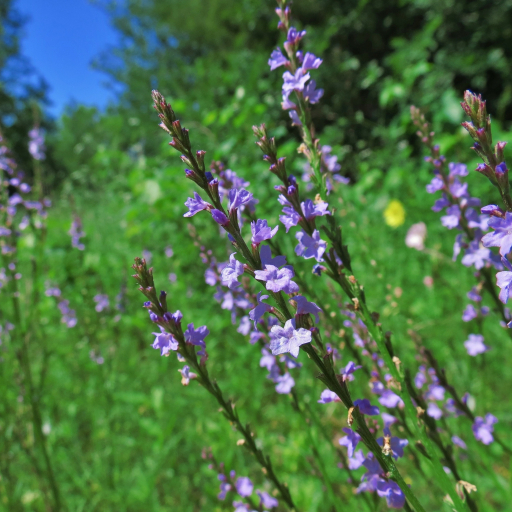
Plant Overview
Often called the Texas Vervain or Slender Verbena, this wiry wildflower is a symbol of resilience across the Southern United States and Mexico. While it might look delicate with its tiny lavender clusters, it is a tough-as-nails survivor that thrives in the scorching sun where other plants wither. It is a staple of prairie landscapes, often dancing in the wind on roadsides and in open meadows.
🔍 How to Identify
- 🌸 Flower Spikes: The plant features long, thin, wand-like spikes. The tiny blue-to-lavender flowers bloom a few at a time, usually starting from the bottom of the spike and working their way up.
- 🌿 The Stem: True to the Verbenaceae family, the stems are distinctly square-shaped and feel slightly rough or "sandpapery" due to tiny, stiff hairs.
- 🍃 Lobed Leaves: The lower leaves are deeply lobed and toothy, while the upper leaves become much smaller and narrower, giving the plant a sparse, airy appearance.
🏡 In Your Garden
- 🏜️ Taproot Strength: This plant develops a deep, sturdy taproot. This makes it incredibly drought-resistant and able to survive in poor, rocky soil, but it also means it hates being moved. Once you plant it, try not to transplant it!
- ☀️ Sun Seeker: It is an "extremist" when it comes to light; it requires full, direct sun to stay upright. In shady spots, the stems will become "leggy" and flop over as they search for the rays.
- 🦋 Pollinator Buffet: While the flowers are small, they are high-energy nectar sources. It is a magnet for hairstreak butterflies and native sweat bees, making it a perfect addition to a "wild" or xeriscape garden.
⚠️ Safety & Toxicity
- ✅ Safe Status: Verbena halei is generally considered non-toxic to humans, dogs, cats, and horses.
- 🌱 Skin Sensitivity: While not poisonous, the rough hairs on the stems can occasionally cause mild skin irritation for people with very sensitive skin if handled frequently without gloves.
✨ Fun Fact
Historically, plants in the Verbena genus were known as "Holy Herbs." In ancient times, they were used to scrub sacrificial altars or worn as charms to ward off bad luck and "heal" broken promises.

Detailed Care Instructions
To grow Verbena halei plant, also known as Texas vervain, follow these steps:
- Choose a suitable location: Verbena halei prefers full sun to partial shade. Ensure the planting area receives at least 6-8 hours of direct sunlight daily. The soil should be well-draining.
- Prepare the soil: Amend the soil by adding organic matter like compost or well-rotted manure to improve fertility and drainage. Remove any weeds or debris from the planting area.
- Start seeds indoors (optional): If you have access to Verbena halei seeds, you can start them indoors before the last frost date. Sow the seeds in seed trays or small pots filled with seed-starting mix. Keep the soil moist and place the containers in a warm location with indirect sunlight. Transplant the seedlings outdoors once they have grown to a suitable size.
- Direct sow seeds (alternative method): Verbena halei seeds can also be sown directly into the garden. Wait until after the last frost date and soil temperatures have warmed up. Moisten the soil and gently press the seeds into the ground. Cover them lightly with soil and keep the area moist until germination occurs.
- Watering: Keep the soil slightly moist but not waterlogged. Water when the top inch of soil feels dry. Avoid overwatering, as Verbena halei prefers slightly drier conditions.
- Fertilization: Verbena halei generally doesn't require much fertilizer. However, you can apply a balanced, slow-release fertilizer once or twice during the growing season if desired. Follow the manufacturer's instructions for application rates.
- Pruning: Regular deadheading of spent blooms helps promote continuous flowering. Additionally, you can trim back the plant in early spring to encourage bushier growth.
- Mulching: Apply a layer of mulch around the base of the plants to help retain soil moisture and suppress weed growth.
- Pests and diseases: Verbena halei is generally resistant to most pests and diseases. However, keeping the plants well-spaced and providing good air circulation can help prevent any potential issues.
- Propagation: Verbena halei can be propagated through stem cuttings as well. Take 3-4 inch long stem cuttings and remove the lower leaves. Dip the cut end in a rooting hormone and plant it in a well-draining potting mix. Keep the soil moist and roots should start to develop within a few weeks.
Remember to check your specific climatic conditions and adjust your care accordingly. With proper care and attention, your Verbena halei plants should thrive and reward you with beautiful blooms.

Place in a bright room that is sun drenched almost all day. Or directly in a south-facing window.

To water this particular plant, it is important to first ensure that the soil is well-draining and the pot or planting location has adequate drainage holes. The plant should be watered when the top inch of soil is dry to the touch. It is best to water deeply, allowing the water to penetrate down to the roots, rather than just lightly sprinkling. Overwatering can lead to root rot, so it is important not to let the plant sit in standing water. The frequency of watering will depend on the environment and growing conditions, but generally, Verbena Halei prefers to have moist soil without being waterlogged.
To fertilize the Verbena Halei plant, provide it with a balanced, water-soluble fertilizer every two weeks during the growing season. Dilute the fertilizer to half the recommended strength and apply it to the soil around the base of the plant, avoiding the foliage. Water the plant thoroughly after fertilizing to prevent fertilizer burn. Avoid fertilizing during the dormant season or in extremely hot or dry conditions.
For the Verbena Halei plant, it is recommended to use a well-draining soil that is not overly fertile or nutrient-rich. The soil should be slightly acidic, with a pH range of around 5.5-7.0. A soil mixture that includes peat moss or coconut coir can help retain moisture without becoming waterlogged. Adding perlite or sand to the soil mixture can also help improve drainage. Avoid using heavy clay soils or soils that are constantly wet, as this can lead to root rot. Additionally, the plant prefers full sun to partial shade and is drought tolerant once established.
The Verbena Halei plant can be propagated through stem cuttings. Here are the steps to follow:
- Choose a healthy plant with strong stems and leaves.
- Identify a stem that is at least 4 inches long and has several leaves.
- Using a sharp, clean pair of scissors or pruning shears, make a clean cut on the stem, just below a node (where a leaf meets the stem).
- Remove any leaves from the lower half of the stem, leaving only a few leaves near the top.
- Dip the cut end of the stem in rooting hormone powder.
- Plant the cutting in a small pot filled with moist potting soil.
- Cover the pot with a clear plastic bag to maintain humidity and keep the soil moist.
- Place the pot in bright, indirect sunlight.
- Keep the soil moist, but not wet, by misting it regularly.
- After a few weeks, roots should begin to form. Once the cutting has developed a strong root system, it can be transplanted to a larger pot or into the ground.








