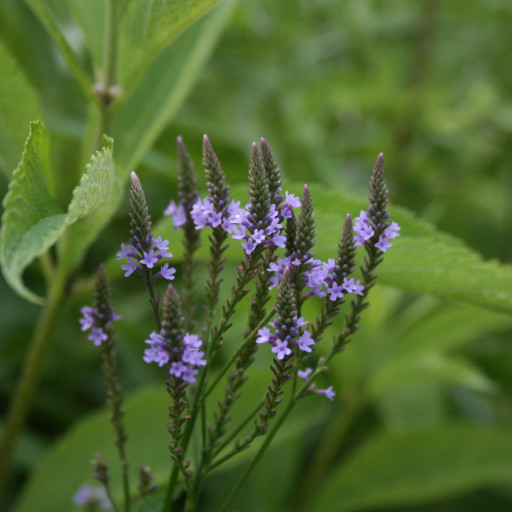
Plant Overview
Often called Blue Vervain or "Simpler’s Joy," this elegant wildflower is a stately sentinel of the North American prairie. Standing tall with its distinct candelabra-like flower spikes, it has been a favorite of herbalists and poets for centuries. In folklore, it was often associated with peace and protection, once believed to bridge the gap between the mundane and the mystical.
🔍 How to Identify
- 🕯️ The "Candelabra" Bloom: The most striking feature is its arrangement of multiple flower spikes that branch upward like a multi-armed candle holder. Tiny, blue-violet flowers bloom in small rings, starting from the bottom of the spike and moving toward the tip.
- 🗡️ Spear-Shaped Leaves: The leaves are long, lance-shaped, and have sharply "toothed" or serrated edges. They grow in opposite pairs along the stem and have a rough, sandpaper-like texture.
- 🟦 Square Stems: Like many of its cousins in the Verbena family, the stems are distinctly square-shaped and covered in fine, bristly hairs, giving the plant a rugged, sturdy feel.
🏡 In Your Garden
- 💧 Moisture Lover: Verbena Hastata is the perfect candidate for a rain garden or a low-lying spot that stays damp. It loves having "wet feet" and can even thrive in heavy clay soils where other plants might struggle with root rot.
- 🦋 Pollinator Magnet: This plant is a high-traffic hub for nature. It is a primary nectar source for many bees and butterflies, particularly the Common Buckeye butterfly. If you want a garden buzzing with life, this is a must-have.
⚠️ Safety & Toxicity
- ✅ Generally Safe: Blue Vervain is considered non-toxic to humans and is not listed on the ASPCA's toxic plant list for dogs or cats.
- 🍵 Usage Caution: While it has a long history in traditional herbal teas, it is extremely bitter. Excessive consumption can cause nausea or interfere with certain blood pressure medications, so it is best enjoyed as a visual treat rather than a culinary one.
✨ Fun Fact
The nickname "Simpler’s Joy" comes from the Middle Ages. A "simpler" was an herbalist who gathered medicinal plants (known as simples). This plant was so easy to find and had so many traditional uses that it was considered a "joy" for any collector to stumble upon!

Detailed Care Instructions
To grow Verbena Hastata plant, follow these steps:
- Choose a sunny location: Verbena Hastata plants thrive in full sun, so select a spot in your garden that receives at least six to eight hours of direct sunlight per day.
- Prepare the soil: Verbena Hastata plants prefer well-draining soil. Before planting, amend the soil by mixing in organic matter like compost or aged manure. This will improve drainage and add nutrients.
- Start seeds indoors (optional): If you prefer to start from seeds, you can start Verbena Hastata indoors 6-8 weeks before the last frost date. Plant the seeds in seed trays or pots filled with seed starting mix, and keep them in a bright location with a temperature around 70°F (21°C). Ensure the soil is consistently moist but not waterlogged.
- Transplant or direct sow: Once the danger of frost has passed and the soil has warmed up, you can either transplant your seedlings outdoors or sow the seeds directly into your prepared garden bed. If transplanting, space the plants about 12-18 inches apart, as they will spread.
- Water regularly: Verbena Hastata plants prefer soil that is evenly moist but not overly wet. Water them regularly, ensuring the soil doesn't dry out completely between waterings. However, be cautious not to overwater, as excessive moisture can lead to root rot.
- Mulch the soil: Apply a layer of organic mulch, such as straw or wood chips, around the plants to help retain moisture, suppress weeds, and maintain a more consistent soil temperature.
- Fertilize occasionally: Verbena Hastata plants are not heavy feeders, but you can fertilize them with a balanced slow-release granular fertilizer once or twice during the growing season. Follow the instructions on the fertilizer packaging for application rates.
- Support taller varieties: If you are growing a taller variety of Verbena Hastata, it may require support to prevent bending or flopping over. Install stakes or small wire cages around the plants to provide support as they grow.
- Deadhead spent flowers: To encourage continuous blooming, remove faded or spent flowers by pinching them off or cutting them back. This will direct the plant's energy towards new growth and flower production.
- Monitor for pests and diseases: Keep an eye out for common pests like aphids or caterpillars, and treat them using organic pest control methods if necessary. Preventative measures like spacing the plants properly and providing good air circulation can help minimize the risk of diseases such as powdery mildew.
By following these steps, you can successfully grow Verbena Hastata plants and enjoy their beautiful blooms throughout the growing season.

Place in a bright room that is sun drenched almost all day. Or directly in a south-facing window.

1. Choose a pot or a garden bed with well-draining soil to avoid waterlogging.
2. Water the plant directly at its base – avoid soaking the foliage as it may encourage fungal growth.
3. Water thoroughly until the soil is moist, but not waterlogged.
4. Check the plant for signs of wilt or drooping, which indicate it needs more water.
5. Water the plant more frequently during hot, dry weather and less frequently during cooler, wet seasons.
6. Avoid watering the plant during the hottest part of the day as evaporative losses will be higher and the plant may become stressed.
7. Consider using mulch around the plant to help retain moisture in the soil and reduce water evaporation.
8. Be cautious not to overwater the plant, as this can lead to root rot and other problems.
9. Regularly monitor the soil moisture levels and adjust the watering frequency accordingly.
- Start fertilizing the Verbena Hastata plant in the spring when new growth appears.
- Use a balanced fertilizer with equal amounts of nitrogen, phosphorus, and potassium.
- Apply the fertilizer at a rate of one tablespoon per square foot of soil, around the base of the plant.
- Water the plant thoroughly after applying the fertilizer to help it absorb the nutrients.
- Repeat the fertilization process every four to six weeks throughout the growing season.
- Do not overfertilize the plant, as this can lead to excessive foliage growth and reduced flowering.
- Always follow the manufacturer's instructions on the fertilizer package for the best results.
Verbena Hastata requires a well-draining soil with good water-retaining capacity. The soil should be rich in nutrients and organic matter. The ideal pH range for this plant is 6.0-7.5. It is recommended to use a mix of peat moss, compost, and sandy loam soil to cultivate this plant. Adding perlite or vermiculite to the soil mixture can improve its drainage properties. It is also advisable to apply a slow-release fertilizer during the growing season to encourage healthy growth and blooming.
There are a few methods to propagate this plant. One way is through stem cuttings, where a section of the stem with a few leaves is removed and planted in moist soil. Another method is to collect and sow the seeds from mature plants. These seeds should be planted in a mix of soil and sand, with a light covering of soil on top. The soil should be kept moist but not saturated and the seeds should germinate within a few weeks. Another method is through root division, where mature plants are dug up and the roots are separated into smaller sections, which can then be replanted in new locations or pots. It is important to take care when handling the roots to avoid damaging them. Propagation should be done in spring or early summer.
Common pests of the american blue vervain include Scale insect, spider mites, aphids, thrips, whiteflies. Make a habit of checking your american blue vervain frequently for pests so that any infestations can be caught and managed early.








