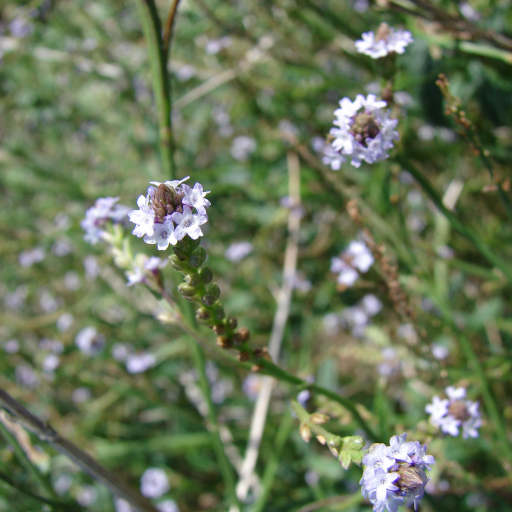
Plant Overview
Known as the Seashore Verbena or Shore Vervain, this tall, wiry traveler from South America has successfully hiked its way across the globe. While it lacks the lush fullness of ornamental garden Verbenas, it possesses a rugged, minimalist beauty. It is often found dancing in the wind along roadsides and coastal marshes, acting as a reliable, if somewhat scruffy, pit stop for weary butterflies.
🔍 How to Identify
- 📏 The Stems: Look for distinctively square, hairless stems that grow stiffly upright, often reaching heights of 3 to 5 feet.
- 🍃 The Leaves: The leaves are narrow, lance-shaped, and have sharply "toothed" or serrated edges. They grow directly opposite each other along the stem.
- 🌸 The Flowers: Tiny, tubular lavender or pale purple blossoms sit in tight clusters at the very tips of long, slender spikes that branch out like a candelabra.
🏡 In Your Garden
- 🌱 A Hardy Survivor: This plant is incredibly "tough-as-nails." It thrives in disturbed soils and can handle both drought and occasional flooding. It doesn't need pampering; in fact, too much fertilizer will make it leggy and weak.
- 🦋 Pollinator Buffet: If you want to attract Hairstreak butterflies and small bees without much effort, this is the plant for you. It provides a steady supply of nectar throughout the warmer months.
- 🚜 Management Note: In some regions (like Hawaii and parts of the mainland US), it is considered a weed because it seeds itself so aggressively. If you have it in your yard, "deadheading" (cutting off the flower spikes before they turn to seed) is essential to keep it from taking over.
⚠️ Safety & Toxicity
- 🟢 General Safety: Verbena litoralis is generally considered non-toxic to humans and is not known for causing severe reactions.
- 🐾 Pet Context: While not listed as a primary toxic plant for dogs or cats, any plant material can cause mild gastrointestinal upset if consumed in large quantities. The stems can also be quite rough and scratchy to the touch.
✨ Fun Fact
The specific epithet litoralis is Latin for "belonging to the seashore." Despite this name, the plant is a master of adaptation and is just as likely to be found growing in a high-altitude mountain meadow or a dry cracks-in-the-sidewalk urban environment as it is by the ocean!

Detailed Care Instructions
To grow Verbena Litoralis plant, follow these steps:
- Choose a suitable location: Verbena Litoralis thrives in full sun, so select a spot in your garden that receives at least six hours of direct sunlight daily.
- Prepare the soil: The plant prefers well-draining soil. If your soil is heavy, mix in some sand or compost to improve drainage.
- Plant the seeds or seedlings: If you have seedlings, dig a hole slightly larger than the root ball and place the seedling in it, covering the roots with soil. If you're starting from seeds, sow them directly in the ground, following the instructions on the seed packet.
- Water regularly: Water the plant regularly, keeping the soil damp but not waterlogged. Once established, Verbena Litoralis is moderately drought-tolerant but still benefits from occasional watering during dry periods.
- Fertilize occasionally: Use a balanced, slow-release fertilizer once or twice a year to provide the plant with necessary nutrients. Follow the instructions on the fertilizer packaging for dosage and application.
- Mulch around the plants: Apply a layer of organic mulch, such as wood chips or straw, around the base of the plants. Mulching helps retain soil moisture and suppresses weed growth.
- Prune as needed: Trim back any dead or leggy growth to promote bushier, healthier plants. Verbena Litoralis can tolerate heavy pruning and often benefits from periodic shaping to maintain its form.
- Monitor for pests and diseases: Keep an eye out for common garden pests like aphids, spider mites, and whiteflies. Check the leaves regularly for any signs of disease, such as powdery mildew or leaf spot. Use appropriate organic or chemical controls if any issues arise.
- Enjoy the blooms: Verbena Litoralis produces small, vibrant blooms throughout the growing season. Enjoy the colorful flowers and their attractive fragrance.
- Overwintering: In colder climates, Verbena Litoralis is typically grown as an annual. However, in warmer regions, it can be perennial. Mulch the plant heavily in winter to protect the roots from frost damage.
By following these steps, you can successfully grow Verbena Litoralis and enjoy its beautiful blooms in your garden or pots.

Place in a bright room that is sun drenched almost all day. Or directly in a south-facing window.

To water this plant, first check the soil moisture level by sticking your finger about 2 inches into the soil. If the soil feels dry, it is time to water. Use a watering can or hose with a gentle flow to avoid damaging the plant or washing away soil. Water the soil around the plant, avoiding the leaves, until water begins to drain out the bottom of the pot or into the ground. Allow the soil to dry out a bit between waterings to avoid overwatering and root rot. In hot or dry weather, the plant may need more frequent watering.
To fertilize this particular plant, you should use a balanced fertilizer with equal amounts of nitrogen, phosphorus, and potassium. The fertilizer should be applied once a month, during the growing season. Be careful not to over-fertilize as this can cause damage to the plant. Additionally, make sure the soil is moist before applying the fertilizer, but not waterlogged. Finally, it's important to avoid getting any fertilizer on the foliage or flowers as this can also cause damage.
When planting Verbena Litoralis, it is important to select a well-draining soil that is rich in organic matter, such as compost or well-rotted manure. This type of soil will provide the necessary nutrients for healthy growth and development. It is also important to avoid soils that are too heavy or compacted, as this can lead to drainage issues and root rot. Adding perlite or coarse sand to the soil can help improve drainage. A slightly acidic soil with a pH between 6.0-7.5 is ideal for optimal growth. When planting, it is recommended to dig a hole twice as wide as the root ball and mix in well-aged compost or a slow-release fertilizer. Water the plant regularly, but avoid over-watering as this can lead to root rot.
To propagate this plant, you can take cuttings from the stems during the growing season. Make sure to choose healthy stems that are not too woody or too young. Cut the stem at an angle just below a node, which is where a leaf joins the stem, using clean pruning shears. Remove any leaves from the lower half of the cutting.
Dip the cut end of the stem into rooting hormone powder and shake off the excess. Plant the cutting in moist soilless potting mix or a mixture of peat moss and perlite, making sure to keep the soil consistently moist.
Cover the pot with a clear plastic bag or plastic wrap to trap in moisture and create a humid environment. Place the pot in a bright, indirect light location that is not too hot or too cold. Check the cutting periodically for signs of new growth, which indicates that rooting has occurred.
After a few weeks, when the new growth is established, you can transplant the cutting into a larger container or the garden. Keep the soil moist and provide regular water and fertilizer as needed to encourage healthy growth.








