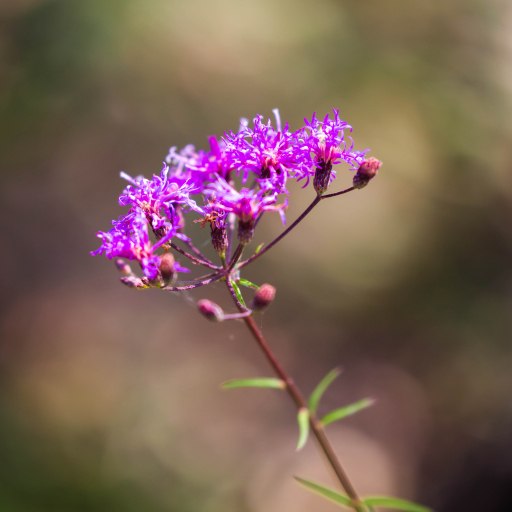
Plant Overview
Often called the Narrowleaf Ironweed, this resilient wildflower is a crowning jewel of the late-summer prairie. Its name is a tribute to its incredibly tough, "iron-like" stems that refuse to bend even in high winds or heavy rain. If you are looking for a plant that brings royal purple hues to your landscape just as other flowers begin to fade, this southeastern native is a reliable and regal choice.
🔍 How to Identify
- 🌿 Slender Foliage: True to its name (angustifolia meaning narrow-leaf), it features long, needle-like leaves that give the plant a delicate, airy texture compared to its broad-leaved cousins.
- 🎨 Vivid Blooms: It produces dense clusters of intense magenta or royal purple flower heads that look like tiny, shaggy brushes or stars.
- 📏 Upright Habit: It grows on stiff, towering stems that usually reach 3 to 4 feet in height, maintaining a strictly vertical silhouette without the need for staking.
🏡 In Your Garden
- 🦋 Pollinator Powerhouse: This plant is a high-octane nectar source. It is a favorite pit-stop for Monarch butterflies during their fall migration, as well as several species of native bees and swallowtails.
- ☀️ Sun & Sand Lover: Native to the pine barrens and sandy ridges of the Southeast, it thrives in full sun and well-drained soil. It is exceptionally drought-tolerant once its root system is established, making it a "set it and forget it" plant for sunny borders.
⚠️ Safety & Toxicity
- ✅ Generally Safe: Narrowleaf Ironweed is not considered toxic to humans, dogs, or cats.
- 👅 Bitter Defense: While safe, the plant contains bitter compounds that make it unpalatable. This is actually a benefit for gardeners, as it acts as a natural deterrent for deer and rabbits who prefer tastier snacks.
✨ Fun Fact
The "Ironweed" name doesn't just refer to the strength of the stems; it also describes the rusty, iron-colored hue of the seed clusters that remain on the plant throughout the winter!

Detailed Care Instructions
To grow Vernonia Angustifolia (also known as Narrowleaf Ironweed), follow these steps:
- Choose a suitable location: Vernonia Angustifolia prefers full sun to partial shade. The soil should be well-draining and fertile. If your soil is heavy clay, you can improve drainage and fertility by adding organic matter such as compost.
- Propagation: You can start Vernonia Angustifolia from seeds or plant cuttings. Seeds can be sown directly in the garden in spring or fall. If using cuttings, take a 4-6 inch long cutting from a healthy plant during spring or early summer and place it in a pot with moist potting soil until it develops roots, then transplant it to its permanent location.
- Planting: Dig a hole in the soil and place the seedling or cutting with the roots spread out. Backfill the hole with soil, gently firming it around the plant. Space the plants about 12-18 inches apart to allow them to grow and spread.
- Watering: Water the plant deeply immediately after planting and keep the soil evenly moist until the plant establishes. Once established, Vernonia Angustifolia is moderately drought-tolerant, but regular watering during hot and dry spells will help it thrive.
- Mulching: Apply a layer of organic mulch around the base of the plant to help conserve moisture, suppress weeds, and maintain a stable soil temperature.
- Pruning: Vernonia Angustifolia may require occasional pruning to maintain its shape and encourage bushier growth. Prune in early spring before new growth begins by cutting back any dead or damaged branches.
- Fertilization: Vernonia Angustifolia generally doesn't require much fertilization. If you find that the plant is not growing vigorously, you can apply a balanced slow-release fertilizer in early spring.
- Pest and disease control: Vernonia Angustifolia is relatively resistant to pests and diseases. However, keeping the plant healthy by providing optimal growing conditions will help prevent many common problems.
By following these guidelines, you should be successful in growing Vernonia Angustifolia plants.

Place in a bright room that is sun drenched almost all day. Or directly in a south-facing window.

To provide the appropriate water requirements for Vernonia Angustifolia plant, here are some guidelines to follow:
1. Evaluate the soil: Before watering, it is important to assess the moisture level of the soil. Insert your finger around two inches into the soil near the plant's root zone. If it feels dry, it's an indication that watering is required.
2. Watering frequency: Vernonia Angustifolia prefers a consistently moist but not waterlogged soil. Water deeply and thoroughly to ensure the water reaches the plant's roots. Watering once or twice per week, depending on the climate and soil conditions, is generally adequate.
3. Watering method: To avoid any potential stress or damage to the plant, use a gentle watering method. You can use a watering can or a soaker hose to deliver a slow, steady stream of water directly to the base of the plant. This allows the water to penetrate deeply into the soil, promoting healthy root growth.
4. Time of day: The best time to water Vernonia Angustifolia is early in the morning. This allows the plant to absorb the water before the heat of the day evaporates it. Watering in the evening can lead to prolonged moisture on the leaves, potentially causing fungal diseases.
5. Quantity of water: Provide enough water to thoroughly moisten the soil around the plant's root zone. Aim to deliver around 1 inch of water per week, adjusting based on the plant's individual needs, climate, and soil conditions.
6. Mulching: Apply a layer of organic mulch, such as wood chips or straw, around the base of the plant. This helps retain soil moisture, reducing the frequency of watering while keeping the root system cool and protected.
7. Monitor plant's response: Observe the plant's overall health, including the color and vigor of its leaves. If the leaves appear wilted or yellow, it may be an indication of underwatering. Conversely, overly saturated soil or consistently wet leaves can imply overwatering. Adjust the watering routine accordingly.
Remember that every plant has unique water requirements, so it is crucial to consider the specific needs of the Vernonia Angustifolia plant you are growing. These guidelines should help ensure optimal watering practices for this particular species.
To properly fertilize Vernonia Angustifolia, follow these instructions:
- Choose a balanced fertilizer: Look for a fertilizer with an NPK ratio of 10-10-10 or similar, indicating equal proportions of nitrogen (N), phosphorus (P), and potassium (K). This will provide essential nutrients for the plant's overall health and growth.
- Timing: Begin fertilizing in early spring, just as new growth starts to appear. Continue fertilizing monthly until the end of summer.
- Dilute the fertilizer: Mix the fertilizer with water according to the package instructions. Use a watering can or sprayer to ensure even distribution.
- Apply to the soil: Pour the diluted fertilizer around the base of the plant, avoiding direct contact with the leaves or stems. This will allow the roots to absorb the nutrients effectively.
- Watering: After fertilizing, water the plant thoroughly to help the nutrients penetrate the soil and reach the roots. Ensure the soil is evenly moist but not waterlogged.
- Avoid over-fertilization: Adhere to the recommended dosage outlined on the fertilizer packaging. Over-fertilization can lead to nutrient burn and damage the plant. If in doubt, use less rather than more.
- Monitor plant health: Observe the plant's growth and appearance. If it shows signs of nutrient deficiencies (such as yellowing leaves or stunted growth), consider adjusting the fertilizer application accordingly.
Remember, the fertilization needs may vary slightly depending on the specific nutrients present in your soil. Regular soil testing can provide more accurate guidance for fertilization requirements.
Vernonia Angustifolia, commonly known as [redacted], is a hardy and versatile perennial plant that requires the right type of soil for optimal growth and development. The ideal soil composition for Vernonia Angustifolia should have the following characteristics:
- Well-Draining: The soil should be well-draining to prevent waterlogging and root rot. Vernonia Angustifolia thrives in moist soils but cannot tolerate excessive moisture. A well-draining soil ensures that excess water can flow away, allowing the roots to remain healthy.
- Loamy Texture: A loamy soil texture is preferred as it provides a good balance of drainage and moisture retention. Loam is a combination of sand, silt, and clay, which allows for adequate water infiltration while retaining enough moisture for the plant's needs.
- pH Level: Vernonia Angustifolia typically prefers neutral to slightly acidic soil with a pH range of 6.0 to 7.0. Conduct a soil test to ensure the pH level matches the plant's requirements. If the soil is too acidic, consider adding lime to raise the pH, or if it is too alkaline, amend it with organic matter like compost to lower the pH.
- Fertility: Vernonia Angustifolia benefits from moderately fertile soil. Prior to planting, enrich the soil with organic matter such as compost or well-rotted manure to provide essential nutrients and improve soil fertility. This can aid in healthy growth and vibrant blooms.
- Soil Composition: The plant thrives in a soil composition that includes a good mix of organic matter, humus, and natural amendments. Organic matter helps retain moisture and supplies necessary nutrients, while humus aids in improving soil structure and fertility. Using natural amendments like bone meal or rock phosphate during planting can provide additional nutrients to promote strong root development.
When planting Vernonia Angustifolia, proper soil preparation is essential. Ensure the soil is loosened and free of weeds to encourage healthy root spread and establishment. Regular watering and mulching will help maintain moisture levels and support the growth of this beautiful perennial plant.
Propagation of Vernonia angustifolia can be done through various methods, including seed propagation, stem cuttings, and division.
- Seed Propagation:
- Harvest mature, dry seeds from the plant.
- Soak the seeds in water for about 24 hours before sowing.
- Prepare a well-draining potting mix and sow the seeds by placing them slightly below the soil surface.
- Maintain a warm temperature (around 70-75°F or 21-24°C) and provide bright indirect light.
- Keep the soil moist but not waterlogged.
- Germination may take a few weeks to several months.
- Once the seedlings are large enough, transplant them into individual pots or desired planting locations.
- Stem Cuttings:
- Select a healthy, non-flowering stem from the parent plant.
- Cut a 4-6 inch (10-15 cm) long section of the stem just below a node.
- Remove any lower leaves, leaving only a few at the top.
- Dip the cut end in rooting hormone powder or gel to encourage root development.
- Insert the cutting into a well-draining potting mix or soil.
- Place the pot or container in a warm location with indirect light.
- Mist the cutting regularly to maintain humidity and keep the soil moist, but avoid waterlogging.
- After a few weeks, roots will begin to form, indicating successful propagation.
- Transplant the rooted cutting into individual pots or desired planting locations.
- Division:
- Carefully dig up the Vernonia angustifolia plant, ensuring minimal damage to the roots.
- Gently separate the plant into multiple sections, ensuring each division has its own set of roots and foliage.
- Transplant the divisions into individual pots or directly into prepared planting locations.
- Provide the divided plants with adequate moisture and light to encourage healthy growth.
Note: It is always important to wear gloves when handling Vernonia angustifolia or any plants, as some individuals may have sensitivity or allergic reactions to the plant's sap or other plant compounds.








