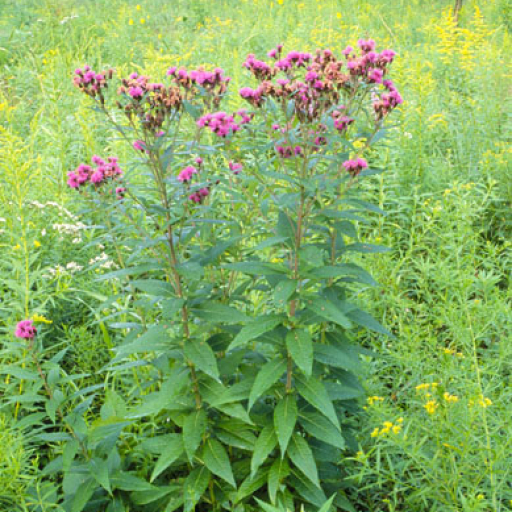
Plant Overview
Known as the "Prairie Ironweed," this Midwestern native is the royalty of the late-summer marshlands. Its name comes from its incredibly tough, iron-like stems that refuse to bend even in high winds, and the rusty color the seed heads take on in autumn. It is a tall, structural masterpiece that brings a "regal purple" punch to the landscape when most other summer flowers are beginning to fade.
🔍 How to Identify
- 🌸 Flower Clusters: Dense, flat-topped bunches of deep magenta or intense purple disk flowers. Unlike daisies, they have no "petals" (ray florets), giving them a fuzzy, fringed appearance.
- 🍃 The Leaves: Long, narrow, lance-shaped leaves with distinct "toothed" or serrated edges. They are arranged alternately along the stem and have a smooth, deep green finish.
- 🏗️ The "Iron" Stem: Smooth, rigid, and perfectly upright stems that often take on a reddish or purplish hue as they mature. They can reach heights of 4 to 6 feet without ever needing a stake.
🏡 In Your Garden
- 💧 Thirst for Life: In the wild, this plant loves "wet feet." It thrives in low spots of the garden, near ponds, or in heavy clay soils that retain moisture. It is a premier candidate for a rain garden or a sunny meadow.
- 🦋 Pollinator Magnet: This plant is a high-octane refueling station for migrating Monarch butterflies, Great Spangled Fritillaries, and long-tongued bees. Because it blooms in late summer, it provides critical nectar when other food sources are drying up.
⚠️ Safety & Toxicity
- 🛡️ General Safety: Prairie Ironweed is generally considered non-toxic to humans, dogs, and cats. It is a safe, "friendly" addition to a family backyard.
- 👅 Bitter Defense: The plant contains bitter sesquiterpene lactones. While not dangerous, these compounds make the plant taste terrible to deer and rabbits, meaning it usually survives the "munch test" from local wildlife.
✨ Fun Fact
Ironweed isn't just a name—it's a reputation! Historically, farmers found it nearly impossible to pull by hand because of its incredibly deep, stubborn, and fibrous root system. Once it decides to grow in a spot, it is there to stay, living up to its "iron" moniker.

Detailed Care Instructions
To grow Vernonia Fasciculata, also known as prairie ironweed, you can follow these steps:
- Choose a location: Vernonia Fasciculata prefers full sun, so select a location in your garden that receives at least 6-8 hours of direct sunlight per day. The soil should be well-drained and fertile.
- Prepare the soil: Amend the soil with organic matter such as compost or well-rotted manure to improve its fertility and drainage. Ironweed can tolerate a wide range of soil types but prefers slightly acidic to neutral pH levels.
- Planting from seeds: You can start Vernonia Fasciculata from seeds. Sow the seeds directly into the prepared soil in the spring, as soon as the soil can be worked. Scatter the seeds on the surface and lightly press them into the soil, but do not cover them completely as they require light to germinate.
- Watering: Keep the soil evenly moist until the seeds germinate and the seedlings become established. After that, ironweed is relatively drought-tolerant and only needs occasional watering during dry spells.
- Maintenance: Vernonia Fasciculata does not usually require much maintenance once established. However, it is a good idea to mulch around the plants to conserve moisture and suppress weeds. Additionally, you can deadhead the faded flowers to encourage prolonged blooming.
- Pruning: In late winter or early spring, cut back the stems of the ironweed plant to a few inches above the ground. This will promote new growth and maintain a more compact form.
- Division: Every few years, you can divide Vernonia Fasciculata to rejuvenate the plant and control its size. Dig up the plant carefully, and using a sharp knife or spade, divide the clump into smaller sections. Replant these sections in prepared soil, and water them well.
By following these steps, you can successfully grow and enjoy the beauty of Vernonia Fasciculata in your garden.

Place in a bright room that is sun drenched almost all day. Or directly in a south-facing window.

1. Ensure that the soil is well-draining to prevent waterlogging, which can damage the roots of the plant.
2. Water the plant deeply, but infrequently. Allow the soil to dry out slightly between waterings.
3. Avoid getting water on the leaves, as this can increase the risk of fungal diseases.
4. Water the plant at the base, aiming for the root system.
5. During hot, dry weather, increase the frequency of watering to avoid drought stress.
6. Use room temperature water, as extremely cold or hot water can damage the plant.
7. If the plant is in a pot, ensure that excess water can drain away by checking that there are drainage holes at the base.
8. Mulch around the base of the plant to help retain moisture in the soil.
To fertilize this plant, it is recommended to use a balanced fertilizer with equal amounts of nitrogen, phosphorus, and potassium. Apply the fertilizer once every month during the growing season, which is typically in the spring and summer. Be sure to follow the instructions on the fertilizer package for the correct application rate. Avoid over-fertilizing, as this can lead to excessive growth, weak stems, and increased susceptibility to pests and diseases. Additionally, remember to water the plant immediately after fertilizing to help the nutrients reach the roots.
Vernonia Fasciculata plants thrive in well-draining, slightly acidic soil with a pH level between 6.0 and 6.5. A mix of sandy loam soil and organic compost is ideal for these plants, as it provides good aeration and moisture retention. Avoid using heavy clay soils, as they can lead to waterlogged conditions that may cause root rot. Adding perlite or coarse sand to the soil mix can also improve drainage. Regularly amending the soil with organic matter such as compost or aged manure will help maintain soil fertility and structure for healthy plant growth. Overall, a well-balanced soil mix that is rich in organic matter and drains well is key for successfully growing Vernonia Fasciculata plants.
To propagate this plant, you will need to take a cutting from a healthy and mature specimen. Choose a stem that is at least 6 inches long and has several leaves. Using clean and sharp pruning shears, make a clean cut at a 45-degree angle at the base of the stem. Remove any leaves from the bottom 2 inches of the stem.
Prepare a pot with well-draining soil and moisten the soil slightly. Dip the base of the stem in rooting hormone powder to encourage the growth of roots. Plant the stem cutting in the soil and gently pat down the soil around the stem.
Cover the pot with a plastic bag or a clear plastic container to create a greenhouse-like environment. Place the pot in a warm and bright location, away from direct sunlight. Keep the soil moist but not waterlogged.
After a few weeks, check for root growth by gently tugging on the stem. If you feel resistance, it means that roots have formed. Remove the plastic cover and move the pot to a brighter area with filtered sunlight.
Continue to keep the soil moist and fertilize the plant with a balanced fertilizer once every two weeks. Once the plant has grown strong roots and leaves, it can be transplanted into a bigger pot or planted directly into the garden.








