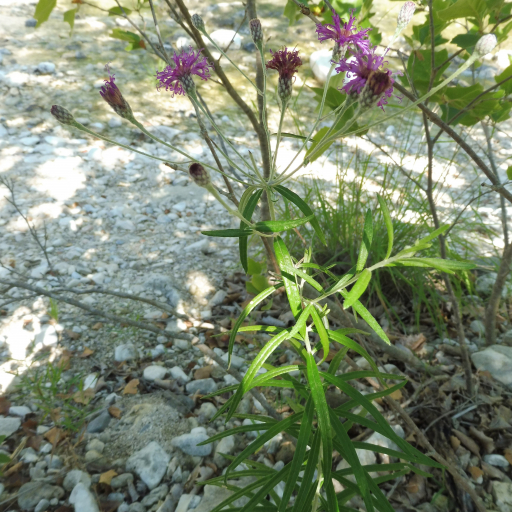
Plant Overview
Often called the "Woolly Ironweed," Vernonia lindheimeri is a shimmering, silvery-green native of the Texas Hill Country and Northern Mexico. Named after Ferdinand Lindheimer, the "Father of Texas Botany," this plant is as tough as its "Ironweed" name suggests, thriving in heat and rocky soils where others wilt. Its striking purple flowers provide a dramatic late-summer pop against its distinctively fuzzy, pale foliage.
🔍 How to Identify
- ☁️ The Foliage: The leaves are narrow and linear, covered in a dense layer of fine white hairs that give the entire plant a dusty, silver-blue appearance.
- 💜 The Flowers: In late summer and fall, it produces flat-topped clusters of vivid magenta to deep purple blossoms that lack traditional petals, appearing instead like tiny, fuzzy stars.
- 📏 The Stature: It typically grows in upright, multi-stemmed clumps reaching 1 to 2 feet in height, maintaining a neat, mounded shape that stands out in a wild landscape.
🏡 In Your Garden
- 🦋 Pollinator Paradise: This plant is a high-priority fuel station for butterflies, particularly Monarchs during their fall migration, as well as native bees and hummingbirds.
- 🏜️ The "Plant and Forget" Choice: Because it possesses a deep, sturdy taproot, it is exceptionally drought-tolerant once established. However, this same taproot means it resents being moved, so choose its permanent "forever home" in well-draining soil carefully.
⚠️ Safety & Toxicity
- ✅ General Safety: Lindheimer’s Ironweed is generally considered non-toxic to humans and common household pets like dogs and cats.
- 🌿 Skin Sensitivity: Like many members of the Aster family, the sap may cause mild skin irritation or "contact dermatitis" in sensitive individuals if handled extensively without gloves.
✨ Fun Fact
The common name "Ironweed" doesn't just refer to the plant's difficult-to-pull roots or tough stems; it also describes the rusty, iron-like color of the seed heads that remain after the purple flowers fade away!

Detailed Care Instructions
To grow a Vernonia Lindheimeri plant (also known as Lindheimer's ironweed), follow these steps:
- Determine the appropriate planting time: Vernonia Lindheimeri plants can be grown from seeds or transplants. If you choose to grow from seeds, it's best to sow them indoors in late winter or early spring, around 6-8 weeks before the last frost. Transplants can be planted in the spring or fall.
- Choose a suitable location: Vernonia Lindheimeri prefers a spot with full sun to partial shade. Ensure the soil is well-draining, as the plant can suffer from root rot if the soil is consistently wet.
- Prepare the soil: Before planting, prepare the soil by removing any weeds, rocks, or debris. Amend the soil with organic matter, such as compost, to improve its fertility and drainage.
- Sow seeds or plant transplants: If growing from seeds, plant them about ¼ inch deep in seed-starting trays or small pots filled with seed-starting mix. Keep the soil consistently moist until the seedlings emerge. If using transplants, space them about 12-18 inches apart, depending on their anticipated size. Gently loosen the roots and plant them at the same depth they were in the original container.
- Watering and maintenance: Once established, Vernonia Lindheimeri is somewhat drought-tolerant, though regular watering during dry periods will improve its growth. Water deeply and allow the soil to dry out between watering. Mulch around the plants to conserve moisture and suppress weeds.
- Fertilization: Maintain the plant's health with occasional fertilization. Apply a slow-release fertilizer in early spring, following the package instructions, or use a balanced, all-purpose fertilizer every 6-8 weeks during the growing season.
- Pruning: In late fall or early spring, you can cut back the plant to encourage bushier growth and prevent it from becoming leggy. Remove any dead or damaged branches.
- Pest and disease control: Vernonia Lindheimeri is relatively resistant to pests and diseases. However, keep an eye out for common garden pests like aphids or spider mites. If an infestation occurs, treat the plant with insecticidal soap or neem oil.
By following these steps, you can successfully grow Vernonia Lindheimeri and enjoy its attractive purple flowers and its ability to attract pollinators like bees and butterflies to your garden.

Place in a bright room that is sun drenched almost all day. Or directly in a south-facing window.

To ensure proper hydration for this particular plant, it is crucial to water it deeply but infrequently. It is recommended that you allow the top layer of soil to dry out before watering it again. Additionally, it is essential to avoid getting water on the leaves to prevent mildew or fungal infections. Using a watering can or hose fitted with a nozzle that allows for a gentle, targeted stream of water can help. It is also important to consider the plant's location and climate while determining the watering schedule. For example, hot, dry weather may require more frequent watering, while cooler and more moist conditions may allow for longer periods between waterings.
Fertilize this plant with a balanced fertilizer in the spring and early summer months. Apply the fertilizer according to the package instructions and water thoroughly afterward. Avoid fertilizing in the fall and winter months as this plant is dormant during that time. Overfertilizing can lead to excessive foliage growth and may reduce flowering.
The ideal soil type for Vernonia Lindheimeri plant is a well-draining, loamy soil that is rich in organic matter. This plant prefers slightly acidic to neutral soil pH levels between 5.5 and 7.5. The soil should be moist but not waterlogged. It is important to avoid using heavy, compacted soil or soil that is prone to becoming waterlogged as this can cause root rot and other diseases. The plant thrives in full sun to partial shade, making it adaptable to various growing conditions. Adding organic mulch around the plant can help retain moisture in the soil and improve soil fertility. Regular fertilization with a balanced, slow-release fertilizer can also promote healthy growth and flowering.
There are a few methods you can use to propagate this plant. One method is by taking stem cuttings. Find a healthy stem and cut a section of it with a sharp, clean pair of scissors or pruning shears. The cutting should be about 4-6 inches long and should have at least one set of leaves on it. Remove any leaves from the lower half of the cutting and dip the cut-end into rooting hormone powder. Plant the cutting in a pot filled with moist, well-draining soil and keep it in a warm, bright location. Keep the soil consistently moist and mist the plant regularly. After a few weeks, you should see new growth indicating that the cutting has taken root.
Another method is by division. Dig up an established plant and separate the root ball into smaller sections, making sure each section has a good amount of roots and foliage. Plant each section in a pot filled with moist, well-draining soil and keep them in a warm, bright location. Keep the soil consistently moist and mist the plants regularly. After a few weeks, you should see new growth indicating that the divisions have taken root.
You can also try propagating Vernonia Lindheimeri by seed. Collect seeds from a mature plant and sow them in a pot filled with moist, well-draining soil. Cover the pot with plastic wrap to create a mini greenhouse and keep it in a warm, bright location. Keep the soil consistently moist and remove the plastic wrap once the seeds have germinated. Once the seedlings have grown a few sets of leaves, you can transplant them into individual pots and continue to care for them until they are large enough to be planted outdoors.








