Plant Overview
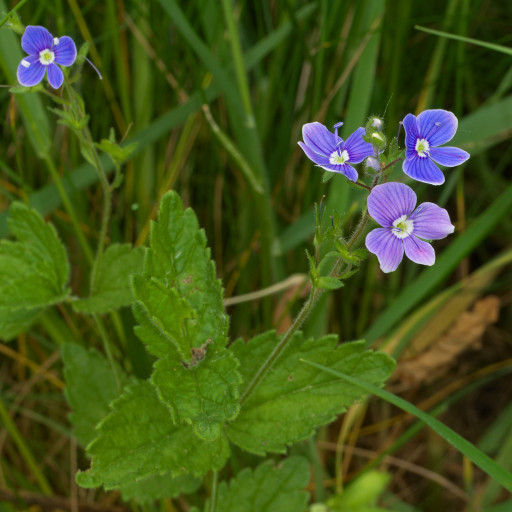
Often called "Bird's-eye Speedwell" or "Angel's Eyes," this charming perennial creates a vivid sapphire carpet across meadows and lawns during late spring. In Irish folklore, it was pinned to the clothes of travelers to bring good luck and "speed" them on their journey, which is how it earned its common name. Though small, its brilliant blue hue makes it one of the most beloved wild plants in temperate regions.
🔍 How to Identify
- 💙 The "Eye" Pattern: Each flower is a deep, striking blue with a distinct white center and dark veins that guide pollinators toward the nectar.
- ✌️ Twin Stamens: Unlike many other small blue flowers, this species has two prominent stamens that poke out like tiny antennae from the center.
- 🌱 Hairy Stems: If you look closely at the stem, you’ll see two rows of fine white hairs running down opposite sides—a unique signature of the Germander Speedwell.
🏡 In Your Garden
- 🌿 The Social Groundcover: It loves to weave through grass and low-growing perennials. While some consider it a "weed" in manicured lawns, many gardeners embrace it as a pollinator-friendly alternative to a plain green carpet.
- 🌦️ Resilient Roots: It is incredibly hardy and can withstand heavy foot traffic. It prefers moist, well-drained soil but isn't picky about pH, making it a "low-drama" guest in any garden bed or woodland edge.
⚠️ Safety & Toxicity
- ✅ Generally Safe: Veronica chamaedrys is not known to be toxic to humans, cats, dogs, or horses.
- 🌼 Mild Irritation: While it has a history in traditional herbalism (often used as an expectorant), it is not a common culinary plant. Sensitive individuals should avoid large-scale skin contact if they are prone to plant-based allergies.
✨ Fun Fact
The name "Veronica" is believed to be linked to Saint Veronica; legend says the patterns on the flower resemble the markings on the veil she used to wipe the face of Jesus, leaving a "true image" (vera iconica).

Detailed Care Instructions
To grow Veronica Chamaedrys, also known as Germander Speedwell, follow these steps:
- Choose a suitable location: Germander Speedwell prefers full sun to partial shade. Ensure that the area has well-draining soil.
- Prepare the soil: Before planting, loosen the soil and remove any weeds or debris. Incorporate organic matter such as compost to improve soil fertility and drainage.
- Planting: Germander Speedwell can be propagated by seeds or cuttings. If using seeds, sow them directly into the soil in early spring or fall. Scatter the seeds and lightly cover them with soil. If using cuttings, take 4-6 inch stem cuttings from a healthy plant and insert them into moist soil, ensuring that at least one leaf node is submerged.
- Watering: Keep the soil consistently moist, but not waterlogged, particularly during the establishment phase. Once the plant is established, it can tolerate some degree of drought, but regular watering is still recommended during dry periods.
- Pruning: Germander Speedwell benefits from regular pruning to maintain a compact shape and promote bushier growth. After flowering, trim the plant back by removing one-third of the growth, ensuring that you prune above a leaf node.
- Fertilizing: Germander Speedwell generally does not need much fertilization. However, you can apply a balanced, slow-release granular fertilizer in spring to encourage healthy growth.
- Pest and disease control: Germander Speedwell is generally resistant to pests and diseases. However, keep an eye out for potential issues such as aphids, slugs, or powdery mildew. Promptly address these problems using appropriate remedies.
- Divide or propagate: Over time, Germander Speedwell may become overcrowded. To maintain vigor, divide the plant every 2-3 years in early spring or fall. Lift the plant, divide it into smaller clumps with roots, and replant them in separate locations.
By following these steps, you should be able to successfully grow Veronica Chamaedrys. Remember to provide adequate care, and enjoy the beautiful flowers and foliage of this plant.

Place in a window with dappled sun or a spot in the middle of a room. Or directly in a window facing west or east.

To water this plant, ensure that the soil is dry before watering. Take care not to allow the soil to become waterlogged. Water the plant thoroughly and allow the soil to drain. Avoid getting water on the leaves or flowers. Water the plant regularly during the growing season and reduce watering during the winter. Use room temperature water and allow any excess water to drain away.
To fertilize this plant, choose a balanced fertilizer with an NPK ratio of 10-10-10. Apply the fertilizer during the plant's growing season, which is typically in the spring and early summer. Scatter the fertilizer evenly over the soil around the base of the plant and then water thoroughly. Avoid over-fertilizing, as this can cause the plant to become weak and susceptible to disease. Always read the label on the fertilizer package and follow the instructions carefully.
The ideal soil for this particular plant is a well-draining soil with a pH range of 5.5 to 7.5. The soil should be rich in organic matter and provide adequate nutrition to the plant. It should be sandy-loam in texture, allowing for proper aeration and drainage. The plant prefers slightly acidic to neutral soil conditions. Soil that is too heavy or compacted can cause poor growth and even root rot in this plant species. Adding compost or organic matter to the soil can improve its fertility and drainage properties. Overall, the soil should be able to hold moisture without becoming waterlogged, and be loose enough to allow the plant's roots to penetrate easily.
To propagate this plant, you will need to take cuttings from a mature plant during the late spring or early summer. Use clean and sharp pruning shears to cut a section of the stem that is around 4-6 inches long.
Carefully remove the lower leaves from the stem, leaving only a few leaves on the upper portion. Dip the cut end of the stem in rooting hormone powder to promote root growth.
Prepare a potting mix of perlite and peat moss, and moisten it with water. Make a hole in the potting mix using a pencil or your finger and insert the stem cutting into the soil. Firmly press the soil around the base of the stem to ensure it stays upright.
Water the cutting well and cover the pot with a clear plastic bag to create a humid environment. This will help the cutting to retain moisture and promote rooting. Place the pot in a warm and bright location, but away from direct sunlight.
Check the cutting regularly for any signs of wilting or mold. Mist the cutting with water if the soil feels dry to the touch. After a period of 6-8 weeks, the cutting should have rooted and new growth should start to emerge.
Once the cutting has developed a strong root system, it can be transplanted to a permanent location in your garden.
Common pests of the germander speedwell include Aphids, snails. Make a habit of checking your germander speedwell frequently for pests so that any infestations can be caught and managed early.








