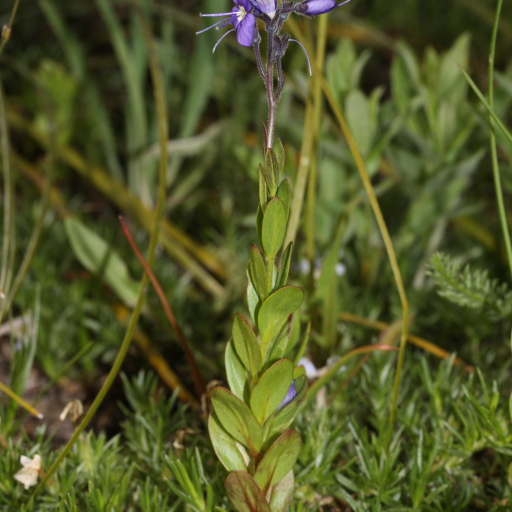
Plant Overview
Known as Cusick’s Speedwell, this charming alpine native is a hidden gem of the high mountains in the Western United States. Named after the pioneer botanist William Cusick, it paints rocky slopes and moist meadows with strokes of deep violet-blue. It’s a resilient little plant that thrives where the air is thin and the winters are long, often appearing just as the snow begins to melt.
🔍 How to Identify
- 🌸 The Bloom: Look for small, saucer-shaped flowers with four distinct petals, usually a rich violet-blue with darker "speedwell" veins and a white center.
- 🍃 The Foliage: The leaves are opposite, oval-shaped, and quite smooth. They have a slightly thick, almost succulent texture to help the plant retain moisture in the windy mountains.
- 📏 Growth Habit: This is a low-growing perennial that rarely exceeds 8 inches in height, forming neat, leafy clumps that hug the ground.
🏡 In Your Garden
- 🏔️ Alpine Requirements: In a garden setting, it behaves like a true mountaineer. It demands "cool feet," meaning it loves a rock garden or a spot where its roots stay moist and shaded while its head enjoys the sun.
- 💧 Drainage is Key: Because it is used to rocky slopes, it cannot tolerate "wet feet" or standing water. It needs gritty, well-draining soil to prevent its roots from rotting during the winter months.
⚠️ Safety & Toxicity
- 🌿 Safe Status: Veronica cusickii is generally considered non-toxic to humans and is not known for causing skin irritation.
- 🐾 Pet Friendly: There are no documented toxic effects for cats, dogs, or horses. However, it is always best to discourage pets from munching on garden plants to avoid minor digestive upset.
✨ Fun Fact
🦋 The Mountain Buffet: Because it blooms during the very short alpine summer, it is a critical early-season nectar source for high-altitude butterflies and bees that have a very limited window to forage before the cold returns!

Detailed Care Instructions
To grow Veronica cusickii, also known as Cusick's Speedwell, follow these steps:
- Climate and location: Choose a suitable location for planting. Veronica cusickii prefers full sun to partial shade. It can tolerate a variety of soil types but prefers well-drained soil.
- Planting season: Plant Veronica cusickii in the spring or fall. It is a perennial plant, so it will come back year after year.
- Soil preparation: Prepare the soil by removing any weeds or rocks. Loosen the soil to a depth of about 6-8 inches and amend it with organic matter, such as compost, to improve drainage and fertility.
- Planting process: Dig a hole that is just the right size to accommodate the plant's root ball. Place the Veronica cusickii plant into the hole, making sure the top of the root ball is level with or slightly above the soil surface. Backfill the hole with soil, gently firming it around the roots.
- Watering: After planting, water the plant thoroughly to settle the soil and ensure good root establishment. Keep the soil consistently moist, but not waterlogged, especially during the plant's first year of growth. Once established, Veronica cusickii is relatively drought-tolerant.
- Mulching: Apply a layer of organic mulch, such as wood chips or straw, around the plant to help retain moisture, suppress weeds, and maintain a consistent soil temperature.
- Fertilizing: Feed the plant with a balanced slow-release fertilizer in the spring to promote healthy growth. Follow the package instructions for application rates.
- Pruning: Veronica cusickii generally does not require much pruning. However, you can trim off any dead or faded flower spikes to encourage new blooms and maintain the plant's shape.
- Maintenance: Regularly monitor the plant for pests or diseases. Treat any issues promptly to prevent them from spreading.
- Propagation: Veronica cusickii can be propagated by division or from stem cuttings. Divide the plant in early spring or fall, or take stem cuttings in summer and root them in a well-draining propagation mix.
By following these steps, you should be able to grow a healthy and beautiful Veronica cusickii plant in your garden.

Place in a bright room that is sun drenched almost all day. Or directly in a south-facing window.

The best way to water this plant is to give it a moderate amount of water when the top inch of soil feels dry to the touch. It is important not to overwater it, as the roots are susceptible to rot. Make sure to allow excess water to drain out of the pot to prevent waterlogging. This plant prefers a well-draining soil mix that is high in organic matter. During the growing season, water more frequently and reduce watering in the winter months. Take care not to let the soil completely dry out, as the plant is sensitive to drought. Avoid getting water on the leaves and stem as this can lead to fungal diseases.
To fertilize this plant, use a balanced fertilizer with equal amounts of nitrogen, phosphorus, and potassium. Apply the fertilizer at half strength every two weeks during the growing season, which is typically from spring to fall. Be sure to water the plant thoroughly before and after fertilizing. Avoid overfertilizing as it can cause damage to the plant, and always follow the manufacturer's instructions for the specific fertilizer product you are using.
Veronica Cusickii plants prefer well-draining soil that is rich in nutrients. The soil should be slightly acidic with a pH between 5.5 and 7.0. It should also be able to hold moisture without becoming waterlogged. A good soil mix for Veronica Cusickii plants can be made by combining equal parts sand, peat moss, and a quality potting mix. Adding perlite or vermiculite to the mix can also improve drainage. It is important to avoid heavy, compacted soils that do not provide enough oxygen for the plant's roots.
To propagate this plant, you can take stem cuttings during the summer months. Select a healthy stem that is at least 4 inches long and has several leaves on it. Cut the stem just below a node (where a leaf attaches to the stem) at a 45-degree angle. Remove the lower leaves and any flowers or buds, as these can take energy away from the cutting.
Prepare a pot with well-draining soil, and make a hole in the soil with a pencil. Dip the cut end of the stem in rooting hormone, and then gently insert it into the hole. Firm the soil around the cutting to hold it in place.
Water the cutting thoroughly, and then cover the pot with a plastic bag to create a mini greenhouse. Keep the pot in a bright, warm location out of direct sunlight, and make sure the soil stays moist but not waterlogged.
After a few weeks, check to see if the cutting has rooted by gently tugging on the stem. If it offers some resistance, it has rooted. If not, give it a few more days. Once it has rooted, remove the plastic bag and move the pot to a sunny location. Gradually acclimate the new plant to direct sunlight over a period of days to prevent sunburn.








