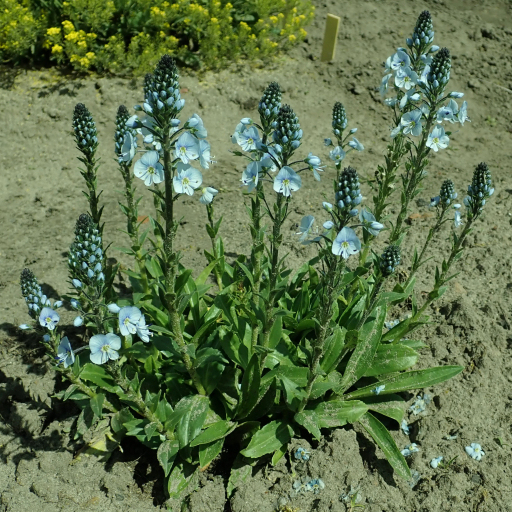
Plant Overview
Commonly known as the Gentian Speedwell, this elegant perennial is a mountain beauty originally hailing from the cool, high-altitude meadows of Turkey and the Caucasus. It earned its name because its glossy, leathery leaves bear a striking resemblance to those of the Gentian family. While many Speedwells are known for their deep "electric" blues, this species offers a more sophisticated, ethereal palette of pale icy-blue and white.
🔍 How to Identify
- 💎 The Pinstriped Petals: The flowers are a very pale blue—almost white—and are uniquely marked with delicate, darker blue veins that look like hand-painted pinstripes.
- 🍃 Glossy Ground Cover: Before it blooms, the plant forms a low-growing mat of thick, oval, dark-green leaves. They have a waxy, lustrous sheen that remains attractive even when the plant isn't in flower.
- 📏 The Spikes: In late spring, the plant sends up slender, upright stems (racemes) that can reach about 12-18 inches tall, topped with a cluster of four-petaled blossoms.
🏡 In Your Garden
- 💧 The Moisture Balance: Unlike some drought-tolerant mountain plants, the Gentian Speedwell prefers consistently moist soil. If it dries out completely, the foliage may crisp at the edges, but it hates "wet feet" during the winter, which can lead to crown rot.
- 🏔️ Rock Garden Royalty: Because of its low-growing rosette habit, it is a superstar for the front of a border or tucked into the crevices of a rock garden where its delicate flowers can be appreciated up close.
- ✂️ Post-Bloom Refresh: Once the flower spikes fade, cutting them back to the base of the plant encourages the foliage to stay lush and prevents the plant from looking "leggy" in the summer heat.
⚠️ Safety & Toxicity
- ✅ Status: Non-toxic and generally safe.
- 🐾 Family Friendly: The Gentian Speedwell is considered safe for households with cats, dogs, and children. It is not known to cause irritation upon contact, making it a "worry-free" addition to your flower beds.
✨ Fun Fact
The name "Speedwell" is an old English term meaning "fare well" or "goodbye." It was historically given to these plants because their petals fall off very quickly after being picked, "speeding" the traveler on their way or signaling a quick farewell to the bloom.

Detailed Care Instructions
To grow Veronica Gentianoides (also known as Gentian Speedwell), follow these steps:
- Choose a suitable location: Veronica Gentianoides prefers full sun to partial shade. Select a spot in your garden that receives at least 6 hours of direct sunlight each day. The soil should be well-draining and moderately fertile.
- Prepare the soil: Before planting, improve the soil by incorporating organic matter, such as compost or aged manure. This helps to enhance drainage and provides essential nutrients to the plant.
- Planting: Dig a hole larger and deeper than the plant's root ball. Gently remove the plant from its container and place it in the hole, ensuring that the top of the root ball is level with the soil surface. Backfill the hole with soil, firming it gently around the roots.
- Watering: After planting, water the Veronica Gentianoides thoroughly to help settle the soil around the roots. Thereafter, water the plant regularly, especially during dry spells, to keep the soil consistently moist but not waterlogged. Aim to water deeply at the base of the plant rather than overhead, as wet foliage can lead to disease.
- Mulching: Apply a layer of organic mulch, such as wood chips or straw, around the base of the plant. Mulch helps to retain moisture, suppress weed growth, and regulate soil temperature.
- Pruning: Cut back the plant after it finishes blooming to encourage further growth and a tidy appearance. Remove any dead or damaged stems throughout the growing season to maintain plant health.
- Fertilizing: Veronica Gentianoides generally does not require heavy fertilization. However, applying a balanced, slow-release fertilizer in spring can help promote healthy growth and flowering. Follow the package instructions for application rates.
- Division: Every few years, Veronica Gentianoides may benefit from division to rejuvenate the plant and control its size. Dig up the plant, carefully separate the clumps into smaller sections, and replant them in their desired locations.
By following these steps, you can successfully grow Veronica Gentianoides and enjoy its beautiful blooms in your garden.

Place in a bright room that is sun drenched almost all day. Or directly in a south-facing window.

Veronica Gentianoides is a flowering plant that requires regular watering in order to thrive. When watering this plant, it is important to make sure that the soil stays moist but not waterlogged. One way to achieve this is by watering deeply once or twice a week rather than shallowly every day. It is also recommended to water the plant early in the morning or late in the evening, to avoid evaporation during the hottest part of the day. When watering, aim directly at the base of the plant and avoid wetting the foliage to prevent fungal growth. Additionally, it is important to choose a well-draining soil and pot with drainage holes to prevent water from accumulating around the roots. Overwatering can lead to root rot and ultimately the death of the plant.
To fertilize this plant, apply a balanced fertilizer with a ratio of 10-10-10 in early spring before new growth appears. Use a slow-release granular fertilizer, following the package instructions for the appropriate amount to apply. Alternatively, you can use an organic fertilizer, such as compost, worked into the soil around the plant. Avoid applying too much fertilizer, as this can lead to excessive growth and weaker plants. Water the plant thoroughly after fertilizing.
It is recommended to use a well-draining soil mixture for this plant. It prefers a slightly acidic to neutral pH soil and does well in moist, but not waterlogged conditions. A mixture of peat moss, sand, and perlite is a good option for this plant. It is important to avoid using heavy clay soils with poor drainage, as this can lead to root rot and other issues. Adding organic matter such as compost or aged manure can also help improve soil quality and provide necessary nutrients for healthy growth.
To propagate this plant, you can divide the clumps in early spring or take stem cuttings in summer. To divide the plant, dig up the clumps and gently pull apart the roots. Replant the divided sections in well-drained soil. To take stem cuttings, select healthy stems, remove the lower leaves, and dip the cut end in rooting hormone. Plant the cuttings in a well-draining soil mix and water them regularly. Keep them out of direct sunlight until they have rooted, which may take several weeks. Once the cuttings have rooted, they can be transplanted into individual pots or in the garden.
Common pests of the gentian speedwell include Aphids, larvae. Make a habit of checking your gentian speedwell frequently for pests so that any infestations can be caught and managed early.








