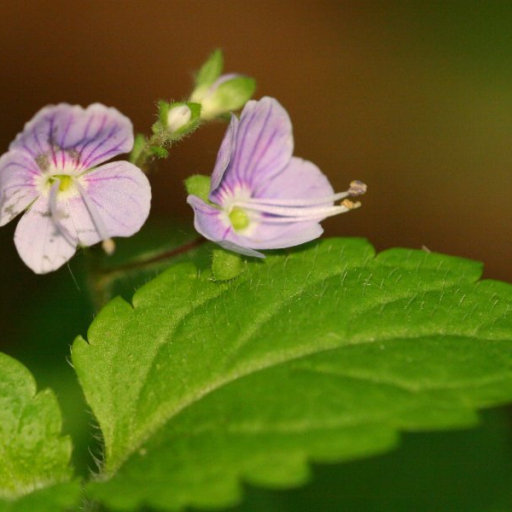
Plant Overview
Often called the Wood Speedwell, this delicate perennial is a subtle gem of the forest floor. Unlike its sun-loving cousins that thrive in open meadows, Veronica montana is a shade-seeker, frequently found carpeted under the cool canopies of ancient deciduous woodlands. Its name, "Speedwell," is an old English blessing, originally given to travelers to wish them a safe journey.
🔍 How to Identify
- 🌸 The Bloom: Tiny, pale lilac or "milky" blue flowers, usually featuring darker violet veins. They have four petals, with the bottom petal often being slightly smaller than the rest.
- 🍃 Leaf Texture: The leaves are broadly heart-shaped or oval with coarsely toothed edges. Most importantly, they are notably hairy on both sides, giving them a soft, matte appearance.
- 🌱 Growth Habit: It has a "prostrate" or creeping habit, meaning it stays low to the ground and spreads via rooting stems to create a lush, green mat.
- 📏 The Stem: Unlike the common Germander Speedwell (which has two lines of hairs), the Wood Speedwell’s stem is hairy all the way around.
🏡 In Your Garden
- 💧 Moisture Lover: This plant is an indicator of moist, fertile soil. In a garden setting, it thrives in "damp shade"—places where other flowers might struggle due to lack of light.
- 🌳 Woodland Aesthetic: It is perfect for a "wilding" project or a woodland garden. Because it spreads via runners, it acts as a wonderful living mulch, protecting the soil around the base of larger shrubs and trees.
- 🐌 Wildife Value: While small, its flowers provide an early spring nectar source for hoverflies and small bees that navigate the forest understory.
⚠️ Safety & Toxicity
- ✅ Status: Generally considered non-toxic.
- 🐾 Pet Safety: There are no known records of Veronica montana being poisonous to dogs, cats, or horses. However, it is not a culinary herb, so it should not be intentionally ingested by humans or pets.
- 🌿 Skin Sensitivity: It is not known to cause contact dermatitis, but it is always a good practice to wear gloves when weeding to avoid any hidden stinging nettles that often grow in the same damp habitats.
✨ Fun Fact
The name "Speedwell" comes from the phrase "speed you well." In the Victorian Language of Flowers, giving someone a Speedwell plant was a way of saying "goodbye and good luck," or even "travel safely." It was often pinned to the clothes of travelers to protect them from accidents.

Detailed Care Instructions
Here are some steps you can follow to grow Veronica Montana plant:
- Choose the right location: Veronica Montana plants prefer full sun to partial shade. Select a spot in your garden that receives at least 6 hours of direct sunlight per day.
- Prepare the soil: Ensure that the soil is well-draining and fertile. Amend the soil with organic matter, such as compost, to improve its quality. This will help the plant grow healthier and produce more blooms.
- Planting: Dig a hole twice as wide and deep as the plant's root ball. Place the plant in the hole, ensuring that the top of the root ball is level with the soil surface. Backfill the hole with soil and firmly press it around the roots to eliminate any air pockets.
- Watering: Veronica Montana plants require regular watering, especially during dry spells. Water deeply and evenly to ensure the roots receive ample moisture. However, avoid over-watering, as it may lead to root rot.
- Mulching: Apply a layer of organic mulch, such as wood chips or straw, around the base of the plant. Mulching helps retain soil moisture, suppresses the growth of weeds, and regulates soil temperature.
- Pruning: Prune Veronica Montana plants in early spring to remove any dead or damaged branches. This allows for better air circulation and promotes new growth. Additionally, remove spent flowers to encourage continuous blooming.
- Fertilizing: Fertilize the plant in spring with a balanced, slow-release fertilizer or a compost tea. Follow the package instructions for appropriate dosage.
- Provide support (optional): Depending on the variety, some Veronica Montana plants may benefit from staking or support to keep them upright as they grow taller. Use stakes or a trellis to keep the plant upright and prevent it from collapsing.
- Pest and disease control: Monitor the plant regularly for signs of pests, such as aphids or slugs. Treat any infestations promptly using organic insecticidal soap or other appropriate methods. Remove any diseased or infected foliage to prevent the spread of diseases.
- Enjoy the blooms: With proper care, Veronica Montana plants should produce beautiful clusters of blue or violet flowers from late spring to early summer. Enjoy their beauty and fragrance!
Remember to research the specific care requirements of your particular Veronica Montana plant variety, as some cultivars may have particular needs or growing habits.

Place in a bright room that is sun drenched almost all day. Or directly in a south-facing window.

The best way to water this particular plant is to pour water onto the soil around its base. Make sure not to pour water onto the leaves or stem as excess moisture can promote fungal growth and disease.
It is important to ensure that the soil is moist but not waterlogged. This can be achieved by allowing the top layer of soil to dry out slightly before watering again.
Consider the plant's location and surrounding environment when determining the watering frequency. If the plant is in a sunny and warm spot, it may require more frequent watering than if it is in a cooler and shadier location.
Lastly, be mindful of the season and adjust watering accordingly. During the growing season, the plant may require more water than during its dormant period. Always check the soil moisture level before watering to avoid overwatering and drowning the roots.
- Begin fertilizing Veronica Montana in the early spring, when new growth emerges.
- Use a balanced, all-purpose fertilizer (10-10-10) and apply it according to the package instructions.
- Water the plant thoroughly before and after fertilizing to prevent root burn.
- Repeat the fertilization process once a month during the growing season.
- Reduce fertilization in the fall and stop completely in the winter.
- If the plant shows signs of nutrient deficiency, such as yellowing leaves, increase the frequency of fertilization.
The recommended soil for this plant is a well-drained soil that is rich in organic matter. It should be slightly acidic with a pH range of 5.5 to 6.5. The soil should be moist but not waterlogged, as excessive moisture can lead to root rot. It is important to avoid using heavy clay soils or soils that are too sandy, as they do not provide the ideal growing conditions for this plant. A soil mix that is suitable for this plant can be made by mixing equal parts of peat moss, perlite, and vermiculite. Additionally, adding a slow-release fertilizer to the soil can provide the plant with the necessary nutrients for healthy growth.
- Choose a healthy parent plant with strong stems and lush foliage.
- Take a sharp, sterile cutting tool (such as scissors or a knife) and cut a stem that is at least several inches long, making sure to include several leaves.
- Remove any leaves from the bottom two-thirds of the stem.
- Dip the cut end of the stem in rooting hormone powder.
- Place the stem in a container with well-draining potting soil, and water thoroughly.
- Cover the stem with a plastic bag or clear plastic wrap to create a humid environment.
- Place the container in a bright, indirect light location and keep the soil moist, but not waterlogged.
- After a few weeks, check for roots by gently tugging the stem. If the cutting resists, it has developed roots and can now be transplanted into a larger container or outside in the garden.








