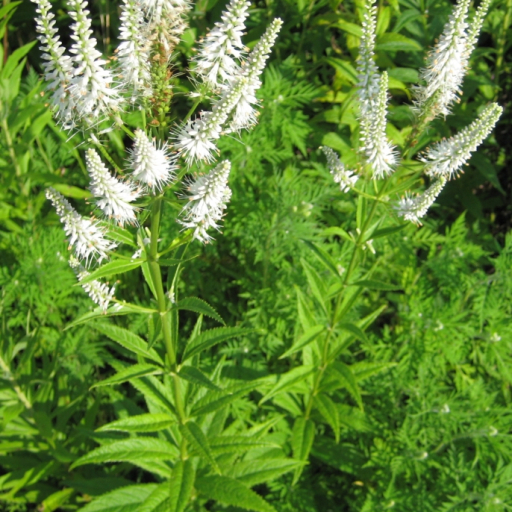
Plant Overview
Commonly known as Culver’s Root, this architectural masterpiece of the North American prairie is a favorite for those seeking height and drama. With its elegant, candelabra-like flower spikes, it adds a touch of wild sophistication to any landscape. It was named after a 18th-century physician, Dr. Culver, who famously prescribed the plant's bitter roots as a potent (and likely unpleasant) medicine.
🔍 How to Identify
- 📏 Stately Stature: It stands remarkably tall and unbranching, typically reaching heights of 3 to 6 feet, giving it a distinct "skyscraper" presence in the garden.
- 🍃 Whorled Leaves: Unlike many plants with staggered leaves, Culver's Root features pointed, serrated leaves that grow in tidy circles (whorls) around the stem, usually in groups of 3 to 7.
- 🕯️ Candelabra Blooms: The tiny white to pale-blue flowers are crowded onto long, slender spikes. These spikes often have smaller "side-candles" branching out, creating a unique branching floral display.
🏡 In Your Garden
- 🦋 Pollinator Magnet: This plant is a buzzing hub of activity. It is particularly beloved by honeybees, bumblebees, and various butterflies who find the tiny tubular flowers irresistible.
- 💧 Moisture and Patience: While it is a hardy perennial, it thrives best in consistently moist, rich soils. It is a slow-starter; expect it to spend its first year or two establishing a deep root system before it finally reaches its full, towering height.
- 🏗️ No Stakes Required: Despite its height, the stems are remarkably sturdy. Unless it is grown in too much shade, it rarely needs staking, standing tall even after heavy summer rains.
⚠️ Safety & Toxicity
- 🐾 Pet Safety: Culver's Root is generally considered non-toxic to dogs, cats, and horses, making it a "worry-free" addition to family landscapes.
- 🌿 Medicinal Caution: While not "poisonous" in the traditional sense, the raw root is a powerful emetic and laxative. It should never be ingested, as it can cause significant gastrointestinal distress.
✨ Fun Fact
Culver’s Root has a "botanical identity crisis." While it looks nearly identical to the common Veronica (Speedwell), it is actually in its own genus, Veronicastrum. The suffix "-astrum" literally means "false" or "resembling," marking it as the "False Veronica."

Detailed Care Instructions
| Lighting | Full Sun |
| Hardiness Zones | Max 9B |
To grow Veronicastrum virginicum (Culver's root) successfully, follow these steps:
- Choose a suitable location: Veronicastrum grows best in full sun or partial shade. Ensure the selected area has well-draining soil.
- Prepare the soil: Before planting, make sure the soil is loose and enriched with organic matter. Add compost or well-rotted manure to the planting hole to improve soil fertility.
- Planting: Dig a hole that is slightly wider and deeper than the plant's root ball. Place the plant in the hole, ensuring the crown remains at soil level. Backfill the hole with soil and gently firm it around the plant.
- Watering: Water the plant thoroughly after planting and keep the soil consistently moist but not soggy. During dry spells, water the plant deeply once or twice a week, providing about an inch of water. Avoid overwatering as it can lead to root rot.
- Mulching: Apply a layer of mulch around the plant to conserve moisture, suppress weed growth, and regulate soil temperature.
- Fertilizing: Veronicastrum generally does not require heavy fertilization. However, you can apply a slow-release balanced fertilizer in spring for an extra boost.
- Pruning: Cut back Veronicastrum in late fall or early spring to remove dead foliage and promote new growth. Additionally, you can deadhead spent flowers to encourage more blooms.
- Division: Veronicastrum can be divided every 3-4 years to maintain plant health. Dig up the clump and separate it into smaller sections, ensuring each section has a good portion of roots and shoots. Replant the divisions in well-prepared soil.
- Pests and diseases: Veronicastrum is relatively resistant to pests and diseases. However, keep an eye out for common issues such as aphids, slugs, and powdery mildew. Apply appropriate pest control measures if necessary.
By following these guidelines, you should be able to grow and maintain healthy Veronicastrum virginicum plants in your garden.

Place in a bright room that is sun drenched almost all day. Or directly in a south-facing window.

The best way to water this plant is to gently pour water onto the soil, ensuring that it reaches the root area without causing run-off or splashing onto the leaves. Watering deeply and infrequently is preferable to light and frequent watering, as it encourages the plant to develop a deeper and stronger root system. Avoid getting water on the leaves or flowers as this can promote disease or damage to the plant. During periods of drought, a thorough watering once a week may be necessary. Always monitor the soil moisture level and adjust watering accordingly to maintain a consistently moist but not waterlogged soil.
To fertilize this plant, use a balanced fertilizer with equal amounts of nitrogen, phosphorus, and potassium. Apply the fertilizer in early spring before new growth emerges and again in midsummer after the first flush of bloom. Do not over-fertilize, as this can lead to excessive growth and weak stems. Instead, follow the recommended dosage on the fertilizer package. Water the plant thoroughly after applying fertilizer to help it absorb the nutrients.
Veronicastrum Virginicum is a flowering plant that requires a well-draining and nutrient-rich soil to grow. The ideal soil for this plant should be slightly acidic to neutral in pH, with a pH range of 6.0 to 7.0 being optimal. Additionally, the soil should be moist but not waterlogged, as excessive moisture can lead to root rot and other problems.
The soil should also be loamy, meaning it has a balance of sand, silt, and clay particles. This type of soil provides good drainage while retaining enough moisture for the plant's roots to absorb. Adding organic matter to the soil is beneficial, as it improves soil structure, increases nutrient availability, and enhances moisture retention.
Veronicastrum Virginicum prefers a location with partial to full sun exposure. However, if the soil is too dry or poor quality, the plant may struggle to thrive, even with adequate sunshine. Therefore, it is essential to provide the plant with the proper soil conditions to ensure its health and vibrancy.
To propagate this plant, you will need to divide the root clump in the spring or fall. Begin by digging up the plant and gently separating the clump into smaller sections, using a sharp knife or garden shears. Each section should have a healthy root system and several shoots. Replant the new divisions in a sunny or partially shaded area with well-draining soil. Water the plants regularly until they become established.
Common pests of the culver's-root include Aphids. Make a habit of checking your culver's-root frequently for pests so that any infestations can be caught and managed early.








