Plant Overview
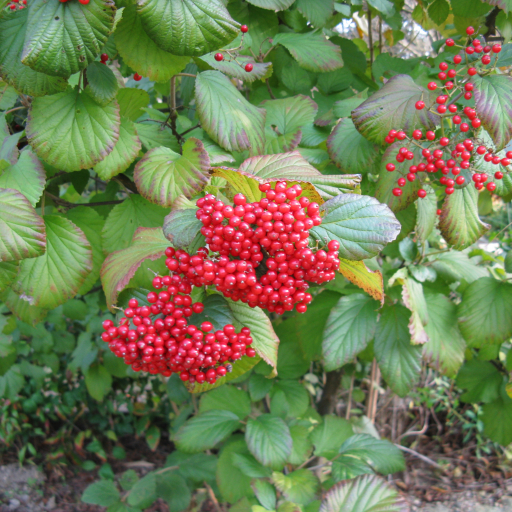
Often called the Linden Viburnum because its leaves mimic the elegant linden tree, this East Asian native is a showstopper for all seasons. It provides a dramatic cycle of beauty, starting with lacy spring blooms and ending with clusters of berries so red they look like polished rubies. It’s a landscape favorite for those wanting to bring life—especially songbirds—into their backyard sanctuary.
🔍 How to Identify
- 🍃 The Foliage: Look for broad, rounded leaves with deeply impressed veins and coarsely toothed edges. In the fall, these leaves transform from deep green into a moody burgundy or bronze-purple.
- 🌼 The Blooms: In late spring, the shrub is covered in flat-topped clusters of tiny, creamy-white flowers. These "cymes" can reach up to 5 inches wide, creating a lace-like effect across the branches.
- 🍒 The Fruit: The most defining feature is the upright clusters of shiny, egg-shaped berries. They ripen to a brilliant scarlet in September and often persist well into the winter.
🏡 In Your Garden
- 🐦 A Wildlife Buffet: This shrub is a five-star hotel for birds. While the berries are too tart for human palates, they are a vital high-energy snack for cardinals and mockingbirds during the first frosts.
- 🌱 Pollination Needs: To get that iconic "explosion" of red berries, you typically need two different cultivars (varieties) planted near each other. They need a partner for cross-pollination to fruit heavily.
- 🌳 Adaptability: It is remarkably hardy and isn't picky about soil texture, though it thrives best in slightly acidic spots. In some parts of the U.S. Mid-Atlantic, it's so hardy that it can become "escape" the garden, so keep an eye on volunteer seedlings!
⚠️ Safety & Toxicity
- ✅ General Status: Non-toxic and safe for most gardens.
- 🐾 Pets & Kids: The berries are not considered poisonous to dogs, cats, or humans. However, consuming large quantities can cause mild stomach upset or nausea. It’s always best to teach children that these "candies" are strictly for the birds.
✨ Fun Fact
The species name dilatatum is Latin for "spread out" or "widened," referring to the wide, expansive reach of its beautiful flower clusters. In the winter, these berries often shrivel slightly like raisins, which actually increases their sugar concentration for foraging wildlife!

Detailed Care Instructions
To grow Viburnum Dilatatum (also known as the linden arrowwood or Chinese viburnum), here are a few steps you can follow:
- Choose a suitable location: Viburnum Dilatatum prefers full sun to partial shade, so find an area in your garden that receives at least 6 hours of direct sunlight daily. The soil should be well-draining and rich in organic matter.
- Prepare the soil: Dig a hole that is larger and deeper than the plant's root ball. Mix the excavated soil with compost or aged manure to improve fertility and drainage. This will create a healthy growing environment for the plant.
- Planting: Place the Viburnum Dilatatum in the prepared hole, making sure the top of the root ball is level with or slightly above the soil surface. Backfill the hole with the amended soil mixture, firming it gently around the roots. Water the plant thoroughly after planting.
- Watering: Keep the soil consistently moist but not waterlogged. Water deeply and less frequently, allowing the top few inches of soil to dry out slightly between waterings. Use mulch around the base of the plant to help retain moisture and prevent weeds.
- Fertilization: Apply a slow-release, balanced fertilizer in early spring to promote healthy growth. Follow the package instructions for the recommended dosage.
- Pruning: Prune Viburnum Dilatatum in late winter or early spring before new growth appears. Remove any dead, damaged, or crossing branches. Thinning out the plant will help improve air circulation and maintain its shape.
- Pests and diseases: Viburnum Dilatatum is generally resistant to pests and diseases. However, it can be susceptible to aphids, scale insects, and viburnum leaf beetles. Monitor the plant regularly and treat any pest infestations promptly using insecticidal soaps or horticultural oils.
- Propagation: Viburnum Dilatatum can be propagated through seed or softwood cuttings. Collect seeds in autumn and sow them in a seed-starting mix. Keep the soil consistently moist until germination occurs. Softwood cuttings can be taken in early summer and rooted in a well-draining medium.
By following these steps and providing proper care, your Viburnum Dilatatum plant should thrive and grow successfully.

Place in a bright room that is sun drenched almost all day. Or directly in a south-facing window.

To water this plant, you should first check the soil moisture level by inserting your finger into the soil up to an inch deep. If the soil feels dry at this level, it is time to water. Provide enough water to saturate the root system, but avoid over-watering as this can cause root rot. It is generally best to water deeply but infrequently, allowing the soil to dry out slightly between watering sessions. Consider using a soaker hose or drip irrigation system to deliver water directly to the roots and avoid wetting the foliage, which can increase the risk of fungal diseases. It is also helpful to mulch around the base of the plant to help retain moisture in the soil. Overall, take care to provide consistent, even moisture to support healthy growth and flowering.
- Begin fertilizing in the early spring before the plant begins to put on new growth.
- Use a balanced fertilizer with equal parts of nitrogen, phosphorus, and potassium.
- Apply the fertilizer evenly around the base of the plant, taking care not to get it on the leaves or stems.
- Water the plant thoroughly after fertilizing to help the nutrients soak into the soil.
- Repeat the fertilization process every four to six weeks throughout the growing season.
- Stop fertilizing in late summer to allow the plant to begin to prepare for dormancy.
- Avoid fertilizing during periods of drought or extreme heat, as this can stress the plant and cause damage.
The Viburnum Dilatatum plant prefers well-drained soil that is moist but not waterlogged. It thrives in soil that is slightly acidic to neutral, with a pH range between 5.5 to 7.5. The soil should be rich in organic matter, as this will enhance the plant's growth and development. Soil that is too compacted and heavy will inhibit root growth and prevent the plant from thriving. Therefore, it is recommended to add amendments such as compost or peat moss to the soil to improve its texture and fertility. This plant can tolerate drought, but it is best to keep the soil moist during the growing season. Avoid using soil that is contaminated with chemicals or heavy metals, as these can adversely affect the plant's growth, health, and overall quality.
To propagate this plant, you will need to select healthy and disease-free stem cuttings from the plant. Cuttings should be about 4-6 inches long and have at least 3-4 nodes. Remove any leaves at the bottom of the cutting.
Prepare a pot filled with a mixture of 50% perlite and 50% peat moss or a rooting hormone powder. Dip the end of the stem cutting in the rooting hormone and gently tap off any excess. Make a hole in the potting mix and insert the cutting, firming the soil around it.
Once inserted, water the cutting generously and cover with a plastic bag to create a humid environment. Propagation should take place in a well-lit area, but not in direct sunlight. Keep the soil moist but not too wet as this can cause the cutting to rot.
In about 4-6 weeks, you should start to see roots growing. At this point, you can carefully remove the plastic bag and transplant the rooted cutting into a slightly larger pot or into a suitable outdoor location. Water the new plant thoroughly and continue to care for it as you would a mature plant.








