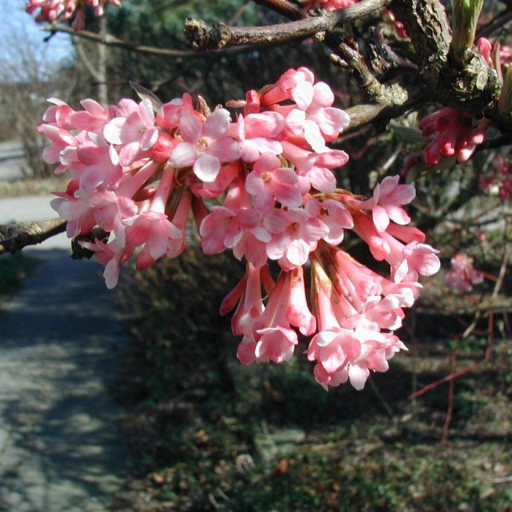
Plant Overview
Often called the Fragrant Viburnum or Farrer Viburnum, this hardy shrub is a true winter pioneer, blooming while most other plants are still deep in hibernation. Named after the legendary plant hunter Reginald Farrer, who rediscovered it in the mountain gardens of China, it is beloved for its ability to perfume an entire garden on a crisp February morning.
🔍 How to Identify
- 🌸 The Blooms: Tiny, tubular flowers that grow in rounded clusters. They start as deep pink buds and open into waxy, crystalline white or pale pink stars.
- 🍃 The Foliage: Deciduous, serrated leaves that emerge with a bronze tint in spring, turning a deep, forest green before shifting to a striking purple-red in the autumn.
- 🎋 The Structure: An upright, multi-stemmed habit that can reach up to 10 feet. It often looks like a collection of vertical wands that arch slightly at the top as they age.
🏡 In Your Garden
- 👃 Scent Placement: Because the fragrance is its greatest gift, plant it near a walkway, a kitchen window, or a front door. You’ll want to catch the scent of honey and almonds every time you step outside in late winter.
- ✂️ Pruning Nuance: This plant blooms on "old wood" (stems from the previous year). If you prune it in the winter, you’ll cut off all your flowers. Always wait until immediately after the blooms fade to shape the bush.
- 🍂 Seasonal Interest: It provides a "triple threat" for landscapers: intoxicating winter flowers, lush summer privacy, and vibrant fall color.
⚠️ Safety & Toxicity
- 🚫 Status: Low toxicity, but caution is advised.
- 🐾 Pets & Kids: While the small red berries (which turn black) are technically edible when fully ripe, they can cause severe stomach upset, nausea, or vomiting if eaten raw or in large quantities. It is best to treat them as ornamental and keep them away from curious toddlers and pets.
✨ Fun Fact
Reginald Farrer, the plant’s namesake, didn't just find this plant in the wild; he first saw it growing in the courtyard of a Tibetan temple. He was so captivated by the scent that he claimed it was "the most beautiful of all its race."

Detailed Care Instructions
| Humidity | Normal |
| Lighting | Part Sun |
| Difficulty | Easy |
| Temperature | 21°C - 30°C |
| Hardiness Zones | 7 - 9 |
To grow Viburnum farreri (Winter Viburnum) plant, follow these steps:
- Select a suitable location: Choose a spot with well-drained soil and full to partial sunlight. The plant can tolerate some shade but performs best in direct sunlight.
- Soil preparation: Prepare the soil before planting by adding organic matter such as compost or well-rotted manure. This will improve soil structure and fertility.
- Planting: Dig a hole that is slightly wider and deeper than the root ball of the plant. Place the plant in the hole, making sure that the top of the root ball is level with the soil surface. Backfill the hole with the soil and firm it gently around the plant.
- Watering: Water the plant thoroughly after planting and keep the soil consistently moist but not waterlogged. During hot and dry periods, increase the frequency of watering.
- Mulching: Apply a layer of organic mulch, such as bark chips or straw, around the base of the plant. This will help retain moisture, suppress weed growth, and regulate soil temperature.
- Pruning: Viburnum farreri generally requires minimal pruning. However, you can prune the plant lightly in early spring to shape it and remove any dead or damaged branches.
- Fertilizing: Apply a balanced slow-release fertilizer in early spring to provide nutrients for healthy growth. Follow the instructions on the fertilizer packaging for application rates.
- Winter protection: Viburnum farreri is cold hardy but may benefit from protecting during severe winters. You can use a layer of mulch around the base or cover the plant with burlap if temperatures drop significantly.
- Pests and diseases: Watch for common pests such as aphids or scale insects. Treat any infestations as soon as possible using organic or chemical insecticides. Viburnum farreri is generally resistant to diseases but may occasionally be susceptible to leaf spots or powdery mildew.
- Regular care: Monitor the plant for any signs of stress, such as wilting or leaf discoloration, and address any issues promptly. Additionally, remove any weeds around the base and keep the area clean to minimize competition for water and nutrients.
By following these guidelines, you can successfully grow Viburnum farreri and enjoy its fragrant flowers and attractive foliage.

Place in a bright room that is sun drenched almost all day. Or directly in a south-facing window.

To water this plant, it is important to first check the soil moisture level. Stick a finger in the soil about 1 inch deep to gauge moisture content. If the soil feels dry, it is time to water. Water slowly and deeply, making sure the water reaches the entire root ball. Avoid getting water on the leaves, as this can encourage disease. Water more frequently during hot, dry weather or if the plant is in a container. Allow the soil to dry out slightly between waterings, but do not let it become bone dry. Overwatering can lead to root rot and other problems.
To fertilize the Viburnum Farreri, use a balanced fertilizer with equal parts nitrogen, phosphorus, and potassium. Apply the fertilizer in early spring before new growth begins and again in late summer or early fall. Be sure to follow the manufacturer's instructions for application rates. Avoid fertilizing during hot, dry periods as this can stress the plant. Fertilize only once a year if the growth of the plant is satisfactory.
The soil for Viburnum Farreri should be well-drained, fertile, and slightly acidic. It should have a pH level between 5.5 and 7.5, with a mixture of organic matter and loam soil. The soil should be able to retain moisture but not be waterlogged, and it should be rich in nutrients such as nitrogen, phosphorus, and potassium. To improve drainage, some sand or grit can be added. It is also recommended to mulch around the base of the plant to help retain moisture and control weeds. It is important to ensure that the soil is not contaminated with toxins or pollutants, as Viburnum Farreri plants are sensitive to pollution.
Viburnum Farreri is typically propagated through stem cuttings taken in the spring or early summer. The cuttings should be about 4-6 inches in length and taken from healthy, disease-free plants. Remove the lower leaves and dip the cut end into rooting hormone powder. Plant the cuttings in a container filled with a well-draining potting mix, and keep them in a warm, humid location with indirect light. Water the cuttings regularly, being careful not to overwater as this can cause rotting. After a few weeks, the cuttings should develop new growth, indicating that they have successfully rooted. Gradually acclimate the new plants to outdoor conditions over a period of several weeks before transplanting them into a permanent location in the garden.








