Plant Overview
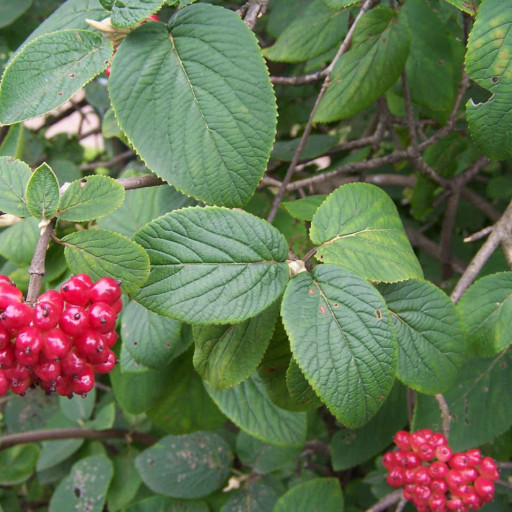
Viburnum lantana, affectionately known as the Wayfaring Tree, has been a silent companion to travelers along European roadsides for centuries. Its common name comes from its tendency to "wayfare" or spread along hedgerows and paths, greeting hikers with its dusty, felt-like leaves. This hardy deciduous shrub is a master of transformation, shifting through a palette of creamy whites, brilliant reds, and deep purples throughout the seasons.
🔍 How to Identify
- 🍃 Felted Foliage: The leaves are broadly oval with a distinct wrinkled, "tooled leather" texture. Both the stems and the undersides of the leaves are covered in tiny, soft grey hairs that feel like felt to the touch.
- 🌼 Flat-Topped Blooms: In late spring, the tree produces dense, flat clusters (cymes) of tiny, creamy-white flowers. Unlike some of its cousins, these flowers are all the same size and emit a faint, hay-like fragrance.
- 🍒 Multi-Colored Berries: One of its most striking features is the fruit cluster. In late summer, you will often see green, bright red, and ink-black berries all hanging together in the same bunch as they ripen at different speeds.
🏡 In Your Garden
- 🧱 Alkaline Champion: The Wayfaring Tree is a specialist for chalky or limestone-heavy soils. If you struggle to grow acid-loving plants, this shrub will thrive in your garden’s naturally high pH.
- 🛡️ Tough as Nails: This is a "set-it-and-forget-it" plant. It is incredibly wind-resistant and drought-tolerant once established, making it an excellent choice for a privacy screen or a windbreak in exposed areas.
- 🦋 Wildlife Magnet: It serves as a vital pit stop for biodiversity; the flowers provide nectar for hoverflies and bees, while the berries are a high-energy snack for migratory birds in the fall.
⚠️ Safety & Toxicity
- 🤢 Mildly Toxic: While the berries look inviting, they are generally considered inedible for humans. Ingesting large quantities can cause nausea, vomiting, or stomach cramps.
- 🐾 Pet Safety: Keep an eye on curious dogs or cats. While not usually fatal, eating the berries or leaves can lead to significant digestive upset for household pets.
- 🧤 Skin Irritation: The tiny "stellate" hairs on the leaves can act as a mechanical irritant. If you have sensitive skin, it is best to wear gloves when pruning to avoid a mild itchy rash.
✨ Fun Fact
The branches of the Wayfaring Tree are incredibly flexible and tough. In ancient times, they were so prized for their strength that they were frequently used to create "withies"—strong, twisted ties used for binding faggots of wood or even making primitive rope.

Detailed Care Instructions
| Soil Ph | 5.5 To 6.6, But Also Tolerates Slightly Alkaline Soil |
| Toxicity | Non-Toxic To Humans And Animals |
| Soil Type | Rich, Moist, Well-Drained Soil |
| Plant Type | Deciduous Shrub |
| Mature Size | 10–15 Feet |
| Native Area | Europe, Western Asia, North Africa |
| Sun Exposure | Full Sun To Partial Shade |
| Hardiness Zones | 4-8 |
To grow Viburnum Lantana plant, follow these steps:
- Choose the right location: Viburnum Lantana prefers full sun to partial shade. Select a location in your garden that receives at least six hours of sunlight per day.
- Soil preparation: Prepare the soil by loosening it with a garden fork or tiller. Remove any rocks or debris and incorporate organic matter, such as compost or well-rotted manure, to improve soil fertility and drainage.
- Planting: Dig a hole slightly larger than the root ball of the Viburnum Lantana plant. Place the plant in the hole, ensuring that the top of the root ball is level with the soil surface. Backfill the hole with soil and gently firm it around the plant.
- Watering: Water the newly planted Viburnum Lantana thoroughly, ensuring that the soil is evenly moist. Afterward, water regularly, especially during dry periods, to keep the soil slightly moist but not waterlogged.
- Mulching: Apply a layer of organic mulch around the base of the plant to help conserve moisture, suppress weeds, and regulate soil temperature. Leave a small gap around the stem to prevent rot.
- Pruning: Prune Viburnum Lantana in late winter or early spring to remove any dead or damaged branches and to shape the plant if needed. This also helps to promote healthy growth and flowering.
- Fertilizing: Apply a balanced, slow-release fertilizer in the spring to provide necessary nutrients. Follow the instructions on the fertilizer package for the correct application rate.
- Pests and diseases: Monitor the plant for any signs of pests, such as aphids or scale insects, and treat them accordingly. Viburnum Lantana is generally resistant to diseases but keep an eye out for any fungal issues and take appropriate steps to address them.
- Propagation: If desired, Viburnum Lantana can be propagated by taking semi-ripe cuttings in late summer or by sowing seeds in the fall.
By following these steps, you can successfully grow Viburnum Lantana plant and enjoy its attractive foliage, clusters of white flowers, and colorful berries.

Place in a window with dappled sun or a spot in the middle of a room. Or directly in a window facing west or east.

To properly water this plant, it is important to identify its specific water needs based on factors such as soil type, humidity, temperature, and level of sun exposure. One method is to check the soil moisture regularly by sticking a finger into the dirt a few inches deep - if it feels dry, it's time to water. Another approach is to provide consistent moisture using a drip irrigation system or watering deeply once per week. It is important to avoid over-watering or allowing water to sit on the leaves as this can lead to root rot or fungal diseases. Additionally, it is recommended to water in the morning or evening when temperatures are cooler and the plant can better absorb the water.
To fertilize this plant, apply a balanced fertilizer with equal amounts of nitrogen, phosphorus, and potassium in the spring before new growth begins. Apply the fertilizer at the base of the plant and water it in well. Repeat this process in mid-summer to encourage healthy growth and blooming. Avoid applying fertilizer late in the growing season, as this can stimulate new growth that may not have enough time to properly harden off before winter. Always follow the manufacturer's instructions when applying fertilizer, and be sure not to over-fertilize, as this can lead to burned or damaged roots.
Viburnum Lantana prefers well-drained, fertile soil that is rich in organic matter. The ideal pH range for this plant is between 5.5 and 7.5. It is important to avoid soil that is heavy or poorly drained, as this can lead to root rot. Additionally, Viburnum Lantana benefits from soil that is slightly acidic, as this will allow for better nutrient uptake and a healthier plant overall. When planting, it is recommended to amend the soil with organic matter, such as compost or peat moss, to improve its structure and water-holding capacity.
Propagation of this plant can be done by taking softwood cuttings from a healthy parent plant in early summer, when new growth is robust. Cut the stem at a 45-degree angle and remove the leaves from the lower third of the cutting. Dip the cut end in rooting hormone and insert into a pot filled with well-draining soil mix. Keep the soil moist and place the pot in bright, indirect light. Cover the pot with a plastic bag to create a humid atmosphere.
Alternatively, the plant can also be propagated through layering. In early spring, identify a low-growing branch that can be bent to the ground. Remove the leaves from the middle of the stem, leaving a few at either end. Make a shallow cut to the underside of the stem, applying rooting hormone to the cut surface. Gently press the stem into the soil and cover with a layer of mulch. Keep the soil moist and wait for new roots to form, usually within several months. Once rooted, cut the stem from the parent plant and transplant to a new location.
Finally, Viburnum Lantana can also be propagated through seed. Collect ripe berries in the fall and gently crush them to expose the seeds. Spread the seeds on a paper towel and allow them to dry for a few days. Sow the seeds in a pot filled with well-draining soil mix and cover lightly with soil. Water the soil and place the pot in bright, indirect light. Keep the soil moist and wait for the seeds to germinate, usually within several weeks.








