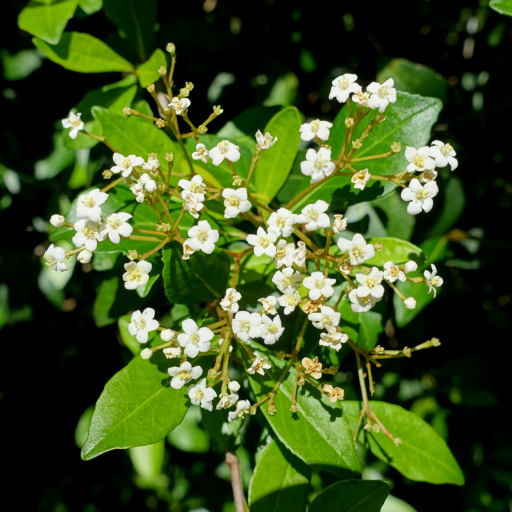
Plant Overview
Known affectionately as Walter’s Viburnum, this native southeastern beauty is a favorite for gardeners wanting a low-maintenance shrub that looks like a drifted snowbank in early spring. It is a versatile powerhouse that bridges the gap between a formal garden hedge and a wild woodland thicket, offering a lush, evergreen backdrop for most of the year.
🔍 How to Identify
- 🍃 Small, Leathery Leaves: The foliage is distinctively small (often less than 2 inches), dark green, and shaped like a teardrop or "obovate," meaning it is wider at the tip than at the base.
- 🌸 Spring Snow: In late winter or early spring, the plant is completely smothered in small, rounded clusters of tiny, creamy-white flowers that attract every pollinator in the neighborhood.
- 🍒 Color-Changing Berries: After flowering, small drupes appear; they transition through a beautiful sunset of colors, turning from green to bright red and finally to a glossy, bird-pleasing black.
🏡 In Your Garden
- 🌳 The Ultimate Privacy Screen: Because of its incredibly dense, twiggy growth habit, it is one of the best native plants for creating a "living wall." It can be sheared into a formal box hedge or allowed to grow into a small, multi-trunked tree.
- 🕊️ A Wildlife Sanctuary: This is a 5-star hotel for birds. The thick branching provides perfect protection from predators for nesting songbirds, while the berries provide a high-energy snack during the autumn months.
- 💧 Adaptable Roots: While it thrives in the moist, acidic soils of its native swamplands, Walter’s Viburnum is surprisingly drought-tolerant once established and can handle occasional "wet feet" better than most landscape shrubs.
⚠️ Safety & Toxicity
- ✅ Safe Status: Walter’s Viburnum is generally considered non-toxic to humans, cats, and dogs.
- ⚠️ Mild Caution: While the berries are a staple for wildlife, they are not considered "table fruit" for humans. Ingesting large quantities of raw viburnum berries may cause mild stomach upset or nausea in young children or sensitive individuals.
✨ Fun Fact
Walter's Viburnum is a crucial "host plant" for the Spring Azure butterfly. The butterflies lay their eggs on the flower buds, and the emerging caterpillars feed on the blossoms, making this plant an essential link in the local ecosystem's food chain!

Detailed Care Instructions
To grow Viburnum obovatum, also known as Walter's viburnum or small-leaf viburnum, you can follow these steps:
- Plant selection: Obtain a healthy young plant from a reputable nursery or garden center. Look for plants with a strong root system and disease-free foliage.
- Location: Choose a suitable site for planting. Viburnum obovatum prefers full sun to partial shade, so select an area that receives at least six hours of direct sunlight per day. Ensure the soil is well-draining and slightly acidic.
- Soil preparation: Before planting, prepare the soil by removing any weeds or debris. Add organic matter such as compost to improve soil fertility and drainage. Aim for a slightly acidic soil pH between 5.5 and 6.5.
- Planting: Dig a hole that is slightly larger than the rootball of the plant. Place the plant in the hole, ensuring it is planted at the same depth it was in the container or rootball. Backfill the hole with soil, gently firming it around the roots.
- Watering: Immediately after planting, give the plant a thorough watering to settle the soil and establish good root contact. Ensure the soil remains consistently moist but not waterlogged during the growing season. Regularly check the moisture level in the soil and adjust watering accordingly.
- Mulching: Apply a layer of organic mulch, such as wood chips or bark, around the base of the plant. This helps to suppress weeds, retain soil moisture, and regulate soil temperature. Keep the mulch a few inches away from the stem to prevent rotting.
- Fertilizing: In late winter or early spring, before new growth appears, you can apply a balanced slow-release fertilizer specifically formulated for shrubs. Follow the manufacturer's instructions for proper dosage and application.
- Pruning: Viburnum obovatum generally requires minimal pruning. However, you can remove any dead, damaged, or crossing branches to maintain a neat appearance and improve airflow. Prune after flowering.
- Pest and disease control: Viburnums are generally resistant to many pests and diseases. However, monitor your plant regularly for signs of aphids, scale insects, or powdery mildew, which can occasionally affect viburnums. If needed, treat with appropriate organic or chemical insecticides or fungicides.
- Winter care: While Viburnum obovatum is generally cold-hardy, protect young or newly planted specimens from extreme temperature fluctuations by applying a layer of mulch around the base of the plant. This helps to insulate the roots and conserve soil moisture during winter.
By following these steps and providing proper care, your Viburnum obovatum plant should grow and thrive. Remember to regularly monitor the plant, adjust care as needed, and enjoy the beauty and fragrance of its flowers.

Place in a bright room that is sun drenched almost all day. Or directly in a south-facing window.

Viburnum Obovatum plants should be watered deeply and regularly during their active growth period. The best way to water these plants is to give them a good soaking, allowing the water to penetrate to the roots. Be sure to avoid over-watering as this can lead to root rot. In addition, it is important to provide adequate drainage to prevent waterlogged soil. During dry periods, be sure to check the moisture level in the soil and adjust watering as needed. It is also recommended to water these plants early in the morning or late in the evening to avoid evaporation.
To fertilize this plant, you should use a balanced, slow-release fertilizer in early spring. Follow the instructions on the fertilizer packaging for the appropriate amount to apply based on the size of the plant. Spread the fertilizer evenly around the plant, being careful not to let it touch the trunk or stems. Water the plant thoroughly after applying the fertilizer to help it absorb the nutrients. Avoid fertilizing in late fall or winter, as the plant is dormant during this time and may not be able to utilize the nutrients effectively.
When planting Viburnum Obovatum, it is important to use the appropriate type of soil. This plant requires a well-draining soil that is rich in organic matter. It prefers a slightly acidic soil with a pH between 5.5 and 6.5. The soil should also be moist but not soggy. It is important to avoid heavy clay soils or soils that are constantly waterlogged, as this can cause root rot. Adding compost or other organic matter to the soil can improve its texture and nutrient content. During planting, it is recommended to create a shallow depression around the base of the plant to help hold moisture around the roots.
There are several ways to propagate Viburnum Obovatum plant. One method is through seed propagation, where seeds are collected from the plant after they have fully ripened and planted in well-draining soil in a sunny location. The seeds should be stratified for at least three months before sowing to ensure germination.
Another method is through softwood cutting propagation, where cuttings of the stem are taken during the early spring when the plant is actively growing. The stem cuttings should be about 6-8 inches long and should be treated with a rooting hormone before planting them in a mixture of peat and sand. The cuttings should be kept in moist soil and covered with plastic to maintain humidity until roots develop.
Lastly, Viburnum Obovatum plant can also be propagated through layering, where a branch of the plant is bent low to the ground and buried in a hole that is dug close to the plant. The branch should be bent in a way that the tip is pointing upwards and should be secured with stakes. Over time, roots will grow from the buried branch and it can be cut from the parent plant and transplanted elsewhere.








