Plant Overview
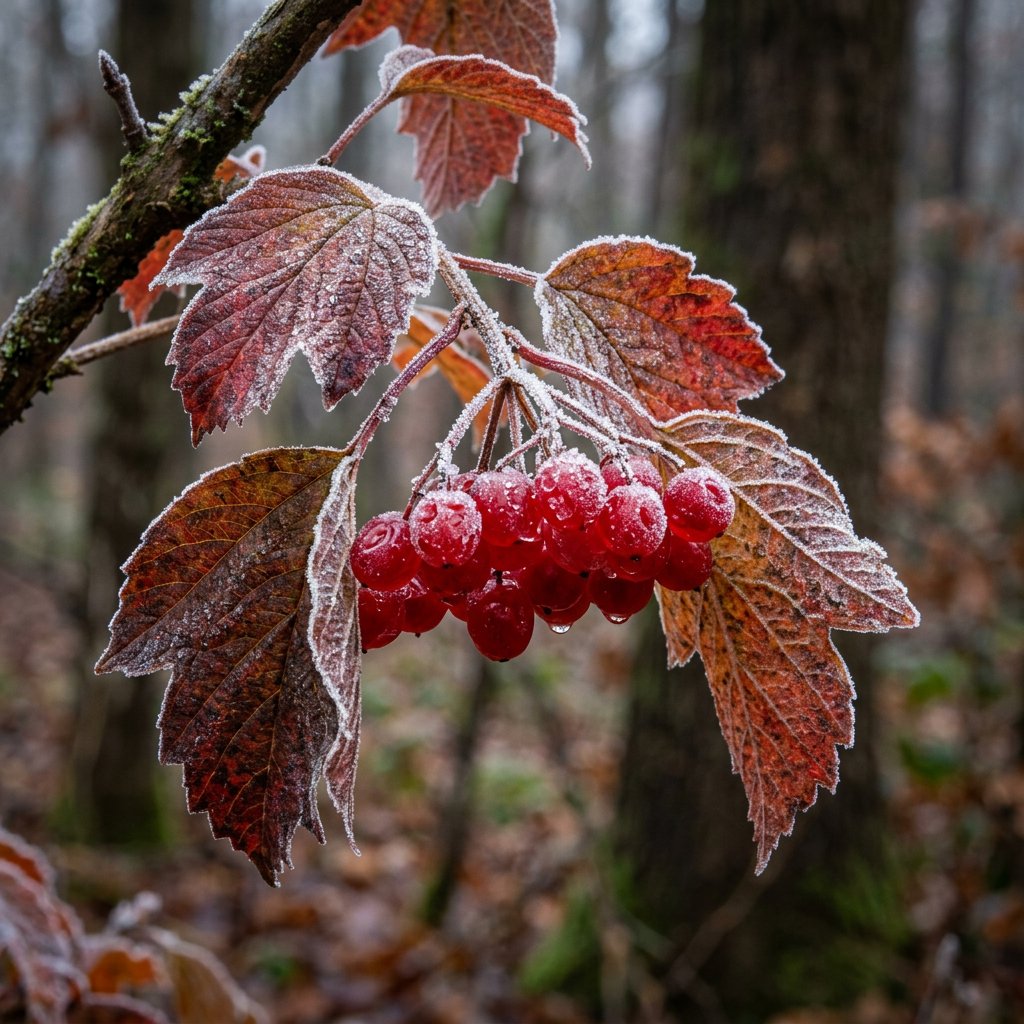
Commonly known as the Guelder-rose or European Cranberrybush, Viburnum opulus is a plant steeped in European and Slavic folklore. In Ukraine, it is known as Kalyna, a powerful symbol of feminine beauty, love, and national identity. This deciduous shrub is a true four-season performer, offering snowy white spring lace-cap blooms, lush summer foliage, and translucent ruby-red berries that glow against the winter frost.
🔍 How to Identify
- 🍃 Maple-Like Foliage: The leaves are deeply three-lobed with a wrinkled texture, closely resembling maple leaves, turning a striking reddish-purple in the autumn.
- 🌸 Lace-Cap Blooms: It features flat-topped flower clusters where a ring of large, showy sterile flowers surrounds a center of tiny, fertile blossoms.
- 🍒 Translucent Berries: In late summer, it produces drooping clusters of bright red, shiny berries that stay on the branch long after the leaves have fallen.
🏡 In Your Garden
- 💧 Thirst for Moisture: Unlike many shrubs that demand perfect drainage, the Guelder-rose thrives in damp, heavy soils and is an excellent choice for boggy corners or near garden ponds.
- 🦋 Wildlife Magnet: It is a high-value plant for biodiversity; the flowers provide nectar for hoverflies, while the dense branching structure offers a perfect nesting site for songbirds who feast on the berries in late winter.
- ✂️ Pruning Patience: It blooms on "old wood," so if you need to shape it, do so immediately after the flowers fade to ensure you don't cut off next year’s floral display.
⚠️ Safety & Toxicity
- 🤢 Mildly Toxic: The raw berries are generally considered mildly toxic to humans and can cause significant stomach upset, vomiting, or diarrhea if consumed in quantity.
- 🐾 Pet Watch: While birds love them, the berries and leaves contain irritants that can cause drooling or digestive distress in cats and dogs.
- 🍳 Culinary Note: In some cultures, the berries are cooked into jams or jellies (which neutralizes the toxins), but they have a very bitter, medicinal taste that isn't for everyone!
✨ Fun Fact
The Guelder-rose gets its name from the Dutch province of Gelderland, where a popular "Snowball" variety (Viburnum opulus 'Roseum') was first cultivated. Unlike the wild version, the Snowball variety has large, spherical blooms that look exactly like pom-poms of frozen snow!

Detailed Care Instructions
| Humidity | Normal |
| Lighting | Part Sun |
| Toxicity | Poisonous |
| Difficulty | Medium |
| Hibernation | Cold Period |
| Hardiness Zones | 3 - 8 |
To grow Viburnum Opulus, also known as European Cranberrybush, you can follow these steps:
- Choose a suitable location: Viburnum Opulus prefers full sun to partial shade and can tolerate a wide range of soil types, but it thrives in moist, well-draining soil. Ensure the location you choose has enough space for the plant to grow to its full size.
- Prepare the soil: If needed, amend the soil to improve drainage and fertility. Viburnum Opulus prefers slightly acidic to neutral soil, so add organic matter like compost if your soil is too alkaline or compacted.
- Planting: Dig a hole that is slightly larger than the root ball of the plant. Place the root ball in the hole, ensuring it is at the same level as the surrounding ground. Backfill with soil, gently firming the soil around the plant.
- Watering: Water the plant immediately after planting, and regularly water it to keep the soil consistently moist but not waterlogged, especially during hot and dry periods. Provide enough water during the plant's first year to help establish its root system.
- Mulching: Apply a layer of organic mulch around the base of the plant, about 2-3 inches thick. This helps retain moisture, suppresses weed growth, and insulates the soil.
- Pruning: Viburnum Opulus generally requires minimal pruning. Trim out any dead, damaged, or diseased branches. You can also prune to shape the plant or remove any crowded branches. It is best to prune after it has finished flowering.
- Fertilizing: Viburnum Opulus usually does not require excessive fertilization. However, you can apply a balanced, slow-release fertilizer in early spring if the plant appears to be lacking in nutrients or if the leaves are pale.
- Pest and disease management: Viburnum Opulus is generally resistant to pests and diseases. However, it may occasionally be affected by aphids, scale insects, or powdery mildew. Monitor the plant regularly and take appropriate action if any issues arise.
With proper care and maintenance, your Viburnum Opulus plant should grow well and provide beautiful flowers and berries.

Place in a window with dappled sun or a spot in the middle of a room. Or directly in a window facing west or east.

To water this plant, it is important to ensure that the soil is moist but not waterlogged. The plant should be watered deeply, allowing the water to penetrate the soil to the root level. It is best to water in the morning or evening, when the sun is not directly on the plant, to avoid scorching the leaves. Additionally, it is important to avoid getting water on the plant's foliage, as this can lead to the development of fungal diseases. The frequency of watering will depend on the climate and the soil type, but generally, the plant should be watered once or twice a week during the growing season and less frequently in the winter. Regular monitoring of the plant's soil moisture level is important to ensure that it is receiving enough water without becoming waterlogged.
The best time to fertilize this plant is in the early spring, just before new growth begins. Use a balanced fertilizer, such as a 10-10-10 or 14-14-14, and apply it according to the package instructions. Be careful not to over-fertilize, as this can damage the plant. Water the plant well after fertilizing to help the nutrients reach the roots.
The ideal soil for Viburnum Opulus needs to be well-draining and loose. It should have a pH level between 5.5 and 7.5. The plant prefers moderately fertile soil that is rich in organic matter. The soil should be moist but not waterlogged, as waterlogging can lead to root rot. The soil should also have good aeration to allow sufficient oxygen circulation around the roots of the plant. In addition, the soil should be able to retain enough moisture to prevent the plant from drying out. An appropriate soil mixture for Viburnum Opulus could include a blend of peat moss, perlite, vermiculite, and sand or loam.
To propagate this plant, first collect semi-ripe cuttings from healthy, mature plants in late summer or early autumn. Choose sections of stem that are around 6 inches long and have several leaves attached. Use sharp, sterilized shears to make a clean cut just below a leaf node, then remove all but the top couple of leaves from the stem.
Next, dip the cut end of the stem in rooting hormone powder and insert it into a pot filled with moist, well-draining soil. Cover the pot with a plastic bag to create a humid environment, then place it in a warm, bright spot out of direct sunlight.
Check the cutting regularly and mist it with water if the soil starts to dry out. After a few weeks to a few months, the stem should begin to form roots and new growth. Once this happens, you can transplant the new plant into a larger pot or into your garden.
Common pests of the american cranberry bush include Aphids, larvae. Make a habit of checking your american cranberry bush frequently for pests so that any infestations can be caught and managed early.








