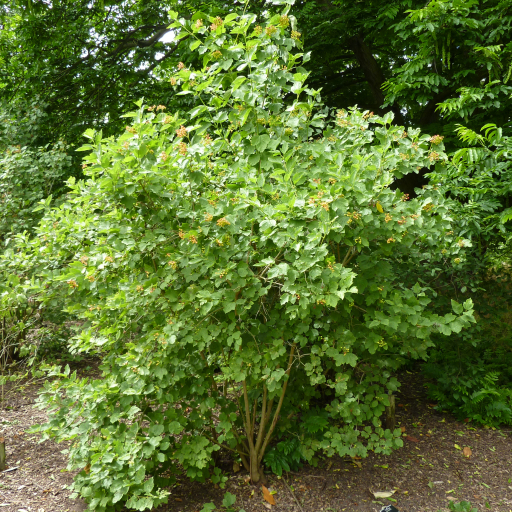
Plant Overview
Often called the "Sargent Cranberrybush," this Asian beauty is a more refined and elegant cousin to the common European viburnum. It is a master of seasonal transformation, shifting from maroon-tinted spring foliage to snowy "lacecap" blooms, and finishing with a dramatic display of translucent red berries. In its native East Asian woodlands, it has long been cherished for its hardiness and its ability to provide structural beauty in even the coldest climates.
🔍 How to Identify
- 🍃 Maple-Like Foliage: The leaves are distinctly three-lobed, mimicking the shape of a maple leaf, and often emerge with a beautiful bronze or purple tint in early spring.
- 🌸 The "Lacecap" Bloom: It produces flat-topped flower clusters where tiny, fertile flowers in the center are surrounded by a halo of larger, showy, white sterile petals.
- 🔴 Glossy Berries: In late summer, the shrub produces heavy clusters of bright red, translucent fruits that look like miniature jewels against the dark green leaves.
🏡 In Your Garden
- 🦋 A Pollinator's Runway: The wide, flat flower clusters act as perfect landing pads for butterflies and hoverflies, making this shrub a bustling hub of activity during the late spring.
- 🌬️ Cold-Weather Warrior: This plant is exceptionally hardy and actually prefers a "chill" period; it thrives in areas with cold winters and is resistant to many of the pests that plague other ornamental shrubs.
⚠️ Safety & Toxicity
- 🐾 Mildly Toxic to Pets: While the berries are a favorite for wild birds, they contain polyphenols that can cause mild stomach upset, vomiting, or lethargy in dogs and cats if ingested in large amounts.
- 👄 Human Consumption: The berries are technically edible for humans but are extremely bitter and acidic when raw. They are generally only consumed after being cooked and heavily sweetened (like in jellies), as raw ingestion can cause nausea.
✨ Fun Fact
The variety known as 'Onondaga' is famous in the gardening world because its inner fertile flowers are a striking maroon-purple, creating a high-contrast "bullseye" effect that is unique among viburnums!

Detailed Care Instructions
To grow Viburnum sargentii, you can follow these steps:
- Choose a suitable location: Viburnum sargentii prefers full sun or partial shade. It can tolerate a wide range of soil conditions, but well-draining soil is ideal.
- Prepare the soil: Before planting, amend the soil with organic matter to improve drainage and fertility. Remove any weeds or grass from the planting area.
- Dig a hole: Dig a hole that is slightly larger and deeper than the root ball of the plant. Mix in some compost or well-rotted manure with the backfill soil.
- Plant the shrub: Place the plant in the center of the hole and backfill with soil mixture gently, making sure the root flare is at soil level. Tamp the soil lightly around the base of the plant.
- Water thoroughly: After planting, water the shrub thoroughly to settle the soil and eliminate any air pockets. Keep the soil consistently moist during the establishment period.
- Mulch: Apply a layer of organic mulch around the base of the plant, leaving a gap around the stem to prevent rot. Mulching helps retain moisture, control weeds, and insulate the roots.
- Pruning: Prune the Viburnum sargentii after it has finished flowering to maintain its shape and remove any dead, damaged, or crossing branches. This will also encourage new growth and better flowering.
- Fertilize: In early spring, apply a slow-release balanced fertilizer according to the package instructions. This will provide essential nutrients for healthy growth.
- Watering and maintenance: Keep the soil evenly moist, especially during dry spells. Water deeply but infrequently rather than frequent shallow watering. Regularly monitor the plant for pests or diseases and take appropriate measures to control them.
By following these steps, you can successfully grow Viburnum sargentii and enjoy its beautiful flowers and foliage.

Place in a bright room that is sun drenched almost all day. Or directly in a south-facing window.

To water this plant, you should ensure that the soil remains consistently moist but not waterlogged. It is important to water deeply, allowing the water to penetrate the root zone. Overhead watering should be avoided, and the plant should be watered at the base to prevent the foliage from getting wet and potentially developing diseases. The frequency of watering will depend on the climate, with more water required in hot and dry conditions. It is advisable to avoid watering during the hottest times of the day, instead choosing to water in the morning or evening to avoid excessive evaporation.
To fertilize this plant, apply a slow-release fertilizer in early spring just as new growth begins. Use a fertilizer with a ratio of 10-10-10 or 12-12-12. Apply the fertilizer evenly over the soil around the base of the plant, avoiding direct contact with the trunk or stems. Water the plant immediately after applying fertilizer to help distribute the nutrients and prevent burning. Repeat the application once or twice during the growing season, following the instructions on the fertilizer label for dosage and timing. Avoid fertilizing in late summer or fall, as this can promote soft growth that is more susceptible to winter damage.
It is recommended to use a well-draining soil mixture that is rich in organic matter, such as compost or aged manure, for the Viburnum Sargentii plant. The soil pH should be slightly acidic to neutral, ranging between 5.5 and 7.0. The plant prefers moist soil conditions, but not overly saturated. It is important to ensure that the soil has good drainage to prevent waterlogged conditions, which can lead to root rot. A mixture of sand, peat moss, and perlite can also be added to the soil to improve drainage. The plant prefers full sunlight to partial shade, so it is important to choose a planting location that receives adequate sunlight.
Viburnum Sargentii is a popular ornamental plant that can be propagated through several methods including seeds, stem cuttings, and layering. Here's a brief overview of each method.
- Seed propagation: Collect the seeds from the plant when they are ripe, typically in the fall. Clean the seeds and soak them in water for a day. Then, plant the seeds in a well-draining soil mix and keep it moist until germination, which can take several weeks. Transplant the seedlings to larger pots or in the garden once they are big enough.
- Stem cutting propagation: Take a cutting from the plant in late spring or early summer, making sure to include at least one or two nodes. Dip the cut end in rooting hormone and plant it in a well-draining soil mix. Keep the cutting moist and in a warm, brightly lit location until rooted, which can take several weeks. Once rooted, transplant the cutting to a larger pot or in the garden.
- Layering propagation: In early spring, select a healthy, low-growing branch and bend it down to the ground. Scratch the branch's underside where it will come in contact with the soil. Cover the scratched section with soil, and hold it in place with a stone or wire. Keep the soil moist and wait for roots to form, which can take several months. Once rooted, cut the branch from the parent plant and transplant it to its new location.
Overall, while each propagation method has its own unique advantages, stem cutting propagation is often considered the easiest and most reliable method to propagate Viburnum Sargentii.








