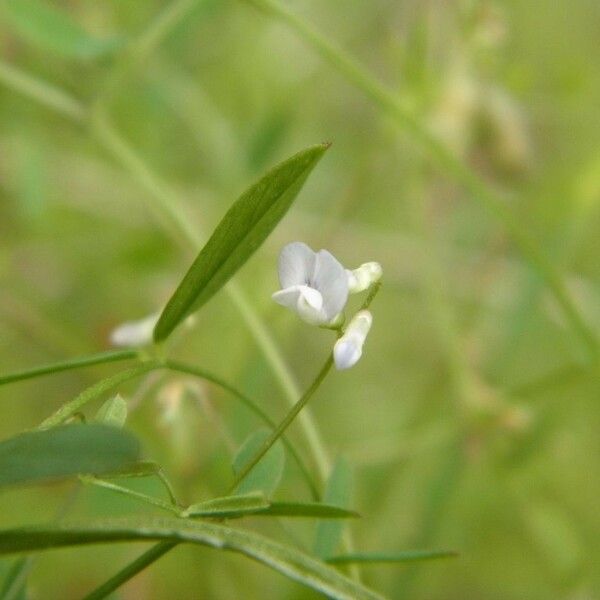
Plant Overview
Often called the Sand Vetch or Fourleaf Vetch, Vicia acutifolia is a delicate, scrambling beauty native to the coastal plains and wetlands of the Southeastern United States. It behaves like a quiet wanderer, using tiny, thread-like fingers to climb over grasses and shrubs in its hunt for sunlight. Unlike some of its more aggressive cousins, this vetch adds a touch of airy elegance to wild landscapes and damp pine woods.
🔍 How to Identify
- 🍃 Sharp Foliage: The name acutifolia literally means "sharp-leaved." You can identify it by its very narrow, needle-thin leaflets that grow in pairs along a central stalk.
- 🌸 Pea-Like Blooms: It produces small, drooping clusters of flowers that look like miniature bonnets, typically shaded in pale lavender, soft blue, or occasionally white.
- 🧶 Climbing Tendrils: Look at the very tips of the leaves—you’ll find branched, curly tendrils that act like grappling hooks, allowing the plant to "hitchhike" up nearby vegetation.
🏡 In Your Garden
- 🌊 Wetland Preferences: This isn't your average dry-land weed; it thrives in moist, sandy soils. If you are trying to establish it, remember it prefers "wet feet" and is often found naturally near marshes or damp pinelands.
- 🛠️ Soil Architect: As a member of the legume family, it is a natural fertilizer. It works with underground bacteria to "fix" nitrogen from the air into the soil, improving the ground for any plants that follow it.
⚠️ Safety & Toxicity
- 🐾 Mildly Toxic: Like many members of the Vicia genus, the seeds and foliage can contain cyanogenic glycosides and other compounds that are harmful if eaten in large quantities.
- 👶 Keep Away from Pets/Kids: While it isn't considered "deadly" in small accidental amounts, it can cause digestive distress or more serious neurological issues in livestock and household pets if grazed upon.
✨ Fun Fact
Sand Vetch has a "secret handshake" with insects! It possesses extrafloral nectaries—tiny glands on the plant that produce nectar outside of the flower. These glands attract ants, which act as a private security force, protecting the vetch from hungrier, more destructive pests.

Detailed Care Instructions
To grow Vicia Acutifolia (commonly known as the sharp-pod vetch) plant, follow these steps:
- Choose a suitable location: Vicia Acutifolia prefers full sun to partial shade and thrives in well-draining soil. Ensure the location you choose has these conditions.
- Prepare the soil: Clear the area of any weeds or debris. Loosen the soil by tilling or digging it to a depth of about 6 inches. Add organic matter, such as compost or well-rotted manure, to improve soil fertility.
- Sow the seeds: Vicia Acutifolia is usually grown from seeds. Plant the seeds directly into the prepared soil, spacing them about 2 inches apart. Sow the seeds at a depth of about 1 inch and cover lightly with soil.
- Water regularly: Keep the soil consistently moist but not waterlogged. Water the plants deeply whenever the top inch of soil starts to dry out. Avoid overwatering as it may lead to root rot.
- Provide support: Vicia Acutifolia is a climbing vine that requires support to grow vertically. Install trellises or other types of support structures to help the plant climb.
- Monitor for pests and diseases: Regularly inspect the plant for any signs of pests, such as aphids or caterpillars, and diseases like powdery mildew. Treat as necessary using appropriate organic pest control methods or fungicides.
- Fertilize as needed: Vicia Acutifolia generally does not require heavy fertilization, especially if the soil was amended with organic matter before planting. However, if you notice slow growth or pale foliage, you can apply a balanced organic fertilizer following the manufacturer's instructions.
- Harvesting: Vicia Acutifolia is primarily grown as a cover crop or forage crop. It produces small, bean-like seeds that can be harvested when they are fully matured and dry. Allow the pods to dry on the plants, then remove them and collect the seeds.
Following these steps should help you successfully grow Vicia Acutifolia. Remember to adapt the care to your specific climate and growing conditions.

Place in a bright room that is sun drenched almost all day. Or directly in a south-facing window.

Vicia Acutifolia is a plant that requires adequate watering for its optimal growth and development. When watering the plant, it is important to ensure that you do not overwater or underwater it, as either condition may lead to stunted growth or even death of the plant.
To water Vicia Acutifolia, you should first assess the soil moisture level. The soil should feel slightly damp to the touch, but not waterlogged. You can check the soil moisture level by inserting your finger about an inch deep into the soil. If it feels dry, then it is time to water the plant.
When watering, use a watering can or hose with a gentle spray nozzle to avoid displacing soil or damaging the plant. Direct the water to the base of the plant, rather than the leaves or flowers, to ensure that the root system receives the water. Water the plant until the soil feels moist, but not saturated.
It is important to note that the watering frequency of Vicia Acutifolia will depend on various factors, such as the climate, temperature, and humidity of the surrounding environment. In hot, dry climates, the plant may require more frequent watering than in cooler, more humid climates. Additionally, during periods of active growth, such as in the spring and summer, the plant may require more water than in the fall or winter when it is dormant.
To ensure the best watering schedule for your Vicia Acutifolia, check the soil moisture level regularly and adjust the watering frequency accordingly. With proper watering, your Vicia Acutifolia plant will thrive and produce a bountiful harvest.
To fertilize a plant of the Vicia Acutifolia species, begin by ensuring the soil is well-draining and moist. Apply a balanced, slow-release fertilizer at the start of the growing season, and then again halfway through the season. Avoid over-fertilizing, as it can lead to excessive foliage growth and reduced flowering. Water thoroughly after fertilizing to maximize nutrient uptake.
The ideal type of soil for Vicia Acutifolia is well-draining and rich in organic matter. It should have a slightly acidic to neutral pH level, preferably between 6.0 to 7.0. This plant prefers soil that is not compact and allows for adequate root growth. Additionally, the soil should not be too dry or too wet, as this can damage the roots. It is recommended to mix in compost or other organic matter into the soil before planting to provide the plant with the necessary nutrients for healthy growth. Overall, the soil should be of good quality and provide sufficient drainage and aeration for the Vicia Acutifolia plant.
To propagate this plant, one can start by collecting its seeds from mature pods. The seeds should be thoroughly cleaned and soaked in water for a few hours prior to sowing. The soil mixture used for sowing should be well-draining, nutrient-rich and moist.
Once the seeds are sown, cover them with a thin layer of soil and keep the soil moist by watering it regularly. It is advisable to keep the pot or tray of newly sown seeds in a warm, bright and humid location until germination.
Once the seedlings begin to grow, they can be transplanted into larger pots or directly into the ground, provided the soil is well-draining. It is important to add organic matter or compost to the soil to provide the young plants with sufficient nutrients.
To promote healthy growth and prevent pests and diseases, the plants should be watered regularly, pruned and fertilized periodically. Overwatering should be avoided as it can lead to root rot.








