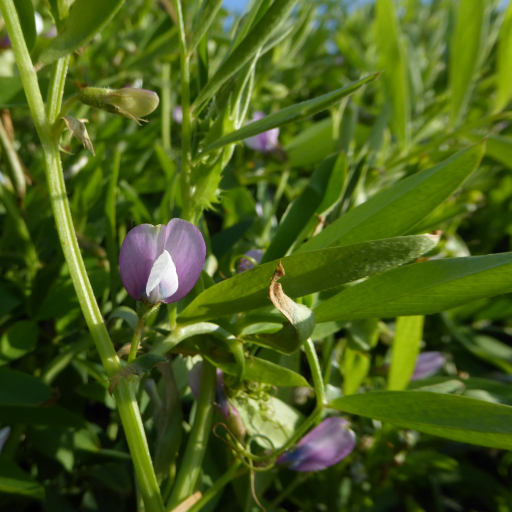
Plant Overview
Commonly known as the Bithynian Vetch, this delicate climber is a hidden gem often found scrambling through coastal scrublands and hedgerows. A member of the pea family (Fabaceae), it carries the name of the ancient region of Bithynia, hinting at its deep roots in the Mediterranean and Western Asia. It is a master of "hitchhiking," using its curly tendrils to lift its beautiful bicolor blooms toward the sun.
🔍 How to Identify
- 🌸 Bicolor Blooms: The flowers are the primary giveaway; they feature a striking contrast with purple or mauve upper petals (the "standard") and creamy white lower petals (the "wings").
- 🍃 Leaf Structure: Unlike many other vetches that have numerous leaflets, this species typically only has two pairs of oval-to-lance-shaped leaflets per leaf.
- 🦷 Toothed Stipules: At the base of the leaf stalks, you will find large, leaf-like structures called stipules that are noticeably jagged or toothed, which distinguishes it from its smoother cousins.
- 🧶 Climbing Tendrils: Look for thin, wiry tendrils at the tips of the leaves that wrap tightly around nearby grasses or twigs for support.
🏡 In Your Garden
- 🌱 The Nitrogen Fixer: As a legume, the Bithynian Vetch has a symbiotic relationship with soil bacteria. It "fixes" nitrogen from the air into the soil, making it a fantastic natural fertilizer for neighboring plants.
- ☀️ Preferential Placement: It thrives in well-drained, slightly alkaline soils and loves a sunny spot. It isn't a fan of being moved once established, as its root system is somewhat delicate, so choose its home carefully.
⚠️ Safety & Toxicity
- 🐾 Mild Toxicity: While not as dangerous as some nightshades, the seeds of many Vicia species contain compounds that can cause digestive upset if eaten in large quantities.
- 👶 Keep Away from Kids: The seed pods look very similar to edible garden peas, which can be tempting for children. It is best to admire this plant visually rather than culinarily.
✨ Fun Fact
🐝 The Bee’s Secret: The Bithynian Vetch has a "tripping" mechanism in its flowers. Only heavy-bodied insects, like bumblebees, are strong enough to land on the petals and trigger the release of the pollen, ensuring that only the most efficient pollinators get the nectar reward!

Detailed Care Instructions
To grow Vicia bithynica, also known as Bithynian vetch, you can follow these steps:
- Obtain seeds: Vicia bithynica seeds can be obtained from seed banks, nurseries, or online stores specializing in rare or native plants.
- Choose a suitable planting location: Bithynian vetch prefers full sun to partial shade and well-draining soil. Ensure the planting area has enough space to allow the vines to spread.
- Prepare the soil: Before planting, prepare the soil by removing any weeds or grass and loosen it up using a fork or spade. Adding organic matter, such as compost or well-rotted manure, can also improve the soil quality.
- Plant the seeds: Sow the Vicia bithynica seeds directly into the prepared soil. The optimal time for planting can vary depending on your location, but generally, it is done in spring or early summer. Bury the seeds about 1-2 inches deep and space them according to the packet instructions, usually around 6-8 inches apart.
- Watering: Keep the soil consistently moist but not waterlogged. Water the seeds immediately after planting and continue to provide regular watering until the plants are established.
- Provide support: Vicia bithynica is a climbing plant that requires support as it grows. Install trellises, staking, or other support systems to guide the vines as they grow.
- Mulching: Applying a layer of mulch around the base of the plants can help retain soil moisture and suppress weeds. Organic mulch, such as straw or wood chips, is recommended.
- Maintenance: Regularly monitor the plants for any signs of pests or diseases. Remove any weeds that may compete with the vetch plants for nutrients and water.
- Harvesting: Depending on your purpose, you can harvest the seeds or use the plant as a forage crop for livestock. The seeds typically mature in late summer or early fall, as they turn brown and harden.
Remember, Vicia bithynica is native to specific regions, so consider your local climate and ensure it is suitable for this plant before starting your cultivation.

Place in a bright room that is sun drenched almost all day. Or directly in a south-facing window.

If you want to water a plant that belongs to the Vicia Bithynica species, make sure to first check the soil moisture level before watering. Stick your finger about an inch into the soil and see if it feels dry to the touch. If the soil is dry, it's time to water the plant.
When watering, avoid getting the foliage wet as this can lead to disease and mold growth. Instead, water the soil directly around the base of the plant.
Water the plant slowly and deeply to allow the moisture to reach the roots. Stop watering once you see water flowing out of the drainage hole in the bottom of the pot. Avoid letting the plant sit in standing water as this can cause root rot.
The frequency of watering will depend on various factors such as the weather, humidity levels, and size of the plant. It's best to water the plant when the soil feels slightly dry to the touch, rather than on a set schedule.
In general, Vicia Bithynica plants prefer evenly moist soil but can tolerate short periods of drought. Overwatering can be just as harmful as underwatering, so pay close attention to the moisture level of the soil.
To properly fertilize this plant, it is recommended to use a balanced fertilizer with equal amounts of nitrogen, phosphorus, and potassium. Apply the fertilizer in the soil around the base of the plant, taking care not to get any on the leaves or stem. It is recommended to fertilize this plant every 2-3 weeks during the growing season, usually from early spring until late summer. Be sure to follow the manufacturer's instructions on the fertilizer packaging for proper dosage and application. Regular fertilization will help the plant to grow strongly and produce healthy foliage and blooms.
The ideal soil for Vicia Bithynica plant growth is a well-drained loamy soil that is rich in organic matter. The soil should have a pH range of 6.0 to 7.5, which is slightly acidic to slightly alkaline. It should have a high water-holding capacity and good fertility. The ideal soil should also be free from rocks, roots, and other debris that may hinder root growth. Adequate soil moisture is necessary for proper plant growth and development. The plant prefers moderate fertility and does not tolerate high levels of salt. The soil should be moderately compacted to provide adequate support for the plant. The plant can grow in a range of soil types such as clay, sandy, and loam soils, but it does best in well-drained, loamy soils.
To propagate this plant, start by collecting seeds from the mature pods. Ensure that the seeds are dry and have turned brown before harvesting. Store the seeds in a cool, dry place until you are ready to plant them.
Prepare a planting pot by filling it with a well-draining potting mix. Sow the seeds in the soil at a depth of around three times the size of the seed. Water the soil lightly and cover the pot with a plastic wrap to maintain a moist and warm environment. Place the pot in a bright location but away from direct sunlight.
After around 7-10 days, the seeds should begin to germinate. Remove the plastic wrap and continue to water the seedlings lightly as needed.
Once the seedlings have developed a few true leaves, they can be transplanted into larger pots or directly into a garden bed. Ensure that the planting location receives full sun to partial shade and has well-draining soil.
To propagate Vicia bithynica through cuttings, take a stem cutting from a healthy, mature plant. Remove the lower leaves and dip the cut end into rooting hormone. Plant the cutting in a small pot filled with well-draining potting mix and water it lightly. Cover the pot with a plastic wrap to maintain a high humidity environment. The cutting should root in around 2-3 weeks, and can then be transplanted into a larger pot or garden bed.








