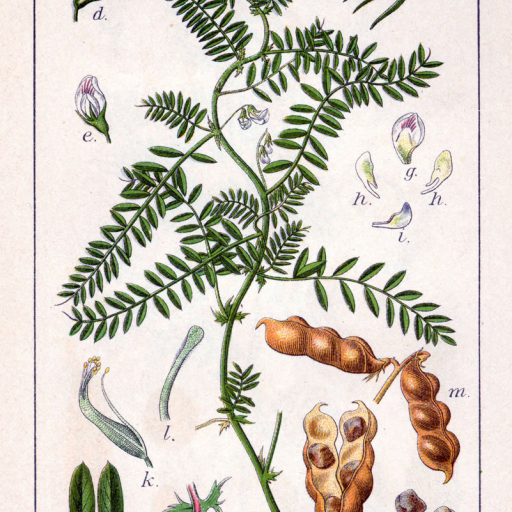
Plant Overview
Known as the "Bitter Vetch," Vicia ervilia is an ancient legume that whispers stories of the very dawn of agriculture. While it has largely faded from the modern human dinner plate, it remains a legendary "founder crop" that helped sustain some of the earliest civilizations in the Mediterranean and Near East.
🔍 How to Identify
- 🌿 The Foliage: It features delicate, feathery (pinnate) leaves arranged in pairs along a central stem. Unlike many of its cousins, its tendrils are often short or even absent, giving it a more upright, bushy appearance compared to climbing peas.
- 🌸 The Flowers: Look for small, butterfly-shaped blossoms that are typically white or a very pale lavender, often decorated with fine, violet-colored veins.
- 🫛 The Pods: The seed pods are distinctive; they are narrow and constricted between each seed, giving them a "beaded" or "knobby" look rather than being smooth and flat.
🏡 In Your Garden
- 🧪 Nitrogen Powerhouse: This plant is a natural fertilizer. It forms a symbiotic relationship with soil bacteria to "fix" nitrogen from the air into the ground, making it an excellent "green manure" for hobbyists looking to naturally enrich their vegetable patches.
- ☀️ Drought Warrior: Bitter Vetch is incredibly hardy. It thrives in poor, shallow, or alkaline soils where other plants might struggle, and it requires very little water once established, making it a great candidate for low-maintenance or rockier garden spots.
⚠️ Safety & Toxicity
- 👅 The Bitter Truth: As the name suggests, the seeds are incredibly bitter. This is nature's way of warning you that they contain anti-nutritional factors and neurotoxins (like canavanine).
- 🚫 Preparation Required: While historically eaten by humans during famines, the seeds are toxic if consumed raw. They require extensive soaking and boiling in multiple changes of water to be rendered safe.
- 🐾 Animal Safety: It is generally safe for ruminants (like sheep and goats), but it can be harmful to "single-stomach" animals like horses, pigs, and household pets if eaten in significant amounts.
✨ Fun Fact
Vicia ervilia is considered one of the "Eight Founder Crops" of the Neolithic period. This means it was one of the very first plants humans ever learned to domesticate, right alongside wheat, barley, and lentils!

Detailed Care Instructions
To grow Vicia Ervilia plant (also known as bitter vetch or camel vetch), follow these steps:
- Climate and soil: Vicia Ervilia plants thrive in areas with a cool Mediterranean climate. They prefer well-drained soil, ideally with a pH of 6.0-7.5. If the soil is heavy clay, add organic matter or sand to improve drainage.
- Seed selection: Choose high-quality seeds from a reputable supplier. Ensure they are clean and free of diseases.
- Timing: Sow the seeds in early spring or late summer when the soil temperature is around 50-68°F (10-20°C).
- Site preparation: Clear the planting area from weeds, rocks, and debris. Dig and loosen the soil to a depth of 8-10 inches (20-25 cm) and add compost or well-rotted manure for nutrient enrichment.
- Seeding method: Vicia Ervilia plants can be sown by broadcasting (spreading the seeds evenly over the prepared area) or by drilling (making shallow furrows and placing the seeds in rows).
- Planting depth and spacing: Sow the seeds at a depth of about 1-2 inches (2.5-5 cm). If broadcasting, aim for approximately 1/4 to 1/2 inch (0.6-1.3 cm) between seeds. For drilling, space rows about 6-10 inches (15-25 cm) apart.
- Watering: Keep the soil consistently moist during the germination period, which usually takes around 1-3 weeks. After that, water regularly, ensuring the soil doesn't dry out completely between waterings.
- Fertilizer: Although Vicia Ervilia plants can fix nitrogen from the air through their root nodules, providing a balanced fertilizer during their growth can enhance their overall vigor. Apply a slow-release organic fertilizer or a balanced granular fertilizer based on soil test recommendations.
- Weed control: Regularly weed the area around the plants to suppress competition and allow them to thrive without competition for nutrients and sunlight.
- Pests and diseases: Monitor the plants for any signs of pests or diseases and take appropriate action if necessary. Common issues include aphids, leaf miners, and fungal diseases like powdery mildew. Consult a local agricultural extension service for guidance on specific pests and diseases in your area.
- Harvesting: Vicia Ervilia plants are typically harvested for their seeds. Harvest when the pods turn brown and dry, indicating that the seeds are mature. Cut the plants at the base and hang them upside down to dry further. Once completely dry, thresh the pods to separate the seeds.
- Storage: Properly store the seeds in airtight containers away from moisture and pests. They can remain viable for several years if stored correctly.
Remember to adjust the specific instructions based on your local climate and conditions.

Place in a bright room that is sun drenched almost all day. Or directly in a south-facing window.

To water this plant, ensure that the soil is moist but not waterlogged. Water the plant deeply at the base, allowing the water to seep in and reach the roots. It is important to avoid getting water on the foliage, as this can encourage fungal growth. Water once a week to ensure that the plant receives enough moisture, adjusting the frequency as needed depending on the weather conditions and soil moisture levels.
For optimal growth and yield, it is recommended to apply a balanced fertilizer containing nitrogen, phosphorus, and potassium to the soil prior to planting. Once the plant reaches a height of 6-8 inches, apply a side dressing of nitrogen-rich fertilizer, such as blood meal or fish meal, to promote healthy foliage growth. Repeat this application every 4-6 weeks throughout the growing season. Avoid over-fertilization, as it can lead to excessive vegetative growth and reduced seed production. Monitor soil pH and adjust if necessary to maintain a slightly acidic (pH 6.0-6.5) growing environment.
The ideal soil for Vicia Ervilia is a well-draining soil with adequate moisture retention capacity and a neutral to slightly alkaline pH level. The soil should be rich in organic matter and have a balanced nutrient content, with emphasis on phosphorus and potassium. It is also important to ensure that the soil is free of any pests or diseases that may affect the plant's growth and development. The soil should be prepared by tilling and amending with compost or other organic matter before planting. Adequate drainage should be ensured to prevent waterlogging or water stress. Additionally, regular soil testing can help maintain the correct balance of nutrients and pH levels for optimal growth.
To propagate this plant, you will need to collect mature seeds in the late summer or early fall. Once you have harvested the seeds, you can either sow them directly into the soil or start them in pots indoors. If you choose to start them indoors, plant the seeds in a pot with well-draining soil and keep them in a warm, sunny spot. Water the soil regularly and ensure that it stays moist but not waterlogged.
Once the seedlings have grown to a reasonable size, you can transplant them outside in a sunny location with well-draining soil. Make sure to space the plants at least two feet apart to allow for their growth and development. Water the plants regularly and fertilize them with a nitrogen-rich fertilizer to encourage healthy growth.
As the plants mature, they will produce pods containing the seeds for the next generation. To harvest the seeds, wait until the pods have turned brown and dry. Then, remove the pods from the plant and allow them to dry completely before threshing the seeds from the pods.
Repeat this process each year to ensure a consistent supply of Vicia Ervilia plants in your garden.








