Plant Overview
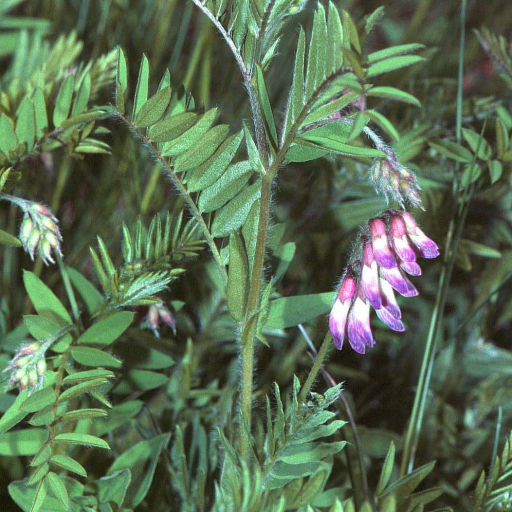
Known as the Wood Bitter-vetch, this rare and charming member of the pea family is a true Atlantic soul. Unlike many of its "climbing" cousins that use curly tendrils to hitchhike onto other plants, Vicia orobus is a sturdy, self-supporting beauty that grows in elegant, bushy clumps. It is often seen as a relic of ancient, undisturbed landscapes, decorating the rocky edges of woodlands and high-altitude pastures with its delicate, painted blossoms.
🔍 How to Identify
- 🌿 The Leaves: Features 6 to 15 pairs of narrow, oval leaflets along a central stem. Crucially, the tip of the leaf lacks the "curly tendril" found on most other vetches, giving it a neater, shrub-like appearance.
- 🌸 The Flowers: Elegant, pea-like blooms that are creamy white or pale mauve. If you look closely, you’ll see intricate, dark purple veins etched into the petals, looking much like a hand-painted botanical illustration.
- 🏗️ Growth Habit: Unlike sprawling wild peas, this plant stands upright. It forms a dense, rounded mound that can reach about 60cm in height, making it easy to spot in a crowded meadow.
🏡 In Your Garden
- 🐝 Pollinator Magnet: If you are lucky enough to have this in a wilder corner of your garden, expect a parade of visitors. It is a high-value nectar source specifically for long-tongued bumblebees, who are the only ones strong enough to prize open its petals.
- ⛰️ Specific Needs: This isn't a "plug and play" garden plant. It thrives in "unimproved" soil—meaning soil that hasn't been treated with modern fertilizers. It prefers cool, damp, and slightly acidic conditions, mimicking its home in the rocky hillsides of Western Europe.
⚠️ Safety & Toxicity
- 🐾 Mildly Toxic: Generally considered safe to touch, but like many members of the Vicia genus, the seeds and foliage should not be eaten.
- 🤢 The Risk: Ingestion by pets or humans can lead to digestive upset or "favism-like" symptoms in sensitive individuals due to natural compounds (cyanogenic glycosides) the plant uses to defend itself from herbivores.
✨ Fun Fact
Vicia orobus is often called an "indicator species." Finding it in the wild is like discovering a historical treasure; its presence usually means the land has remained a traditional hay meadow or pasture for centuries without ever being touched by a plow!

Detailed Care Instructions

Place in a bright room that is sun drenched almost all day. Or directly in a south-facing window.

Some plants require more regular watering than others, which should be done every few days. It's critical to maintain the soil moist all of the time. The water requirements of the same plant placed in pots with varying sizes will differ. Because the water in the smaller pot evaporates faster than the water in the larger pot, it will require more watering. Regardless of pot size, the surface should constantly be maintained moist.








