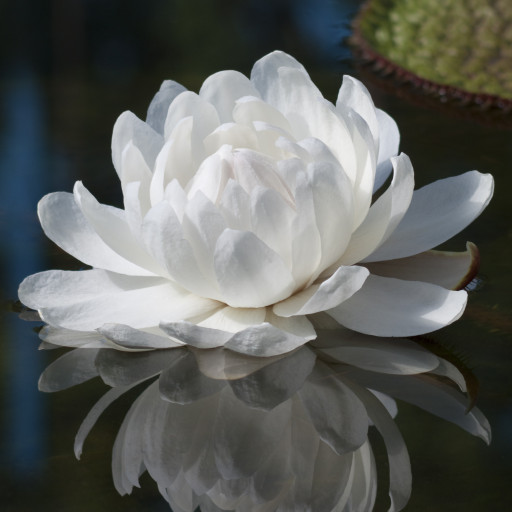
Plant Overview
Known as the "Queen of the Water Lilies," Victoria amazonica is a botanical marvel of the Amazon River basin. Named to honor Queen Victoria shortly after its discovery by Europeans, this plant is famous for its gargantuan, platter-like leaves that can span up to 10 feet in diameter. It is a master of structural engineering, using a complex network of air-filled ribs to stay afloat in the murky, slow-moving waters of its native home.
🔍 How to Identify
- 🟢 The "Water Platter": Circular, massive leaves with high, upturned rims (often 2–6 inches tall) that prevent water from washing over the surface.
- 🌸 Metamorphic Blooms: Enormous flowers that open at night. They begin as a pure, creamy white with a pineapple scent and transform into a deep rosy pink by the second evening.
- ⚔️ Spiny Armor: While the top of the leaf is smooth, the undersides and the long submerged stalks are covered in sharp, formidable thorns to deter hungry aquatic animals.
🏡 In Your Garden
- 🌊 Space & Depth: This is not a plant for a standard backyard pond. It requires a massive amount of space, deep water, and a very heavy "heavy-feeder" soil mix to support its rapid growth, which can be as much as 20 inches in a single day.
- ☀️ Tropical Requirements: To thrive, it needs constant warmth (water temperatures above 75°F) and full, unobstructed sunlight. In cooler climates, it is almost exclusively grown in specialized heated conservatories or botanical glasshouses.
⚠️ Safety & Toxicity
- 🌵 Physical Hazard: The plant is not known to be chemically toxic to humans or pets, but its spines are incredibly sharp. Handling the plant requires thick, puncture-proof gloves to avoid painful stings and skin irritation.
- 🚫 Drowning Risk: Because the leaves look like solid, floating docks, they can be tempting to children or pets. While a leaf can support weight if perfectly balanced, it is highly unstable for a moving target and can easily flip, leading to a dangerous fall into deep water.
✨ Fun Fact
The Giant Water Lily is a master manipulator of insects! It uses "thermogenesis" to heat its flower up to 18°F above the ambient air temperature. This heat spreads a fruity scent that lures beetles inside; the flower then closes, trapping the beetles overnight to ensure they are thoroughly dusted with pollen before releasing them the next evening.

Detailed Care Instructions
| Lighting | Full Sun |
| Toxicity | Non-Toxic |
| Hardiness Zones | 10A - 11 |
Growing Victoria Amazonica, also known as giant water lily or Victoria lily, can be a challenging but rewarding experience. These plants are native to the Amazon basin and require specific conditions to thrive. Here is a general guide to help you grow Victoria Amazonica:
- Climate and location:
- Victoria Amazonica requires a tropical to subtropical climate with high humidity and warm temperatures. It cannot tolerate frost or temperatures below 60°F (15°C).
- If you live in a region with colder climates, consider growing the plant indoors in a large container or greenhouse.
- Choose a location with plenty of sunlight, preferably 6-8 hours of direct sunlight per day.
- Victoria Amazonica requires a tropical to subtropical climate with high humidity and warm temperatures. It cannot tolerate frost or temperatures below 60°F (15°C).
- Planting:
- Victoria Amazonica is typically grown in large containers or ponds. If growing in a container, choose one that is at least 3-4 feet deep and wide, with good drainage.
- Fill the container or pond with a mixture of loamy soil, compost, and aquatic plant fertilizer.
- Gently place the Victoria Amazonica seeds or young plants on the soil surface. The seeds can be soaked overnight to soften the hard outer shell before planting.
- Victoria Amazonica is typically grown in large containers or ponds. If growing in a container, choose one that is at least 3-4 feet deep and wide, with good drainage.
- Water and soil conditions:
- These plants require access to clean, warm water. It is essential to maintain water temperatures between 75-87°F (24-31°C).
- The water should be around 6-8 inches deep, and the plant's leaves should float on the water surface.
- Avoid using chlorinated tap water, as it can harm the delicate roots. Rainwater or filtered water is preferable. If using tap water, let it sit for at least 24 hours to allow chlorine to evaporate.
- Maintain the water pH between 6.5 and 7.5, slightly acidic to neutral.
- Change the water regularly to prevent stagnation and the buildup of algae.
- These plants require access to clean, warm water. It is essential to maintain water temperatures between 75-87°F (24-31°C).
- Nutrients and fertilization:
- Victoria Amazonica requires nutrient-rich soil to thrive. Add aquatic plant fertilizer according to the manufacturer's instructions.
- Liquid fertilizer or slow-release fertilizers can be added to the water periodically to provide additional nutrients.
- Victoria Amazonica requires nutrient-rich soil to thrive. Add aquatic plant fertilizer according to the manufacturer's instructions.
- Maintenance:
- Keep the water temperature stable since these plants are sensitive to fluctuations. Use a pond heater or protect container plants during colder periods.
- Clean the leaves regularly to prevent the blocking of sunlight.
- Monitor for pests like snails, aphids, or fungal infections. Remove any affected leaves and use appropriate treatments if necessary.
Remember, Victoria Amazonica is a large and fast-growing plant that can cover a considerable area. Prepare for its massive leaves, which can reach up to 8 feet in diameter. With the right conditions and care, you can enjoy the stunning beauty of this fascinating plant.
- Keep the water temperature stable since these plants are sensitive to fluctuations. Use a pond heater or protect container plants during colder periods.

Place in a bright room that is sun drenched almost all day. Or directly in a south-facing window.

The plant in question requires a specific method of watering, taking care not to overwater or underwater. One approach is to ensure the soil is moist but not waterlogged, and that the plant is not sitting in standing water. It is important to monitor the soil moisture levels regularly, using a watering can or hose attachment to water the plant gently and evenly. It may be helpful to use a water meter or finger test to check the moisture levels in the soil. It is also important to consider the temperature and humidity of the environment, as the plant's water needs may vary based on these factors. Strategic placement of the plant, such as near a water source or in a location with increased humidity, may help ensure it receives adequate hydration. Overall, a careful and attentive approach to watering is crucial for the health and wellbeing of this unique plant.
This plant requires fertilization every two weeks during the growing season. Use a balanced fertilizer with equal amounts of nitrogen, phosphorus, and potassium. Use a diluted solution of the fertilizer and apply it directly to the soil around the plant. Be sure not to get the fertilizer on the foliage as it can burn the leaves. Water the plant well after fertilization to help distribute the nutrients throughout the soil. As the plant matures, reduce the frequency of fertilization to once a month during the growing season.
Victoria Amazonica requires a freshwater environment with adequate nutrients to thrive. The ideal soil for this plant is a mixture of organic and inorganic materials that can provide a nutrient-rich, well-draining environment. This type of soil will allow the plant's roots to develop adequately while also preventing waterlogging, which can cause root rot. The soil should be slightly acidic with a pH range of 5.5 to 7.0. It is recommended to use a mixture of peat moss, clay, and sand to create the ideal soil for Victoria Amazonica. This mixture will allow for proper drainage and water retention while also providing nutrients through the organic matter present in the peat moss. It is important to note that the soil should be regularly fertilized with aquatic plant fertilizer to provide the plant with the necessary nutrients for healthy growth.
To propagate this plant, collect mature seed pods that have ripened and turned brown. Remove the seeds from the pod and soak them in water for 24 hours. Then, plant the seeds in a container filled with nutrient-rich soil that is kept moist but not waterlogged. Place the container in a warm and humid indoor location with adequate light, or in a location that will receive diffused natural light. Keep the soil moist until the seeds germinate in about 2-3 weeks. Once the seedlings are established, transplant them to a larger container or a suitable outdoor location with gentle moving water. Ensure that the soil around the plant is consistently moist to encourage healthy growth and development.








