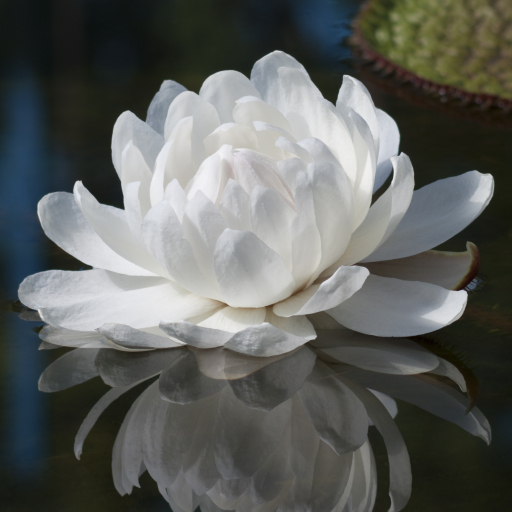
Plant Overview
The Victoria amazonica (historically known as Victoria regia) is the undisputed monarch of the water world. Named in honor of Queen Victoria, this legendary giant water lily is famous for its massive, tray-like leaves that look like they belong in a prehistoric landscape. In its native Amazon basin, these leaves can grow large enough and strong enough to support the weight of a small child, provided the weight is evenly distributed.
🔍 How to Identify
- 🍃 Colossal Pads: The most striking feature is its circular, floating leaves that can reach up to 10 feet (3 meters) in diameter, featuring distinct upturned edges that prevent overlapping.
- 🪷 Transforming Blooms: The flowers are massive—up to 12 inches across. They open as creamy white on the first night to attract beetles, then blush a deep pink or purple on the second night after pollination.
- 🛡️ Spiny Defenses: While the top of the leaf is smooth, the underside and the long stems are covered in sharp, formidable spines to protect the plant from hungry fish and manatees.
🏡 In Your Garden
- 🌊 Space Requirements: This is not a plant for a standard backyard pond. It requires an immense amount of space and very deep, nutrient-rich mud to accommodate its aggressive growth and heavy "feeding" habits.
- ☀️ Tropical Heat: As a true child of the Amazon, it demands consistent warmth. If the water temperature drops below 75°F (24°C), the plant will quickly languish. It thrives in full, intense sun which fuels its rapid leaf production.
- 🏗️ Structural Engineering: The underside of the leaves features a complex network of air-filled ribs. This geometric structural support is what gives the leaf its incredible buoyancy and strength.
⚠️ Safety & Toxicity
- ✅ General Safety: The plant is generally considered non-toxic to humans and pets. In some cultures, the seeds are even ground into flour or popped like corn.
- 🌵 Physical Hazard: The primary danger is the underside of the leaves and the stalks, which are heavily armed with sharp thorns. Always wear thick pond gloves if you need to manage or prune the plant to avoid painful punctures.
✨ Fun Fact
The Victoria amazonica has a fascinating "kidnapping" strategy for pollination. When the white flower opens at night, it releases a pineapple-like scent and generates heat (thermogenesis) to lure beetles inside. It then closes, trapping the beetles for 24 hours to ensure they are covered in pollen before turning pink and releasing them the following evening!

Detailed Care Instructions
To grow Victoria Regia plants, also known as giant water lilies, you will need to provide them with specific growing conditions:
- Climate: Victoria Regia plants require a tropical or subtropical climate with temperatures consistently around 70-85°F (21-29°C). They cannot tolerate frost or cold temperatures.
- Sunlight: Victoria Regia plants need plenty of sunlight to grow and thrive. Ensure they receive at least 4-6 hours of direct sunlight each day.
- Water: These plants are aquatic and require a large body of water to grow. They are commonly grown in ponds, water gardens, or large containers such as half-barrels. The water temperature should be maintained between 70-85°F (21-29°C).
- Water Depth: The water depth for Victoria Regia plants should be around 3-6 feet (1-2 meters). If growing in a container, ensure it is large enough to accommodate the plant's root system and maintain the appropriate water depth.
- Nutrients: Add organic matter or aquatic plant fertilizer to the water to provide essential nutrients for the plant's growth.
- Planting: Victoria Regia plants can be propagated from seeds or purchased as young plants. If starting from seeds, soak them in water for a couple of days until they swell before planting.
- Maintenance: Regularly check and clean the pond or container to prevent the accumulation of debris or algae. Remove any dead leaves or spent flowers to maintain the health and appearance of the plant.
- Protection: If you live in a colder climate and want to grow Victoria Regia plants outdoors, you may need to bring them indoors or provide protective coverings during the winter months.
Remember that Victoria Regia plants are known for their ability to grow large leaves, sometimes reaching up to 10 feet (3 meters) in diameter. To accommodate their size, proper growing space is essential.
It's important to note that growing Victoria Regia plants can be challenging and will require a dedicated effort to provide the right conditions for their growth. It's recommended to consult local experts or enthusiasts in your area who have successfully grown these plants for additional guidance and tips specific to your region.
The best way to water the plant is to fill up a container, such as a watering can, with water. Carefully pour the water onto the soil around the plant, making sure that the soil is thoroughly saturated but not overly soaked. It is important to avoid getting water directly on the foliage, as this can lead to fungal diseases. The plant should be watered regularly, with the frequency depending on the temperature and humidity levels of its environment. It is important to monitor the moisture level of the soil, checking for dryness and adjusting watering accordingly. Additionally, it is important to use water that is free of chemicals and contaminants, such as tap water that has been allowed to sit out for a few hours to dissipate any chlorine.
To fertilize this aquatic plant, use a well-balanced fertilizer at half the recommended strength every two weeks during the growing season. Apply the fertilizer directly to the water around the roots of the plant. Avoid over-fertilizing as it can harm the plant and the environment.
The ideal type of soil to use for a Victoria Regia plant would be a mixture of organic matter such as compost or peat moss and sandy soil. The soil should have good drainage but also retain enough moisture to keep the plant hydrated. It is important to monitor the pH level of the soil and keep it slightly acidic, between 5.5 and 6.5. The plant prefers nutrient-rich soil, so fertilizing once a month during the growing season is recommended. Additionally, adding a layer of mulch around the base of the plant can help retain moisture and maintain a consistent temperature.
One way to propagate this plant is to collect the seeds from the mature fruit. Once the fruit has turned brown and started to split open, remove the seeds and wash them carefully to remove any debris. Soak the seeds in water for a day or two to soften the hard outer layer and promote germination. Then, plant the seeds in a shallow dish of warm, moist soil and keep them in a warm, brightly lit area (but not in direct sunlight). Keep the soil moist but not waterlogged and within a few weeks, the seeds should sprout. As the plants mature, they will need to be transplanted into larger containers or ponds to give them enough space to grow. Another way to propagate this plant is through division. Dig up a mature plant and carefully cut it into pieces (with each piece having a healthy stem and root system) and replant each section in its own container or pond.








