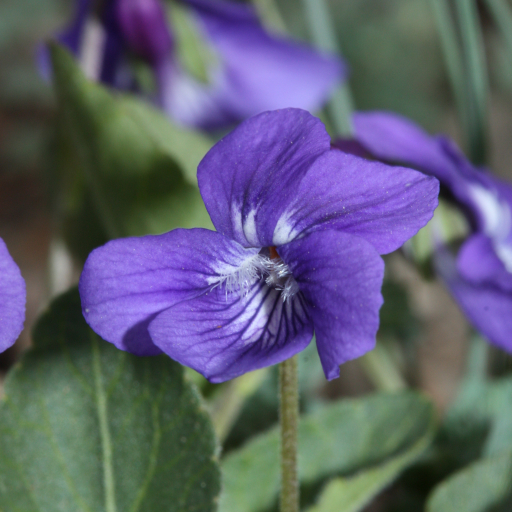
Plant Overview
Often called the Early Blue Violet or Hookedspur Violet, this hardy perennial is one of nature’s most charming early-season surprises. Native across much of North America, it frequently blankets meadows and open woodlands in a sea of deep purple as soon as the snow melts. In folklore, violets were often associated with modesty and faithfulness, but in the wild, Viola adunca is a tough survivor, clinging to rocky slopes and moist fields alike.
🔍 How to Identify
- 💜 The Bloom: Small, five-petaled flowers ranging from deep violet to sky blue. The lower petals often feature delicate white "honey guides" (veins) to lead pollinators to the center.
- 🪝 The Hooked Spur: A signature trait of this species is the long, prominent spur at the back of the flower, which often curves upward—giving it the name adunca (Latin for "hooked").
- 🍃 The Foliage: Rich green, heart-shaped (cordate) leaves with slightly scalloped or rounded edges that form a low-growing basal clump.
🏡 In Your Garden
- 🦋 A Butterfly Buffet: This violet is a critical "host plant" for several species of Fritillary butterflies. If you notice the leaves being nibbled, celebrate—you are providing a nursery for the next generation of pollinators.
- 💧 Moisture Matters: While it is surprisingly drought-tolerant once established, it prefers "cool feet." In your garden, it thrives in moist, well-drained soil and dappled sunlight, making it an excellent choice for a woodland border or a rock garden.
⚠️ Safety & Toxicity
- ✅ Generally Safe: Viola adunca is considered non-toxic and is famously edible.
- 🥗 Kitchen Use: The flowers and young leaves are often used to decorate salads or are candied for desserts. However, ensure they haven't been treated with pesticides. As a precaution, the seeds and roots should not be consumed in large quantities, as they can cause mild stomach upset.
✨ Fun Fact
Viola adunca plays a clever "insurance" game with its reproduction. Late in the summer, it produces tiny, closed flowers near the ground that never actually open. These "cleistogamous" flowers self-pollinate under the leaves, ensuring the plant produces seeds even if the spring weather was too cold for bees to visit!

Detailed Care Instructions
To grow Viola adunca, also known as the early blue violet or western dog violet, follow these steps:
- Choose a suitable location: Viola adunca grows best in partial shade to full sun. Look for an area in your garden that receives at least 4-6 hours of sunlight per day.
- Prepare the soil: The soil should be well-draining and rich in organic matter. Add compost or well-rotted manure to improve the soil's fertility and drainage.
- Sow seeds or transplant: Viola adunca can be grown from seeds or transplants. If using seeds, sow them directly into the prepared soil in early spring or fall. Press the seeds lightly into the soil without covering them completely, as they need light to germinate. If using transplants, dig a small hole and plant them at the same depth as they were in their nursery pots.
- Watering: Keep the soil consistently moist but not waterlogged. Water the plants regularly, especially during dry periods.
- Mulch: Apply a layer of organic mulch around the plants to help retain moisture and suppress weed growth. This will also protect the shallow root system of Viola adunca.
- Fertilization: These plants generally don't require heavy fertilization. If the soil is poor, you can apply a balanced, slow-release fertilizer in early spring or use compost as a natural fertilizer.
- Maintenance: Viola adunca is a relatively low-maintenance plant. Remove any weeds that may compete with the plants for nutrients and water. Deadhead the spent flowers regularly to encourage continuous blooming.
- Propagation: Viola adunca can spread through self-seeding. Allow some seed pods to mature and scatter the seeds naturally. You can also collect the seeds and sow them in desired areas. Alternatively, propagate from division by dividing the clumps in early spring.
- Winter care: Viola adunca is generally hardy and can withstand winter conditions. However, in regions with severe winters, it is advisable to apply a layer of mulch around the plants to protect the roots from frost.
By following these steps, you can successfully grow Viola adunca and enjoy its beautiful flowers in your garden.

Place in a bright room that is sun drenched almost all day. Or directly in a south-facing window.

Viola adunca is a flowering plant that belongs to the genus Viola. The best way to water this plant is to provide it with moderate moisture levels. This can be achieved by watering it thoroughly once a week or whenever the soil feels dry to the touch. Ensure that the soil around the plant is moist but not waterlogged, as excessive water can lead to root rot. It is important to avoid over-watering the plant, as this can cause the roots to suffocate. Water the plant at the base, avoiding getting water directly on the leaves or flowers. The watering frequency may vary depending on factors such as the climate, soil type, and level of sunlight the plant receives. It is advisable to monitor the soil moisture levels regularly to ensure that the plant receives adequate water and nutrients.
To fertilize the Viola Adunca plant, you should use a mild, balanced fertilizer that is high in nitrogen, phosphorus, and potassium. Apply the fertilizer in the spring when new growth begins to appear, and again in mid-summer. Be sure to water the plant thoroughly before and after fertilizing to prevent burning the roots. Follow the instructions on the fertilizer package carefully, and never exceed the recommended dosage.
When growing Viola Adunca, it is important to use well-draining soil. Soil that is too compact or holds too much moisture can cause the plant's roots to rot. A mix of sandy loam soil, peat moss, and perlite can create an ideal soil for Viola Adunca. The sandy loam provides good drainage and aeration, while the peat moss provides organic matter and helps retain moisture. The addition of perlite helps to loosen the soil and allow water to move freely through the potting mix. It is important to avoid using heavy clay soils or soils with high levels of organic matter as they can retain too much moisture and cause root rot. Amending the soil with a slow-release fertilizer can also help provide nutrients to the plant throughout the growing season.
There are several methods of propagating this plant. One way is to collect seeds from mature plants and plant them in well-draining soil. The seeds should be kept moist until they germinate, which can take several weeks. Another method is to take stem cuttings from healthy plants and root them in a rooting hormone before planting them in soil. It is also possible to divide the plant at the roots and plant new sections in separate containers or areas. It is important to ensure the plant receives adequate sunlight, water, and nutrients during the propagation process.
Common pests of the early-blue violet include Aphids, thrips, whiteflies, larvae. Make a habit of checking your early-blue violet frequently for pests so that any infestations can be caught and managed early.








