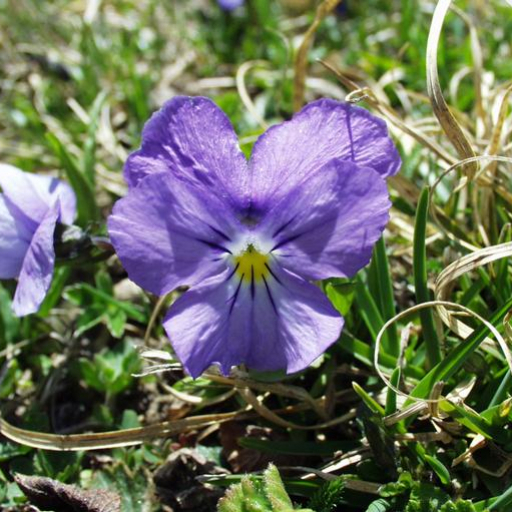
Plant Overview
Perched high in the European Alps, Viola calcarata, commonly known as the Spurred Violet, is a tiny powerhouse of color. Unlike its delicate forest cousins, this violet is a rugged mountain climber, specially adapted to survive where the air is thin and the winters are harsh. It is a favorite among hikers for its ability to transform rocky, grey slopes into vibrant carpets of purple and gold.
🔍 How to Identify
- 🌸 The Prominent Spur: Its most defining feature is the "calcar" (spur)—a long, slender nectar-filled tube extending from the back of the flower that gives the plant its name.
- 🎨 Color Variability: This species is a master of disguise; you might find a colony of deep royal purple right next to a patch of bright sulfur yellow or even pure white.
- 🍃 Low-Profile Foliage: The leaves are small, oval-to-heart-shaped, and grow in a compact rosette close to the ground to hide from biting mountain winds.
🏡 In Your Garden
- 🏔️ Rock Garden Royalty: Because it originates from alpine scree slopes, it thrives in "gritty" conditions. It requires exceptional drainage and will struggle in heavy, clay-based garden soil where its roots might suffocate.
- ❄️ The Alpine Rhythm: This plant isn't a fan of the tropics. It craves a distinct winter dormancy period and prefers cooler summer nights. If you live in a hot climate, it will need a spot with afternoon shade to prevent its delicate petals from scorching.
⚠️ Safety & Toxicity
- 🐾 Pet Safety: Violets are generally considered non-toxic to dogs and cats. However, the roots and seeds contain higher concentrations of saponins, which can cause mild vomiting if ingested in large quantities.
- 👶 Child Safety: While the flowers of many violets are technically edible and used as garnishes, it is best to discourage children from eating them to avoid confusion with other, more toxic "little blue flowers."
✨ Fun Fact
The nectar spur of Viola calcarata is so deep that only insects with very long "tongues" (proboscises), such as certain specialized butterflies and bumblebees, can reach the sweet reward hidden inside, making them the plant's exclusive pollinators!

Detailed Care Instructions
To grow Viola calcarata plants, also known as spurred violet, follow these steps:
- Choose the right location: Viola calcarata prefers partial shade to full shade, making it an excellent choice for woodland gardens or under the shade of trees. The soil should be rich, well-draining, and slightly acidic to neutral.
- Prepare the soil: Loosen the soil and remove any weeds or grass from the planting area. Add organic matter, such as compost or well-rotted manure, to improve soil fertility and drainage.
- Plant the seeds or transplants: Viola calcarata can be grown from seeds or purchased as transplants from a nursery. If starting from seeds, sow them on the surface of the soil in early spring or fall. Lightly press them down, as they require light to germinate. If using transplants, dig a hole slightly larger than the root ball and place the plant in it, covering the roots with soil.
- Water regularly: Viola calcarata prefers consistently moist soil but not waterlogged conditions. Water the plants regularly, especially during dry periods, to keep the soil evenly moist.
- Mulch: Apply a layer of organic mulch, such as wood chips or shredded leaves, around the plants to conserve moisture, suppress weeds, and regulate temperature.
- Provide shade: If the planting area receives too much sun, provide some shade to protect the plants from intense heat and drying out.
- Fertilize sparingly: Viola calcarata generally does not require heavy feeding. However, you can apply a balanced, slow-release fertilizer once or twice a year to encourage healthy growth. Follow the package instructions for application rates.
- Monitor for pests and diseases: Keep an eye out for common pests like slugs, snails, and aphids. Control these pests using organic methods like handpicking or soapy water sprays. Also, watch for signs of diseases such as powdery mildew or leaf spot. If problems occur, remove affected plant parts and, if necessary, treat with appropriate fungicides or insecticides.
- Propagate: Viola calcarata can be propagated through division. Dig up the plant in early spring or fall, gently separate the root clumps, and replant in suitable locations.
By following these steps, you can successfully grow Viola calcarata plants and enjoy their beautiful, spurred flowers in your garden.

Place in a bright room that is sun drenched almost all day. Or directly in a south-facing window.

To water this plant, it is important to first observe the soil moisture levels. This can be done by checking the topsoil and feeling for moisture with your fingers. The plant will require watering when the topsoil dries out, but before the soil becomes completely dry. When watering, it is best to use room temperature water and avoid getting water on the leaves of the plant. The water should be applied directly to the soil around the base of the plant. It is important not to overwater the plant as this can lead to root rot and other moisture-related issues. A good rule of thumb is to water deeply and then allow the soil to dry out before watering again. The frequency of watering will depend on the environmental conditions and the size of the plant. In general, it is better to underwater than overwater this type of plant.
To fertilize this particular plant, use a balanced fertilizer with an N-P-K ratio of 10-10-10. Apply the fertilizer once every two weeks during the growing season, which is typically from spring until autumn. Be sure to follow the instructions on the label for the amount of fertilizer to use based on the size of your plant. It's important not to over-fertilize, as this can lead to burns on the plant's leaves and stems.
Viola Calcarata prefers a well-draining soil that is rich in organic matter. The soil should be slightly acidic with a pH level of 5.5 to 6.5. A mixture of peat moss, pine bark, and perlite or vermiculite can be used to create a suitable soil mix. It is important to avoid soil that is heavy, wet, or clay-like as it can cause root rot and other problems. Additionally, the soil should be kept moist but not waterlogged to support healthy growth and development of the plant.
There are several ways to propagate this plant. One method is through division, which involves separating the root system into smaller sections and replanting them. This can be done in the spring or fall. Another method is through cuttings, taking a stem from the plant and rooting it in water or soil. The cuttings should be taken in the spring or early summer. Seeds can also be collected from the plant and sown in the fall or early spring. The seeds should be planted in a well-draining soil mix and kept moist until they germinate. The plant prefers moist soil and partial shade, making it a great addition to shady gardens or woodland areas.








