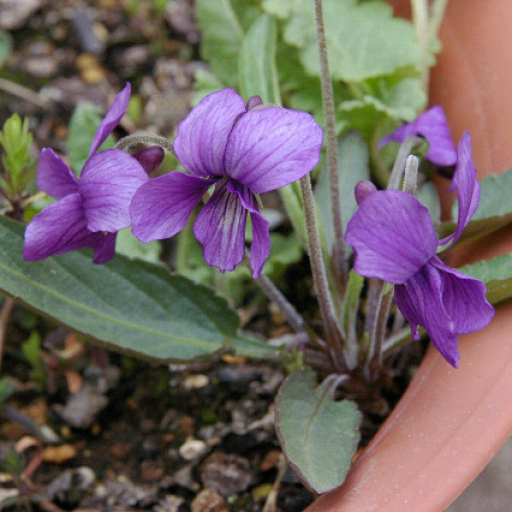
Plant Overview
Often called the "Sumire" in Japan, the Manchurian Violet is a resilient beauty that has inspired East Asian poets and artists for centuries. While it looks delicate with its deep, royal-purple petals, this little perennial is surprisingly tough, often found peeking through cracks in stone walls or sidewalks. It is a symbol of humility and sincerity, bringing a touch of "wild" elegance to any garden nook.
🔍 How to Identify
- 🌸 Deep Purple Blooms: Look for five-petaled flowers with a distinct "bearded" or fuzzy throat on the lateral petals and a long, prominent spur at the back.
- 🍃 Elongated Leaves: Unlike the common heart-shaped leaves of other violets, these are long, narrow, and lance-shaped, appearing almost like small green tongues.
- 🌱 Stemless Growth: This is a "rosulate" plant, meaning the leaves and flower stalks all emerge directly from a central underground rhizome rather than a tall main stem.
🏡 In Your Garden
- 🧱 Urban Survivor: This plant is famous for its "opportunistic" growth. It thrives in rock gardens or between paving stones, making it a perfect choice for adding life to narrow garden borders or "dead" spaces.
- ☀️ Sun Preference: While many violets hide in the deep woods, the Manchurian Violet actually enjoys a fair amount of sunlight. More sun often results in deeper, more vibrant purple pigment in the flowers.
- 💧 Drainage is Key: It hates "wet feet." Ensure your soil is gritty or well-drained, as the rhizomes are prone to rot if kept in standing water during the winter.
⚠️ Safety & Toxicity
- ✅ Generally Safe: The Manchurian Violet is widely considered non-toxic to humans. In some cultures, the flowers are even used as a colorful garnish for salads.
- 🐾 Pet Friendly: This plant is not known to be toxic to cats or dogs. However, like most garden plants, consuming large quantities of the roots or seeds may cause mild stomach upset or vomiting.
✨ Fun Fact
- 💥 The Seed Cannon: Viola mandshurica doesn’t just wait for the wind to move its offspring. When its seed pods dry out, they contract and "snap" with enough force to physically launch seeds several feet away, helping the plant colonize new territory without any help!

Detailed Care Instructions

Place in a bright room that is sun drenched almost all day. Or directly in a south-facing window.

Some plants require more regular watering than others, which should be done every few days. It's critical to maintain the soil moist all of the time. The water requirements of the same plant placed in pots with varying sizes will differ. Because the water in the smaller pot evaporates faster than the water in the larger pot, it will require more watering. Regardless of pot size, the surface should constantly be maintained moist.








