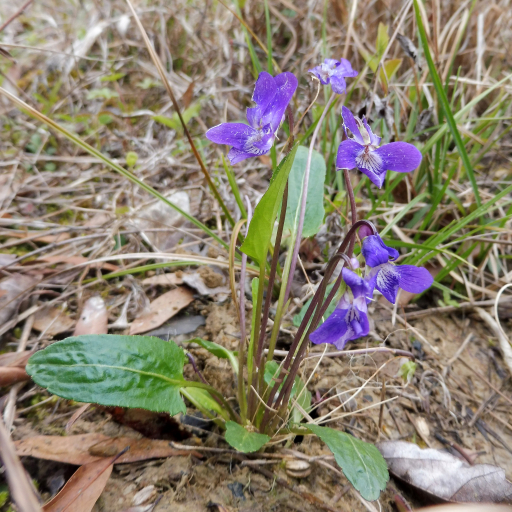
Plant Overview
Known affectionately as the "Arrow-Leaved Violet," this hardy little perennial is a sharp-dressed star of North American meadows and open woodlands. Unlike the rounded or heart-shaped leaves of its common cousins, this violet sports distinctive foliage shaped like ancient flint arrowheads. It is a quiet favorite for native plant enthusiasts who want to provide a feast for early-season pollinators.
🔍 How to Identify
- 🏹 The Foliage: The most striking feature is the leaf shape. They are elongated and "sagittate" (arrow-shaped), often with coarse teeth or lobes near the base of the leaf blade.
- 💜 The Bloom: Deep violet to pale purple flowers rise on slender stalks. If you look closely at the throat of the flower, you’ll see delicate white "nectar guides" designed to lead bees straight to the prize.
- 🌱 Growth Habit: This is a stemless violet, meaning the leaves and flower stalks emerge directly from the underground rhizome, forming a tidy, low-growing clump.
🏡 In Your Garden
- 🦋 The Butterfly Host: This plant isn't just pretty; it is an essential "nursery" for the Great Spangled Fritillary butterfly. Their caterpillars rely almost exclusively on violets like this one for food, making it a must-have for conservation-minded gardeners.
- ☀️ Sun & Soil Nuance: While many violets crave deep shade and moisture, the Arrow-Leaved Violet is quite tough. It actually prefers sunnier spots and can thrive in drier, sandier, or rockier soils where other garden plants might wither.
- 🌿 Self-Sowing Style: It spreads gently through "cleistogamous" flowers—tiny, closed flowers near the soil surface that self-pollinate and "shoot" seeds a short distance when ripe.
⚠️ Safety & Toxicity
- ✅ Pet & Human Safe: Like most true members of the Viola genus, the Arrow-Leaved Violet is considered non-toxic to dogs, cats, and humans.
- 🥗 Edible Context: While the flowers and leaves are technically edible and high in Vitamin C, always ensure they haven't been treated with lawn chemicals or pesticides before considering them for a garnish.
- 🛑 Look-alike Caution: Never consume any wild plant unless you are 100% certain of its identity, as some toxic "look-alikes" (like certain Lobelias) can grow in similar environments.
✨ Fun Fact
Violets have a "secret" backup plan. In late summer, Viola sagittata produces inconspicuous flowers that never open. These hidden flowers are self-fertile and produce plenty of seeds, ensuring the colony survives even if a late frost or hungry rabbit destroys the pretty purple spring blooms!

Detailed Care Instructions
To grow Viola sagittata, also known as Arrowleaf Violet, follow these steps:
- Obtain seeds or seedlings: You can purchase seeds or young plants from a local nursery or online. Alternatively, you can try collecting seeds from mature plants in late summer or early fall.
- Choose a suitable location: Arrowleaf Violets prefer partial shade or filtered sunlight. They can tolerate full sun in cooler regions but may require more shade in hot climates. Additionally, they thrive in well-draining soil with a pH of 6.0 to 7.5.
- Prepare the soil: Before planting, prepare the soil by removing any weeds, loosening it with a garden fork or tiller, and adding organic matter such as compost or aged manure to improve its fertility and drainage.
- Planting seeds: If starting from seeds, sprinkle them onto the soil surface and lightly press them down. Viola sagittata seeds require light to germinate, so do not cover them with soil.
- Planting seedlings: If using seedlings, make small holes in the soil with your finger or a tool, keeping each hole about 6-8 inches apart. Gently separate the seedlings and place one in each hole, ensuring that the crown is level with or slightly above the soil surface. Firmly press the soil around the roots.
- Watering: After planting, thoroughly water the soil to establish moisture and encourage root growth. Viola sagittata prefers evenly moist soil, so water regularly, especially during dry periods. Avoid overwatering, as excessive moisture could lead to root rot.
- Mulching: Apply a layer of organic mulch, such as wood chips or straw, around the base of the plants to help retain soil moisture, suppress weeds, and regulate soil temperature.
- Fertilizing: Arrowleaf Violets generally do not require much fertilization. However, you can apply a balanced fertilizer in early spring or during the growing season, following the manufacturer's instructions.
- Maintenance: Monitor the plants regularly for any signs of pests or diseases. Remove any dead or dying leaves or flowers to encourage healthy growth and prevent the spread of diseases. Divide crowded clumps every few years to maintain vigor and prevent overcrowding.
- Enjoy the blooms: Viola sagittata produces beautiful purple flowers with yellow centers from late spring to early summer. Enjoy the blooms and consider leaving some flowers to set seeds for future propagation.
Remember to check for specific regional requirements, as growing conditions may vary.

Place in a bright room that is sun drenched almost all day. Or directly in a south-facing window.

Water the plant regularly and consistently, making sure not to overwater or underwater. Check the soil every few days by sticking your finger about an inch into the soil. It should feel moist but not waterlogged. If it feels dry, it's time to water the plant. When watering, do so at the base of the plant rather than on the leaves or flowers. Use room temperature water and avoid getting water on the foliage as it can lead to fungal diseases. If the plant is in a container, make sure there are drainage holes to allow excess water to escape. If the plant is in the ground, be mindful of the soil type and drainage in the area, adjusting watering accordingly. During periods of high heat or drought, increase watering frequency as needed.
To fertilize this plant, apply a balanced slow-release fertilizer in the early spring, just as new growth begins. You can also apply a water-soluble fertilizer every two to three weeks during the growing season. Be sure to follow the fertilization instructions on the product label and avoid over-fertilizing, as it can damage the plant. Additionally, consider adding a layer of compost or mulch to the soil around the base of the plant to provide additional nutrients.
Viola Sagittata plant prefers a well-drained soil with a slightly acidic to neutral pH level. The soil should be rich in organic matter and nutrient-dense, allowing the plant to develop healthy roots and foliage. It is important to avoid using heavy, compacted soil or soil that is excessively sandy or clayey, as this can lead to poor drainage and nutrient deficiencies. Adding compost or other organic materials can help improve soil structure and fertility. The ideal soil for Viola Sagittata plant should be moist but not waterlogged, with good levels of air circulation to promote healthy root growth and prevent disease.
To propagate this plant, one can take stem cuttings in the spring or summer. The cuttings should be about 3-4 inches long and should be taken from healthy, mature stems. The bottom leaves should be removed and the stem should be dipped in rooting hormone powder. The cutting should then be planted in moist, well-draining soil and covered with a plastic bag to create a humid environment. The plant should be kept in a warm, bright location out of direct sunlight until roots start to form in 2-3 weeks. Once the roots have formed, the plant can be transplanted into a pot or into the ground.








