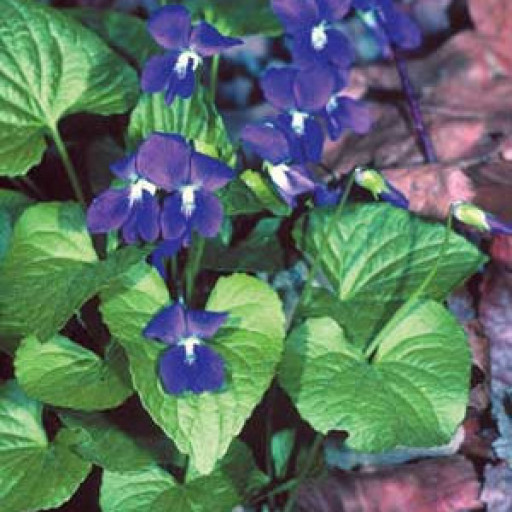
Plant Overview
The Viola sororia, affectionately known as the "Common Blue Violet" or "Meadow Violet," is the quintessential herald of spring in North American woodlands and backyards. While some perfectionist gardeners view it as a stubborn weed, this charming perennial is a powerhouse of biodiversity and a darling of traditional folklore. Its deep purple blooms have inspired poets for centuries, symbolizing modesty and faithfulness.
🔍 How to Identify
- 🍃 Heart-Shaped Foliage: The leaves are distinctively heart-shaped (cordate) with rounded teeth along the edges, typically growing in a lush rosette close to the ground.
- 💜 Velvety Blooms: The flowers feature five deep-purple petals; the lower three petals often have delicate white veins that act as "nectar guides" for visiting bees.
- 🌱 Bearded Throat: If you look closely at the center of the flower, you’ll notice tiny, fuzzy white hairs (called "auricles") that protect the nectar from rain.
🏡 In Your Garden
- 🦋 A Pollinator Powerhouse: This plant is the primary host for the larvae of Great Spangled Fritillary butterflies. By welcoming these violets into your lawn, you are providing a vital nursery for one of nature’s most beautiful insects.
- 🌑 The Shade Solution: Because they naturally grow on the forest floor, these violets are the perfect "green mulch" for shady spots where traditional grass fails. They handle moist, cool soil with ease and require almost zero maintenance once established.
- 🚀 Stealthy Spreaders: Violets are clever; they produce "secret" flowers near the soil line in late summer that never actually open. These flowers self-pollinate underground and eventually "shoot" seeds several feet away to expand their colony.
⚠️ Safety & Toxicity
- 🥗 Safe & Edible: Viola sororia is non-toxic to humans. In fact, both the flowers and young leaves are edible and exceptionally high in Vitamins A and C. They are often used to decorate salads or steeped into vibrant purple syrups.
- 🐾 Pet Friendly: These plants are generally considered non-toxic to dogs and cats. However, as with any plant, if a pet consumes a large amount of foliage, they may experience mild stomach upset.
✨ Fun Fact
Common Blue Violets are the "magicians" of the chemistry world. Their flowers contain anthocyanins, which act as a natural pH indicator. If you make a blue violet tea and add a drop of lemon juice (acid), the liquid will instantly turn a bright, vivid pink!

Detailed Care Instructions
| Humidity | Normal |
| Invasive | Weed |
| Lighting | Part Sun |
| Difficulty | Easy |
| Hibernation | Cold Period |
| Temperature | 5°C - 25°C |
| Hardiness Zones | Min 7A |
To grow Viola sororia (commonly known as the blue violet), follow these steps:
- Choose a suitable location: Viola sororia prefers partial shade to full shade, although it can tolerate some sunlight. Make sure the area gets some direct sunlight in the morning or late afternoon.
- Prepare the soil: The plant thrives in well-draining, rich, moist soil. Amend the soil with organic matter, such as compost, to improve moisture retention and fertility.
- Sow seeds or transplant: Viola sororia can be grown from seeds or transplants. If starting from seeds, sow them in early spring or fall directly into the prepared soil. Transplants can be planted at any time during the growing season, ensuring they are adequately watered.
- Watering: Keep the soil consistently moist but avoid overwatering, as this can lead to root rot. Water deeply whenever the top inch of soil feels dry.
- Mulch: Apply a layer of organic mulch, such as bark chips or straw, around the plant to conserve moisture, suppress weeds, and provide insulation. Ensure the mulch is not directly in contact with the stems to prevent rot.
- Fertilization: Viola sororia generally does not require heavy fertilization. If the soil is lacking nutrients, apply a balanced, slow-release fertilizer in early spring.
- Pruning: Trim the plant after it has finished blooming to maintain a compact shape and encourage new growth. Remove any dead or damaged foliage.
- Pest and disease control: Viola sororia is relatively resistant to pests and diseases. However, keep an eye out for slugs, snails, aphids, and fungal diseases. Handpick pests or use organic insecticides if necessary.
- Propagation: Viola sororia can be propagated through division or by collecting and sowing its seeds. Divide the plant in early spring or fall, making sure each division has healthy roots and foliage.
- Winter care: Viola sororia is a hardy perennial that typically survives the winter without special care. However, in areas with extremely cold winters, you can apply a layer of mulch around the plant to protect it.
Remember to check with your local gardening resources for specific care instructions and recommendations based on your growing zone.

Place in a window with dappled sun or a spot in the middle of a room. Or directly in a window facing west or east.

To water this plant, you should first check the soil moisture level by inserting your finger about 1-2 inches deep into the soil. If it feels dry, then it is time to water. Fill a watering can with room temperature water and slowly pour it at the base of the plant, avoiding getting water on the leaves. Water until you see the excess water draining out of the pot holes. It is important not to overwater this plant as it can lead to root rot. Instead, water it consistently when the soil feels dry to the touch. Additionally, it is best to water in the morning or evening when the sun is not directly shining on the plant.
First, prepare the soil by loosening it to a depth of at least 6 inches. Spread a balanced, granular fertilizer over the soil surface, making sure to follow the recommended application rate. Gently mix the fertilizer into the soil using a garden fork or cultivator. Water the soil thoroughly to activate the fertilizer and evenly distribute it throughout the soil. Repeat the fertilization process every 4-6 weeks during the growing season. Avoid getting fertilizer on the plant's leaves or stems, as this may cause burn or damage.
Viola Sororia prefers a well-draining soil that is rich in organic matter. A pH range of 5.5 to 6.5 is ideal, although it can tolerate slightly acidic to slightly alkaline soils. The soil should be moist, but not waterlogged, as Viola Sororia does not like wet feet and can develop root rot if the soil is too wet. Adding compost or well-rotted manure to the soil before planting can improve its structure and increase its nutrient content. It is also recommended to amend the soil with peat moss, perlite, vermiculite, or sand to improve its drainage. Additionally, a layer of mulch around the base of the plant can help retain moisture and suppress weed growth.
One way to propagate the plant known as Viola Sororia is to take stem cuttings from an established plant. Choose a healthy stem with several leaves and cut it at a 45-degree angle, making sure the cutting is about 4-6 inches long. Remove the bottom leaves, leaving a few at the top. Dip the bottom end of the cutting into rooting hormone and place it in a pot filled with moist potting soil. Keep the soil moist and place the pot in a well-lit area, but not in direct sunlight. It may take a few weeks for the cutting to form roots. Once the roots have formed, the new plant can be potted into individual pots or planted in a garden bed.
Common pests of the common blue violet include Aphids, thrips, whiteflies, larvae. Make a habit of checking your common blue violet frequently for pests so that any infestations can be caught and managed early.








