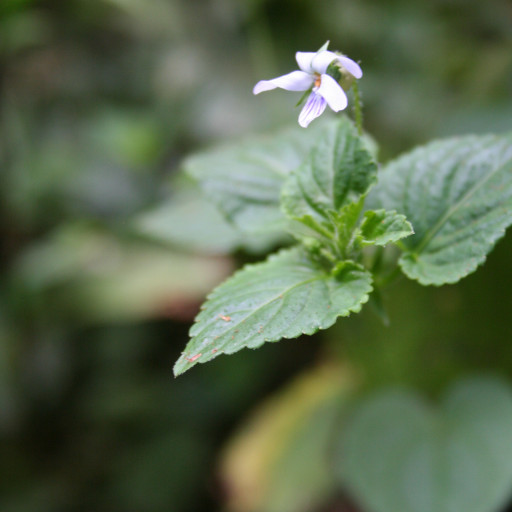
Plant Overview
Violets are the charming heralds of spring, often called "Heart’s Ease" for their historical use in folk medicine to soothe both physical and emotional heartaches. From the classic deep-purple wood violet to the bold, "cat-faced" garden pansy, these plants have inspired poets like Shakespeare and Wordsworth for centuries. They are more than just pretty faces; they are resilient survivors that can carpet a forest floor or brighten a winter windowsill with ease.
🔍 How to Identify
- 🌸 The "Face" Flower: Most species feature five distinct petals—two on top, two on the sides, and one at the bottom, often decorated with dark "whiskers" or nectar guides.
- 🍃 Heart-Shaped Foliage: The leaves are typically heart-shaped (cordate) with slightly scalloped or serrated edges, often growing in a low-lying basal rosette.
- 🌱 Spreading Habit: Many varieties grow in low, dense clumps or use runners (stolons) to spread across the ground, creating a lush green carpet even when not in bloom.
🏡 In Your Garden
- ❄️ Cool Weather Lovers: Unlike many garden favorites, Violas thrive in the chilly air of early spring or autumn. They are surprisingly frost-tolerant but will often "melt" or go dormant when the intense heat of summer arrives.
- 💧 Soil & Moisture: They prefer "woodland" conditions—moist, well-drained soil rich in organic matter. If you are growing them in pots, ensure they don't dry out completely, as their shallow roots are sensitive to drought.
- ✂️ Deadheading Nuance: To keep the blooms coming, pinch off faded flowers. This prevents the plant from putting all its energy into seed production and encourages a longer flowering window.
⚠️ Safety & Toxicity
- 🟢 Safe for Humans: Most Viola species are edible. The flowers are frequently crystallized in sugar for cake decorating or tossed into salads for a pop of color.
- 🐾 Pet Friendly: Violas and Pansies are generally considered non-toxic to dogs, cats, and horses. However, if a pet consumes a large quantity, they may still experience mild stomach upset.
✨ Fun Fact
Violets possess a "disappearing" scent! They contain a chemical compound called ionone, which temporarily desensitizes your sense of smell. You might get one beautiful whiff of their perfume, but then the scent seems to vanish until your scent receptors reset a few minutes later.

Detailed Care Instructions
To grow a Viola plant, follow these steps:
- Choose a well-draining and rich soil mix that is slightly acidic to neutral (pH 6.0-7.0). Violas prefer soil that retains some moisture but is not waterlogged.
- Select a location that receives partial sun to full sun. Violas thrive in cooler conditions, so avoid planting them in areas with intense heat.
- Prepare the soil by removing any weeds or debris and loosening it with a garden fork or tiller. Add compost or organic matter to improve soil fertility.
- Sow the viola seeds in early spring or late summer, as they prefer cool temperatures. Scatter the seeds evenly on the soil surface and gently press them down. Do not cover them with too much soil, as they require light to germinate.
- Water the seeds regularly, keeping the soil moist but not waterlogged. Violas prefer consistent moisture, so monitor the soil moisture levels regularly.
- Once the seedlings have emerged, thin them out to give each plant enough space to grow. Space the plants about 6-8 inches apart.
- Fertilize the Viola plants with a balanced fertilizer every four to six weeks during the growing season. Follow the instructions on the fertilizer package for the correct dosage.
- Mulch around the plants to retain moisture and suppress weed growth.
- Regularly deadhead the spent flowers by pinching or cutting them off to encourage continuous blooming and prevent seed production.
- Protect the viola plants from extreme heat or frost by providing shade or cover as needed.
With proper care, Viola plants should grow and bloom throughout the growing season, providing you with colorful and beautiful flowers.

Place in a bright room that is sun drenched almost all day. Or directly in a south-facing window.

Viola plants require regular watering to keep the soil moist. The frequency of watering depends on the surrounding environment, soil type, and plant size. Adequate drainage is necessary to ensure that excess water does not accumulate in the soil and cause root decay. Watering the plant when the topsoil feels dry to the touch is recommended to prevent overwatering. It is preferable to water the plant slowly and deeply to ensure that the water penetrates the soil to reach the roots. Avoid getting water on the foliage as it can promote the growth of fungal diseases. During hot weather, it may be necessary to water the plant more frequently to prevent dehydration.
- Begin by choosing a high-quality fertilizer specifically formulated for flowering plants. Look for a balanced N-P-K ratio, such as 10-10-10 or 8-8-8.
- Mix the appropriate amount of fertilizer with water according to the package instructions. Use a watering can or similar container to mix the fertilizer and water together thoroughly.
- Water your Viola plant thoroughly before applying fertilizer. This helps to ensure that the fertilizer is evenly distributed throughout the soil and root system.
- Use the watering can to distribute the fertilizer mixture evenly across the soil, taking care not to get the fertilizer on the leaves or stems of the plant.
- Apply fertilizer to your Viola plant every 4-6 weeks during the growing season. Avoid fertilizing during the dormant period, and be sure to follow the package instructions for the specific fertilizer you are using.
- Monitor your Viola plant carefully for signs of over-fertilization, such as yellowing or burning of the leaves. If this occurs, reduce your fertilizing schedule or switch to a lower concentration fertilizer.
- Regular fertilization can help your Viola plant produce abundant blooms and remain healthy throughout the growing season. Enjoy the beauty and fragrance of your Viola plant as it thrives in its new fertilized environment.
The soil preferred for Viola plants should be well-draining, nutrient-rich, and should have a pH level that is slightly acidic to neutral. It should have a good proportion of organic matter, and should not be too heavy or too compact. Additionally, it is preferable to use a soil that has good water retention capabilities, but is not waterlogged. Soil that has been enriched with compost or organic fertilizer is also ideal for this plant.
Viola plants can be propagated by cuttings or seeds. To propagate by cuttings, choose a healthy stem and make a clean cut at a 45-degree angle. Remove the lower leaves, leaving only a few at the top. Dip the cut end in rooting hormone powder and plant it in a pot filled with well-draining soil. Keep the soil moist and place the pot in a bright, but indirect sunlight. After a few weeks, you should see new growth indicating that the cutting has taken root.
To propagate by seeds, collect the seed pods when they turn brown and start to split open. Gently shake the pod to release the seeds. Scatter the seeds on a soil surface and cover them lightly with soil. Keep them moist and in a bright location, but out of direct sunlight. The seeds should germinate within a few weeks.
Both of these methods can be effective in propagating Viola plants. It is important to keep the new plants well-watered and choose an appropriate location for them to grow once they have established themselves.
Common pests of the violets include Aphids, thrips, whiteflies, larvae. Make a habit of checking your violets frequently for pests so that any infestations can be caught and managed early.







