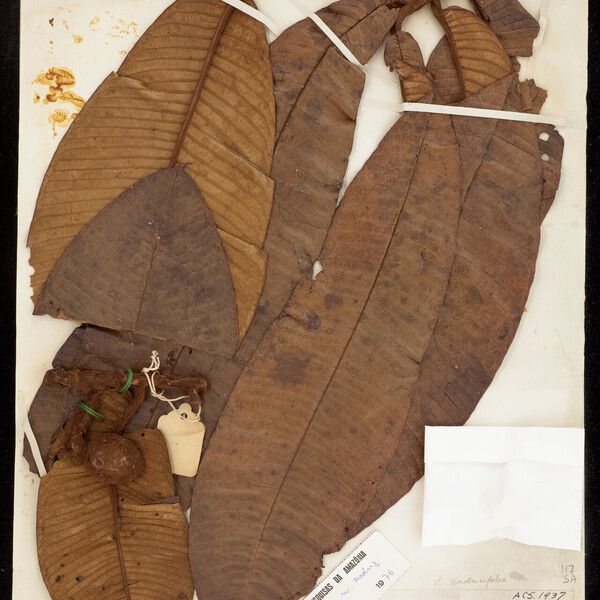
Plant Overview
Often called the Red Ucuúba or part of the "Epená" tree group, Virola caducifolia is a striking member of the nutmeg family native to the lush Amazon rainforest. This tropical giant is famous among indigenous cultures for its potent resin and its "bleeding" bark. While it isn't your average backyard shrub, it plays a vital role in the canopy of South American jungles.
🔍 How to Identify
- 🍃 The Foliage: Look for leathery, elongated leaves with a distinct "ribbed" appearance due to their parallel veins. They often have a slightly rusty or hairy texture on the underside when young.
- 🩸 The "Bleeding" Bark: One of its most famous traits; if the bark is nicked or cut, it exudes a deep reddish-brown resin that looks remarkably like blood.
- 🍒 The Fruit: It produces small, oval fruits that split open when ripe to reveal a single seed wrapped in a bright red, fleshy "lace" (an aril), similar to the spice mace found on common nutmeg.
🏡 In Your Garden & Environment
- ☁️ Tropical Requirements: As an Amazonian native, this tree thrives in high-humidity environments with consistent warmth. It is rarely grown as a houseplant because it prefers to send its roots deep into rich, acidic forest soil.
- 🐒 Wildlife Magnet: In its natural habitat, the tree is a "supermarket" for the forest. Its nutrient-rich seeds are a favorite for large birds like toucans and monkeys, which help disperse the seeds across the jungle floor.
⚠️ Safety & Toxicity
- 🧪 Status: Bioactive and Potentially Toxic.
- ⚠️ The Details: The bark and sap of Virola species contain powerful tryptamines (hallucinogens). Indigenous tribes historically processed the resin into a potent snuff called Yopo or Epená. It is not safe for consumption by humans, pets, or livestock and can cause severe neurological reactions if ingested.
✨ Fun Fact
The name "Virola" comes from the Latin term for a small ring or "ferrule," but many locals call it the "Tree of the Sun" because of the way its fiery red sap and seed coatings stand out against the deep green shadows of the rainforest.

Detailed Care Instructions







