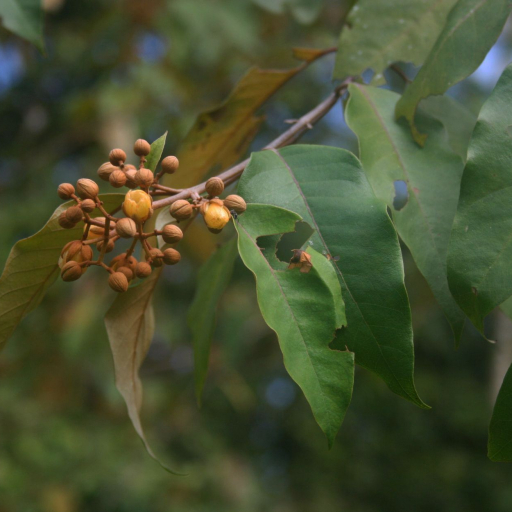
Plant Overview
Known affectionately in its native tropical home as the "Waxberry" or "Bloodwood," Vismia baccifera is a resilient pioneer of the rainforest. This small tree or shrub is a member of the St. John’s Wort family and is famous for its vibrant, orange-colored sap that bleeds from its stems when cut. It plays a vital role in its ecosystem, often being among the first plants to reclaim cleared land in Central and South America.
🔍 How to Identify
- 🩸 The "Bleeding" Sap: The most distinctive feature is the thick, bright orange or reddish-yellow latex that emerges from broken stems or leaves.
- 🍂 Rusty Foliage: The undersides of the leaves are often covered in a fine, cinnamon-colored "rust" of tiny hairs, giving the plant a bicolor appearance in the wind.
- 🌼 Fuzzy Flowers: It produces small, star-shaped yellow-green flowers that are notably hairy on the inside of the petals, followed by small, fleshy berries.
🏡 In Your Garden
- 🌱 Acidic Ambitions: This plant thrives in acidic, well-draining soils. In its natural habitat, it acts as a "pioneer," meaning it is incredibly tough and helps prepare the soil for more sensitive plants to follow.
- 💧 Humidity Lover: Because it hails from the humid tropics of the Andes and the Amazon, it struggles in dry, indoor air. If kept as a specimen plant, it requires high humidity and consistent moisture to prevent leaf drop.
⚠️ Safety & Toxicity
- 🟠 Mild Irritant: While not considered deadly, the orange sap can cause mild skin irritation or dermatitis in sensitive individuals.
- 🐾 Pet Caution: There is limited data on its toxicity to domestic pets; however, due to its chemical compounds (quinones), it is best kept out of reach of curious cats and dogs who might chew on the foliage.
- 👕 Staining Hazard: The sap is a potent natural dye—be careful when pruning, as it will permanently stain clothing and garden gloves.
✨ Fun Fact
Indigenous communities in the Amazon have used the "blood" of this tree for centuries as a traditional remedy for skin fungal infections and wounds, earning it a reputation as "Nature's Iodine."

Detailed Care Instructions
To grow Vismia baccifera plants, you can follow these steps:
- Obtain seeds or seedlings from a reputable nursery or supplier that specializes in native or tropical plants.
- Choose a suitable planting location with well-draining soil. Vismia baccifera plants prefer sandy or loamy soil types.
- Prepare the planting area by removing any weeds or grass and loosening the soil.
- Dig a hole that is slightly larger than the root ball of the seedling or deep enough to accommodate the seeds. Space multiple plants around 4-6 feet apart to allow for the plant's spread.
- If using seeds, plant them at a depth of about 1-2 inches and cover them lightly with soil. Water the area gently after planting.
- If using seedlings, carefully remove them from their containers and place them in the prepared hole. Backfill the hole with soil, ensuring the seedling is planted at the same depth as it was in its container. Lightly press down the soil around the base of the seedling.
- Water the newly planted Vismia baccifera plant thoroughly to settle the soil and provide initial hydration. Afterward, water the plant regularly, ensuring the soil remains evenly moist but not waterlogged.
- Vismia baccifera plants prefer partial shade to full sunlight. Choose a location that receives a few hours of direct sunlight each day.
- Apply a slow-release fertilizer specifically formulated for tropical plants or use organic compost to provide necessary nutrients for growth. Follow the manufacturer's instructions for application.
- Mulch around the base of the plant to help retain moisture, suppress weeds, and maintain a moderate temperature.
- Monitor the plant for any signs of pests or diseases. Treat them promptly to prevent damage.
- Prune the plant as needed to maintain its shape and remove any dead or diseased branches.
- Regularly monitor soil moisture and water the plant accordingly. Overwatering or underwatering can negatively affect its growth.
- Provide support if necessary by placing stakes or trellises near the plant to help it climb.
- Enjoy your Vismia baccifera plant as it grows and matures. With proper care, it will develop into an attractive tropical shrub.

To water this plant, ensure that the soil is completely dry before watering. Use a watering can or hose with a gentle stream to water the plant slowly and evenly at the base, avoiding getting water on the leaves. Do not overwater the plant as it can lead to root rot and other issues. It is best to water this plant less frequently but deeply. Keep an eye on the plant during periods of drought or hot weather and increase watering if necessary.
To fertilize this plant, use a balanced fertilizer with equal amounts of nitrogen, phosphorus, and potassium. Apply the fertilizer during the growing season, starting in early spring and continuing through to fall. Be sure to follow the package instructions for application rates and timing. Avoid over-fertilizing, as this can burn the plant and damage its roots. Water the plant well before and after applying fertilizer to help it absorb the nutrients.
The ideal soil for the Vismia Baccifera plant should be well-draining, slightly acidic, and rich in organic matter. It should have a pH level ranging between 5.5 to 6.5. The soil should be loamy, with a mixture of sand, clay, and silt. The plant prefers a soil that is moderately fertile, with good moisture retention properties. The soil should be sufficiently aerated to facilitate root growth and development. It is recommended to use a mixture of potting soil and compost to create the ideal growing medium for the Vismia Baccifera plant. Additionally, it is important to avoid soils that have high saline content or are prone to waterlogging, as these conditions may be detrimental to the plant's health.
To propagate this plant, start by collecting mature and healthy stems from the parent plant. Prepare a potting mix using well-draining soil and organic matter. Remove the lower leaves from the stem and cut them at an angle. Make sure the cut is clean and avoid damaging the stem.
Dip the cut end of the stem in rooting hormone powder and then plant it in the prepared potting mix. Cover the pot with a plastic bag to create a humid environment for the plant and place it in a well-lit spot but protected from direct sunlight.
Keep the soil moist but not waterlogged and mist the plant regularly. After a few weeks, the plant should have developed roots. Remove the plastic bag and transplant the young plant into a larger pot if necessary.
Continue to care for the plant as you would for a mature plant, providing regular watering, fertilizing, and pruning to promote healthy growth.








