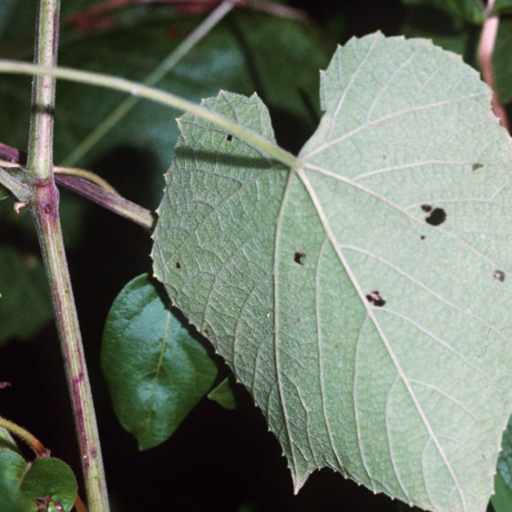
Plant Overview
Known as the Graybark Grape or Winter Grape, this native North American climber is a resilient powerhouse of the wilderness. Unlike the plump, sugary grapes found in grocery stores, Vitis cinerea is a wild spirit that thrives in moist bottomlands and along riverbanks. It earns its name from the distinctive ashy-gray hue of its bark and the soft, dusty fuzz that coats its young leaves and stems.
🔍 How to Identify
- 🍇 The Fruit: It produces small, dark purple to black berries that grow in loose, dangling clusters. They are much smaller than Concord grapes and have a matte, rather than shiny, finish.
- 🍂 The Foliage: The leaves are large and heart-shaped with "toothed" edges. If you flip a leaf over, you’ll find a carpet of tiny, gray-white hairs that give the plant a silvery shimmer in the wind.
- 🪵 The Bark: Unlike many other wild grapes whose bark shreds into long, messy strips, the Graybark Grape has relatively tight, gray-brown bark that only becomes slightly scaly as the vine reaches old age.
🏡 In Your Garden
- 🏗️ Support Systems: This is a high-climbing woody vine that uses branched tendrils to scale almost anything in its path. If you host it in your garden, ensure it has a heavy-duty trellis or a "sacrificial" tree to climb, as it can quickly overwhelm smaller shrubs.
- 💧 Moisture Lover: While it is surprisingly drought-tolerant once established, its "happy place" is soil that stays consistently moist. It is an excellent choice for stabilizing soil near ponds or in low-lying areas of a property where water tends to sit.
⚠️ Safety & Toxicity
- 🐾 Pet Safety: Like all members of the Vitis genus, the fruit can be toxic to dogs, potentially causing kidney failure. Keep your canine friends away from the fallen berries.
- 🚫 The Moonseed Warning: For foragers, it is vital to distinguish this plant from Canada Moonseed, a toxic lookalike. True wild grapes have "toothed" leaf edges and seeds shaped like pears, while Moonseed has smooth leaf edges and a single crescent-moon-shaped seed.
✨ Fun Fact
Vitis cinerea played a "behind-the-scenes" role in saving the world's wine! During the late 1800s, when a tiny insect called Phylloxera nearly wiped out European vineyards, botanists used the hardy, pest-resistant roots of American wild grapes like this one to graft and save the famous French wine varieties.

Detailed Care Instructions
To grow Vitis Cinerea, also known as the Graybark Grape, you can follow these steps:
- Choose a suitable location: Vitis Cinerea prefers full sun but can tolerate light shade. Ensure the chosen spot has well-drained soil and enough room for the plant to spread because it can climb and cover a significant area.
- Planting: Dig a hole that is wide and deep enough to accommodate the root system of your Vitis Cinerea plant. Place the plant in the hole, ensuring the base of the stem is level or slightly above the ground level. Fill the hole with soil and gently firm it around the plant.
- Watering: Initially, water the plant thoroughly to help establish the root system. After that, it should only require watering during prolonged dry periods. Keep the soil evenly moist but not overly waterlogged.
- Pruning: Pruning is necessary to maintain the shape and size of the plant. In late winter or early spring, before new growth begins, prune away any dead, damaged, or crossed branches. This will promote healthy growth and prevent disease.
- Fertilizing: Vitis Cinerea does not require excessive fertilization. However, you can apply a balanced fertilizer in early spring or late winter to provide essential nutrients.
- Mulching: Apply a layer of organic mulch around the base of the plant to conserve moisture, suppress weeds, and insulate the roots during temperature fluctuations.
- Support: Vitis Cinerea is a climbing plant, so providing support is essential for optimal growth. Install trellises, fences, or any other suitable structure for the vines to climb on.
- Pest and disease control: Monitor for common grape pests such as aphids and grapevine beetles. If necessary, use appropriate organic or chemical treatments to control the pest population. Additionally, check for any signs of fungal diseases such as powdery mildew or black rot and treat accordingly.
- Harvesting: Vitis Cinerea produces small, bluish-gray berries that are edible but fairly tart. Harvest the grapes when they are ripe and enjoy them fresh or use them for making jellies, jams, or wines.
By following these steps, you can successfully grow Vitis Cinerea and enjoy its beautiful foliage and fruits.

Place in a bright room that is sun drenched almost all day. Or directly in a south-facing window.

Watering Vitis Cinerea plant requires proper attention and care. You should make sure to water the plant regularly to keep the soil moist, but not too wet. Water it deeply to ensure that the roots absorb enough moisture. However, avoid overwatering, as it can lead to root rot and kill the plant.
It is best to water the plant early in the morning or late in the evening when the sun is not too strong. This is to prevent the water from evaporating quickly and not reaching the roots. Use a watering can, hose or drip irrigation system to apply the water to the soil around the base of the plant. Avoid splashing water on the foliage, as this can lead to mildew and other fungal diseases.
It is also important to consider the soil type when watering Vitis Cinerea. If the soil is sandy, it may require more frequent watering since it drains quickly and doesn't retain moisture well. In contrast, if the soil is loamy or clay-based, it may retain water longer, and you may need to water less frequently.
Finally, observe the plant regularly to determine if it needs watering. If the leaves appear droopy or wilted, it may be an indication that the plant needs watering. On the other hand, if the soil looks too wet or waterlogged, you may want to hold off on watering until the soil dries out a bit. By following these watering guidelines, you can ensure that your Vitis Cinerea plant thrives and produces healthy foliage and fruit.
To fertilize this plant, use a balanced fertilizer with equal parts nitrogen, phosphorus, and potassium. Apply the fertilizer in early spring before new growth begins. Be careful not to apply too much fertilizer, as overfertilization can cause excessive growth that weakens the plant. Additionally, it is important to water the plant deeply after fertilizing to ensure that the nutrients are absorbed properly.
Vitis Cinerea prefers to grow in well-draining soil that is slightly acidic and nutrient-rich. The soil should have a pH level between 5.5 and 6.5 and should not be too heavy or compacted. Sandy loam soil that is mixed with organic matter such as compost or aged manure is ideal. The plant also likes to grow in areas that receive full sun exposure but can tolerate some shade. The soil should be kept consistently moist but not waterlogged, as this can cause root rot. Adding a layer of mulch on top of the soil can help with moisture retention and weed control.
To propagate this plant, you will need to take a cutting from a healthy and mature vine. The cutting should be taken during the dormant season, typically in the late fall or winter. It should be approximately 8-12 inches in length and have at least 2-3 nodes.
Once you have your cutting, remove any leaves from the bottom few inches of the stem. Dip the cut end in rooting hormone powder to promote root growth. Place the cutting in a pot filled with moist and well-draining potting soil. Cover the pot with a plastic bag to create a humid environment and place it in a bright area but out of direct sunlight.
Keep the soil moist and check for signs of new growth regularly. Once the cutting has established roots and new growth has appeared, you can transplant it to a larger pot or into the ground in a sunny location with well-draining soil.








