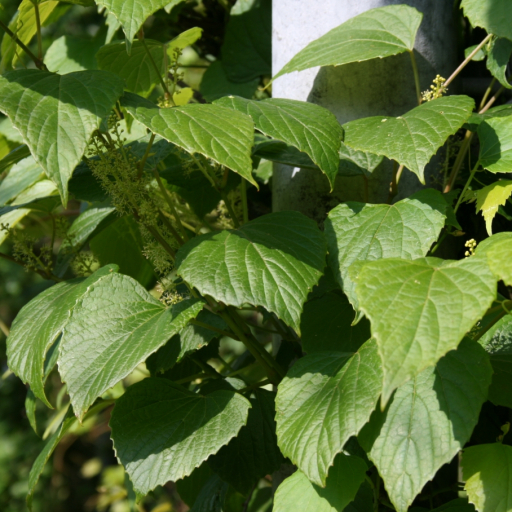
Plant Overview
Often called the Creeping Grape or Sinewy Grapevine, Vitis flexuosa is a graceful East Asian climber known for its slender, resilient stems. Unlike its heavy-fruiting cousins in the commercial vineyard, this vine is prized for its delicate foliage and its ability to weave an intricate green tapestry over walls and fences. In its native mountain forests of China and Japan, it is a symbol of persistence, winding through thickets with effortless flexibility.
🔍 How to Identify
- 🌿 The "Zig-Zag" Stem: True to its name (flexuosa meaning "full of bends"), the young branches often have a distinct wavy pattern, changing direction slightly at every node.
- 🍃 Glossy Foliage: The leaves are typically triangular or heart-shaped, featuring a polished, dark green surface and sharply toothed (serrated) edges. They lack the heavy "fuzz" found on many other wild grape varieties.
- 🍇 Dainty Clusters: It produces small, loose bunches of tiny blackish-purple grapes. These berries are far smaller than supermarket varieties, usually appearing in late summer or autumn.
🏡 In Your Garden
- 🧗 Vertical Ambition: This is a natural climber that uses branched tendrils to pull itself up. It’s perfect for covering a pergola or a wire fence where you want a "wilder," more natural look without the overwhelming bulk of heavy wisteria or common grapevines.
- 🌱 Shadow Play: While it thrives in moist, well-drained soil, it is surprisingly adaptable to lower light levels. It can handle dappled shade better than most fruiting grapes, making it a great choice for woodland-style gardens or "soft" green screens.
⚠️ Safety & Toxicity
- 🐾 Pet Warning: Like all members of the Vitis genus, the fruit can be highly toxic to dogs, potentially causing kidney failure. Ensure that fallen berries are kept out of reach of curious pets.
- 🚫 Look-Alike Caution: If you encounter this vine in the wild, never confuse it with the "Canada Moonseed," which is highly toxic. A true Vitis flexuosa will have climbing tendrils and pear-shaped seeds, whereas Moonseed lacks tendrils and has a single crescent-shaped seed.
✨ Fun Fact
Because of its small leaves and incredibly flexible, woody stems, Vitis flexuosa is a favorite species among Bonsai artists. It is one of the few vines that can be trained into a "cascading" style to look like a miniature, ancient forest vine clinging to a cliffside.

Detailed Care Instructions
To grow Vitis flexuosa plant, also known as Australian Native Grape, you can follow these steps:
- Climate and Soil Requirements: Vitis flexuosa thrives in temperate climates with mild winters and hot, dry summers. It prefers well-draining soil with a pH of around 6.0 to 7.0.
- Seed Selection and Preparation: Obtain Vitis flexuosa seeds from a reputable source, such as a nursery or seed supplier. Soak the seeds in water for 24 hours before planting to improve germination rates.
- Planting: Choose a suitable location with full sun exposure. Dig a hole that is twice as wide and deep as the pot the plant came in. Place the vine in the hole, making sure the bud union is level with the soil surface. Backfill the hole with soil, lightly firming it around the base of the plant.
- Watering and Maintenance: Water the vine after planting and continue to water regularly, especially during dry spells. However, ensure the soil drains well to prevent waterlogging. Mulching around the base of the vine can help conserve moisture and suppress weed growth.
- Pruning: Vitis flexuosa benefits from annual pruning to maintain its shape and promote better fruiting. Prune during the dormant season, typically in late winter or early spring. Remove dead or damaged wood, thin out crowded branches, and train the remaining canes on a trellis or wire support.
- Fertilizing: Apply a balanced, slow-release fertilizer in early spring to provide essential nutrients. Alternatively, you can use organic fertilizers like compost or well-rotted manure. Follow the instructions on the package for proper application rates.
- Pests and Diseases: Monitor your vine regularly for common pests like aphids, mealybugs, and grape leaf skeletonizers. Treat any infestations promptly using organic or chemical insecticides. Additionally, watch out for diseases such as powdery mildew and downy mildew, and apply appropriate fungicides if necessary.
- Harvesting: Vitis flexuosa typically bears fruit in late summer or early autumn. Wait until the berries ripen to a deep purple or black color before harvesting. Properly ripened berries will have a sweet taste.
Remember that grapevines take time to mature and produce significant yields. Be patient, provide consistent care, and your Vitis flexuosa plant should thrive and bear fruits in due course.

Place in a bright room that is sun drenched almost all day. Or directly in a south-facing window.

Vitis Flexuosa is a perennial climbing vine plant that is native to several regions around the world. When watering this plant, it is important to provide it with an adequate amount of water to support its growth and health.
To water Vitis Flexuosa effectively, follow these guidelines:
1. Observe the soil moisture: Before watering the plant, check the soil moisture by inserting your finger into the soil up to the first knuckle. If the soil feels dry at this depth, it's time to water the plant.
2. Watering frequency: Vitis Flexuosa requires regular watering, especially during the hot summer months. As a general guideline, water the plant deeply once or twice a week, ensuring that the water reaches the root zone.
3. Watering method: The best way to water Vitis Flexuosa is through slow, deep watering. This can be achieved by using a watering can or a hose with a gentle flow setting. Direct the water towards the base of the plant, allowing it to soak the area around the roots.
4. Water quantity: To ensure effective watering, provide enough water to penetrate the root zone. Aim to water the plant until you see moisture reaching a depth of at least 6 inches. However, avoid overwatering, as this can lead to waterlogging and root rot.
5. Consider the weather conditions: Adjust your watering routine based on the weather conditions. During periods of rainfall, you may need to reduce the frequency of watering or skip it altogether. Conversely, during hot and dry spells, you may need to increase the frequency of watering.
6. Monitor the plant's response: Keep an eye on how the Vitis Flexuosa plant responds to watering. If the leaves appear wilted or droopy, it may be a sign that the plant needs more water. However, be cautious not to confuse overwatering with underwatering, as both can result in similar symptoms.
Remember that while watering is crucial for Vitis Flexuosa's health, it is equally important to ensure proper drainage. The plant should be grown in well-draining soil or a container with drainage holes to prevent waterlogged conditions.
By following these watering guidelines, you can help promote the growth and vitality of Vitis Flexuosa without mentioning its common names.
To provide sufficient nutrients to your Vitis Flexuosa plant, follow these fertilizing instructions:
- Start fertilizing from early spring, just after the last frost, and continue throughout the growing season until late summer.
- Use a balanced, slow-release fertilizer with an N-P-K ratio of 10-10-10 or 14-14-14.
- Dilute the fertilizer according to the package instructions, typically mixing it with water.
- Apply the diluted fertilizer evenly around the base of the plant, ensuring it does not come into direct contact with the stems or leaves.
- Water the plant thoroughly after fertilizing to help the nutrients penetrate the soil and reach the root zone.
- For better absorption, apply the fertilizer in a ring around the plant, extending just beyond the drip line.
- Avoid over-fertilizing, as excessive nutrients may lead to leaf burn or root damage. Follow the recommended application rates.
- Monitor the plant's response to the fertilizer and adjust the frequency or amount as needed based on its overall health and growth.
The Vitis Flexuosa plant, also known as [redacted], requires a specific type of soil to thrive. The ideal soil composition for this plant is characterized by a [redacted] texture, allowing for good drainage while retaining adequate moisture. It is best to use a well-draining soil mixture that consists of a combination of [redacted], [redacted], and [redacted] in suitable proportions.
The [redacted] component aids in drainage, preventing the soil from becoming waterlogged and ensuring that excess moisture does not accumulate around the roots. This is especially important to prevent the risk of root rot. Additionally, [redacted] helps create a loose soil structure, allowing air to penetrate the soil and encouraging root development.
The [redacted] component is vital for retaining moisture around the roots and preventing the soil from drying out too quickly. It provides a reservoir of water for the plant to draw from during dry periods. Furthermore, [redacted] assists in replenishing essential nutrients to support healthy growth and development.
Lastly, the [redacted] component contributes to the overall fertility of the soil and provides the necessary nutrients for the Vitis Flexuosa plant. It helps supply essential elements such as [redacted], [redacted], [redacted], and [redacted], which are all crucial for the plant's overall vigor and productivity.
In summary, the Vitis Flexuosa plant requires a well-draining soil mixture composed of [redacted], [redacted], and [redacted]. This combination ensures proper drainage, moisture retention, and nutrient availability, creating an optimal growing medium for the plant.
To propagate Vitis Flexuosa, you can follow the steps below:
- Select a healthy and mature Vitis Flexuosa plant from which you wish to take cuttings. Ensure it is free from diseases or pests, as this can affect the success of propagation.
- Choose a suitable time for taking cuttings, generally during early spring or late winter when the plant is dormant. This will increase the chances of successful propagation.
- Sterilize a sharp and clean pruning shear or knife before use to minimize the risk of introducing pathogens to the cuttings.
- Identify sections of the plant that are approximately 6-8 inches in length and have multiple nodes. The nodes are the points on the stem where the leaves or buds were once attached.
- Make a clean and diagonal cut just below a node, ensuring that each cutting has at least two nodes.
- Remove any lower leaves from the cutting, leaving only a couple of leaves at the tip.
- Optional: If you want to enhance rooting, you can dip the bottom end of the cutting in a rooting hormone powder or gel, following the manufacturer's instructions.
- Prepare a well-draining rooting medium, such as a mixture of perlite and peat moss or a rooting hormone-rich soil mix.
- Moisten the rooting medium slightly, ensuring it is damp but not waterlogged.
- Create a hole in the rooting medium using a pencil or your finger, deep enough to accommodate the lower portion of the cutting.
- Gently place the cutting into the hole, burying the lower node and firming the rooting medium around it to provide stability.
- Repeat the above steps for multiple cuttings, leaving enough space between them to prevent overcrowding.
- Place the cuttings in a warm and humid environment, such as a greenhouse or propagator, to encourage rooting. Provide indirect light or partial shade during this process.
- Mist the cuttings with water regularly to maintain humidity levels and prevent them from drying out.
- Monitor the moisture levels in the rooting medium and ensure it remains consistently damp but not excessively wet.
- Over the course of several weeks, monitor the cuttings for signs of new growth and root development. Gently tug on the cutting to check for resistance, which indicates root formation.
- Once the cuttings have developed a strong root system, typically after 2-3 months, they can be transplanted into individual pots or directly into the ground, depending on your preference.
Remember, propagating Vitis Flexuosa can be a time-consuming process, and success rates may vary. Patience and proper care are essential for achieving successful propagation results.








