Plant Overview
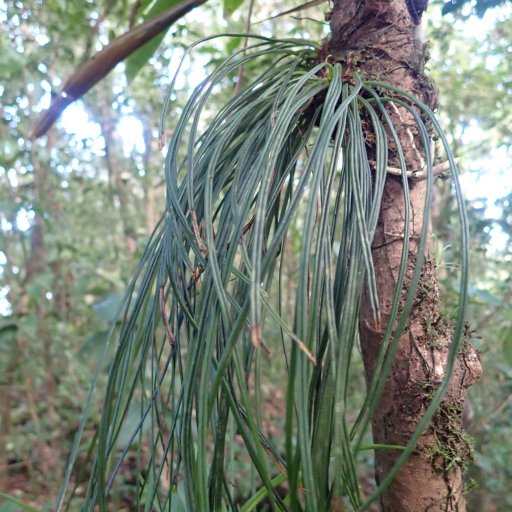
Imagine a fern that decided to look exactly like a clump of dark green grass hanging from the sky. Known colloquially as the Shoestring Fern, this unique epiphyte doesn't grow in the dirt but instead makes its home in the nooks and crannies of tree bark. In its native Florida and Caribbean habitats, it is often seen dangling elegantly from the "boots" of Cabbage Palms, looking like a shaggy, green wig for the tree.
🔍 How to Identify
- 🌿 The Fronds: Unlike typical feathery ferns, these fronds are long, narrow, and ribbon-like. They are dark green, leathery, and can reach up to 2 feet in length while remaining only a few millimeters wide.
- 🕶️ Hidden Spores: If you look closely at the edges of the fronds, the spores (sori) are tucked away in deep, longitudinal grooves along the margins, rather than in dots on the underside.
- 🧵 Growth Habit: It grows in dense, pendulous clumps. The base consists of a short, creeping rhizome that is usually buried deep within the organic debris of its host tree.
🏡 In Your Garden
- 🌴 The Palm Connection: If you live in a tropical climate, this fern is the perfect companion for your palm trees. It thrives on the organic "mulch" that collects where old palm fronds were cut off.
- 💧 Humidity is Non-Negotiable: Because it is an epiphyte with thin leaves, it has very little water storage. It relies on high ambient humidity and frequent misting. If kept as a houseplant, it usually fails in dry, air-conditioned rooms unless placed in a dedicated terrarium or greenhouse.
- 🧗 Mounting, Not Potting: Trying to grow this in standard potting soil often leads to root rot. It prefers being mounted on a piece of cork bark or nestled into a hanging basket filled with long-fiber sphagnum moss to mimic its natural tree-dwelling lifestyle.
⚠️ Safety & Toxicity
- 🐾 Pet Friendly: The Shoestring Fern is generally considered non-toxic to cats, dogs, and humans. It is a "safe" choice for households with curious nibblers.
- ☁️ Air Quality: Like many ferns, it acts as a natural air purifier, though its primary "safety" concern is actually its own—it is very sensitive to chemical fumes and heavy pesticides.
✨ Fun Fact
The genus name Vittaria comes from the Latin word "vitta," which means a ribbon or headband worn by ancient Roman women. This perfectly describes the long, band-like appearance of its foliage!

Detailed Care Instructions
To grow Vittaria Lineata plant, also known as Shoestring Fern, you can follow these steps:
- Propagation: Start by obtaining a healthy Vittaria Lineata plant from a nursery or obtain spores from a mature fern. You can also divide an existing plant if it has multiple stems or clumps.
- Soil and Potting: Vittaria Lineata prefers a rich, well-draining soil mix. Use a mix of peat moss, orchid bark, and perlite or sand for good drainage. Choose a pot with drainage holes to avoid waterlogging.
- Light: Place the pot in a location with bright, indirect light. Vittaria Lineata prefers filtered sunlight or partial shade rather than direct, intense sunlight. It can thrive in areas with low light as well.
- Watering: Keep the soil consistently moist but not waterlogged. Water the plant whenever the upper layer of soil feels slightly dry to the touch. Mist the leaves occasionally to provide additional humidity, especially in dry indoor environments.
- Humidity: Vittaria Lineata thrives in humid conditions. To increase humidity, you can place the pot on a tray filled with water and pebbles. Just make sure the pot is not sitting directly in the water.
- Temperature: Vittaria Lineata prefers temperatures between 65-75°F (18-24°C). Avoid exposing the plant to sudden temperature fluctuations or cold drafts.
- Fertilizing: Feed the fern with a balanced liquid fertilizer once a month during the growing season (spring to fall). Dilute the fertilizer to half the recommended strength. Avoid fertilizing during winter months.
- Pruning: Trim any brown or damaged fronds to maintain the plant's appearance and encourage new growth. Use clean, sharp pruners or scissors to avoid damaging the plant.
- Repotting: As the Vittaria Lineata grows, you may need to repot it every few years. Choose a slightly larger pot and fresh potting mix. Gently remove the plant from its old pot, loosen the roots, and place it in the new pot. Fill with fresh soil mix and water thoroughly.
By following these guidelines and providing proper care, your Vittaria Lineata plant should thrive and grow well.

Place in a window with dappled sun or a spot in the middle of a room. Or directly in a window facing west or east.

Vittaria Lineata is a type of plant that requires frequent watering to thrive. When watering this plant, it is important to ensure that the soil is moist but not overly saturated. Too much water can lead to root rot and other diseases.
To water Vittaria Lineata, begin by checking the soil moisture level. Stick your finger about an inch deep into the soil. If it feels dry to the touch, it is time to water the plant. If the soil feels moist, wait a few days before checking again.
When watering, use a watering can or hose with a gentle stream. Avoid using a strong stream as this can cause soil erosion and damage the delicate foliage of the plant. Water the plant until the soil is evenly moist, but not waterlogged.
It is important to note that Vittaria Lineata plants prefer humid environments, so misting the foliage with water daily can also help to keep the plant healthy and happy.
To fertilize the Vittaria Lineata plant, use a balanced liquid or granular fertilizer. Make sure to dilute the fertilizer according to the manufacturer's instructions. Apply the fertilizer to the soil around the base of the plant, being careful not to get it on the leaves. Fertilize once a month during the growing season, which is typically from spring through summer. Avoid fertilizing during the dormant season in fall and winter.
The ideal soil for this plant is a mixture of peat moss, sphagnum moss, and perlite. The peat moss provides organic matter and helps retain moisture, while the sphagnum moss helps to increase drainage and aeration. Perlite helps to improve soil porosity and drainage. It is important to provide a well-draining soil to prevent the plant from waterlogging and rotting. Avoid using heavy soils that compact easily and retain too much moisture. This plant thrives in moist, humid environments, therefore, avoid soils that dry out too quickly.
Propagation of this plant can be accomplished through both sexual and asexual reproduction. In sexual reproduction, spores are produced and released by the plant. In asexual reproduction, plantlets are produced from the parent plant.
To propagate through spores, collect mature spores from the underside of the plant leaves. Place the spores in a potting mix containing peat moss and perlite and cover the container with plastic to create a humid environment. Keep the soil moist and spores should germinate in a few weeks.
To propagate through plantlets, separate them from the parent using a clean sharp blade. The plantlets can be planted in a moist, well-draining soil mix and kept in a warm, humid environment until established.
Make sure to water the new plants frequently, but avoid overwatering as this can lead to root rot. Once the plantlets have established their roots, they can be moved to a suitable growing location and cared for as usual.








