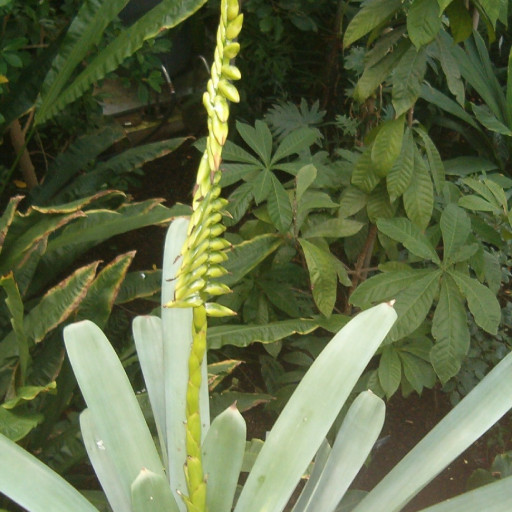
Plant Overview
Often called the Flaming Sword or Painted Feather, Vriesea is a tropical showstopper that looks like it was plucked straight from a prehistoric jungle. Native to the lush rainforests of Central and South America, these bromeliads are famous for their dramatic, sword-shaped flower spikes and architectural foliage. Whether perched on a bookshelf or hanging as an air plant, they bring a bold, exotic energy to any indoor space.
🔍 How to Identify
- 🗡️ The Bloom: Its most striking feature is a flattened, brightly colored flower spike (the bract) that resembles a glowing blade in shades of fiery red, orange, or yellow.
- 🍃 The Foliage: Long, strap-like leaves grow in a fountain-shaped rosette. Many species feature dark, horizontal "zebra" stripes or intricate marbling.
- 🕳️ The Central Tank: The leaves overlap at the base to form a watertight "cup" or "urn" in the center of the plant, designed to catch rain and nutrients.
🏡 In Your Garden & Home
- 💧 Watering the Tank: Unlike most plants, Vriesea prefers to "drink" through its center. You should keep the central reservoir filled with fresh rainwater or distilled water, flushing it out occasionally to prevent stagnation.
- 🌳 Epiphytic Nature: In the wild, these plants often grow on tree branches rather than in soil. Because of this, they have small root systems and hate being overwatered in heavy potting mix—use a loose, airy orchid bark or peat mix instead.
- 👶 The Life Cycle: A Vriesea typically blooms only once. After the "sword" fades, the mother plant will slowly decline, but don't worry—she will produce "pups" (baby offsets) at her base that you can eventually detach and grow into new plants.
⚠️ Safety & Toxicity
- ✅ Status: Non-toxic and Pet-Friendly.
- 🐾 Details: Vriesea is generally considered safe for cats, dogs, and children. However, the standing water in the central tank can attract mosquitoes or grow bacteria if not refreshed regularly, so keep an eye on the water quality.
✨ Fun Fact
In their native rainforests, the central "tanks" of large Vriesea plants act as miniature islands! They hold so much water that entire communities of tiny aquatic insects and even specialized tree frogs spend their whole lives inside a single plant.

Detailed Care Instructions
To grow a Vriesea plant successfully, you will need to follow a few basic steps:
- Choose the right pot and soil: Vriesea plants prefer well-draining soil, so ensure you use a pot with drainage holes. A mixture of peat moss, perlite, and orchid bark makes a suitable soil mix. Make sure the pot is the right size for the plant, allowing enough room for growth.
- Provide the right light conditions: Vriesea plants thrive in bright, indirect light. Place your plant near a window that gets bright, filtered sunlight. Be cautious of direct sunlight, as it can scorch the leaves.
- Maintain proper temperature and humidity: Vriesea plants prefer temperatures of 65-80°F (18-27°C). They also enjoy moderate humidity, so consider placing a tray of water near the plant to increase ambient humidity. Additionally, misting the leaves occasionally can be beneficial.
- Water correctly: Vriesea plants require regular watering, but it's crucial not to overwater the plant. Allow the top couple of inches of soil to dry out before watering again. When watering, pour water into the center banana-shaped cup (called the "vase") formed by the leaves. Avoid overwatering the surrounding soil, as this can lead to root rot.
- Fertilize periodically: During the growing season (spring and summer), feed your Vriesea plant with a balanced, water-soluble fertilizer every month or according to the package instructions. Dilute the fertilizer to half the recommended strength.
- Provide good air circulation: Vriesea plants benefit from good air circulation, which helps prevent fungal issues. Avoid excessively crowded spaces or stagnant air around the plant.
- Repot when necessary: Vriesea plants may require repotting every few years, especially if they outgrow their current pot. Choose a slightly larger pot with fresh soil and gently transfer the plant, taking care not to damage the roots.
- Prune as needed: Trim off any brown or withered leaves regularly. You can also remove any spent flower spikes to encourage new growth.
By following these steps and providing the right conditions, you can successfully grow a Vriesea plant and enjoy its beautiful foliage and occasional vibrant blooms!

Place in a window with dappled sun or a spot in the middle of a room. Or directly in a window facing west or east.

Vriesea is a type of indoor plant that requires regular watering to stay healthy and vibrant. To water a Vriesea plant, you should first check the soil to see if it is dry. If the soil feels dry to the touch, it is time to water the plant. Use room temperature water and pour it slowly over the soil until it begins to drain out of the bottom of the pot. Be careful not to overwater the plant, as this can lead to root rot and other issues. Watering frequency may depend on the humidity level and temperature of the room and should be adjusted accordingly. It is also important to keep the leaves clean and free of dust and debris, as this can impact the plant's ability to photosynthesize.
To fertilize the Vriesea plant, mix a balanced, water-soluble fertilizer with water and apply it to the plant's soil every two to three months during the growing season. Avoid over-fertilizing, as it can lead to salt buildup in the soil and harm the plant. Additionally, water the plant thoroughly before and after fertilizing to prevent burning the roots.
For Vriesea plant, a well-draining, loose and moist soil mixture is recommended. The soil should be able to hold moisture without becoming waterlogged. A suitable soil mix may contain a combination of peat moss, perlite, vermiculite, and orchid bark. This soil should have a slightly acidic pH level between 5.5 and 6.5. The organic matter in the soil helps provide aeration and nutrient retention, which are essential for the growth of a healthy Vriesea plant. It is also recommended to add slow-release fertilizers to the soil mix, which will provide nutrients for the plant as it grows. Overall, the soil should be well-draining, said to be neither too compact nor too loose, and able to retain moisture while allowing for adequate airflow and drainage.
To propagate this plant, you will need a sharp, clean knife or pair of scissors and a container with soil.
First, select a healthy, mature plant with at least one viable offset (baby plant growing from the main plant). Carefully remove the offset from the main plant using the knife or scissors.
Next, allow the severed edge of the offset to dry for a few hours to prevent rotting.
Prepare the potting soil by mixing equal parts peat moss, coarse sand, and perlite. Fill your container with the soil mixture and create a small hole for the offset.
Gently place the offset in the hole and backfill with soil, firming it around the base of the offset. Water thoroughly and place in a bright, indirect light location.
Keep the soil moist but not soggy and mist the plant regularly to maintain high humidity. After a few weeks, the offset should begin to root and grow.







