Plant Overview
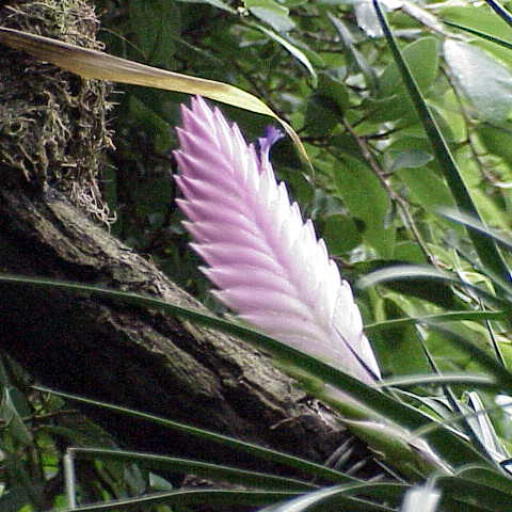
Often called the Pink Quill, Wallisia cyanea is a tropical masterpiece from the rainforests of Ecuador that looks like it was plucked straight from a fantasy novel. This unique member of the Bromeliad family is famous for its large, neon-pink paddle that stays vibrant for months. While it is often sold in pots, it is actually an adaptable "air plant" that can survive tucked into the crotch of a tree or nestled in a well-draining mix.
🔍 How to Identify
- 🪶 The Quill: The most striking feature is the central, flattened flowering spike (bract) that resembles a cluster of bright pink feathers.
- 🪻 Electric Flowers: Don't mistake the pink spike for the flower itself! Small, three-petaled violet flowers emerge one or two at a time from the edges of the pink "quill."
- 🍃 Foliage: It features a dense rosette of thin, recurved, dark green leaves that are often striped with reddish-brown at the base.
🏡 In Your Garden
- 💧 Drinking Habits: Because it is an epiphyte, it can absorb water through its leaves. While it appreciates slightly moist soil, it loves being misted or having its central "quill" dampened to mimic rainforest humidity.
- 🌱 The Life Cycle: This plant follows a "once-in-a-lifetime" blooming strategy. After the pink quill eventually fades, the mother plant will slowly die, but not before producing "pups" (baby offsets) at her base to continue the legacy.
- ☀️ Light Logic: To keep that "quill" a vibrant pink, it needs very bright, indirect light. If the pink starts to turn pale or green, it’s a sign the plant is craving more sunshine.
⚠️ Safety & Toxicity
- ✅ Status: Non-toxic and Pet-Friendly.
- 🐾 Details: Wallisia cyanea is considered safe for cats, dogs, and children. However, the thin, pointed leaves can be tempting for curious cats to chew on, which may cause minor stomach upset or be a choking hazard.
✨ Fun Fact
Despite its delicate appearance, the Pink Quill is a close relative of the Pineapple! They both belong to the Bromeliaceae family, though you definitely wouldn't want to try eating this ornamental beauty.

Detailed Care Instructions
| Humidity | Normal |
| Difficulty | Medium |
| Temperature | 21°C - 26°C |
| Hardiness Zones | 9 - 11 |
To grow a Wallisia Cyanea plant, also known as a Purple Heart plant or Tradescantia Pallida, follow these steps:
- Choose a suitable location: Wallisia Cyanea plants prefer bright, indirect sunlight. Find a spot in your home where the plant will receive at least 6-8 hours of sunlight daily.
- Prepare the soil: The plant prefers well-draining soil with a slightly acidic to neutral pH. A mixture of potting soil, perlite, and sand can provide the ideal growing medium.
- Plant the cuttings: The easiest way to propagate Wallisia Cyanea is through stem cuttings. Take a cutting from a healthy, mature plant, about 4-6 inches long. Remove the lower leaves, leaving a few at the top. Dip the cut end in rooting hormone powder to encourage root growth. Plant the cutting in a pot filled with the prepared soil mixture, burying it about two inches deep.
- Watering: Keep the soil consistently moist, but not soggy. Avoid overwatering to prevent root rot. Allow the top inch of soil to dry out before watering again.
- Fertilizer: Feed the plant with a balanced, water-soluble fertilizer once a month during the growing season (spring and summer). Follow the instructions on the fertilizer packaging for the appropriate dilution and frequency.
- Pruning: Regularly pinch back the stems to encourage bushier growth. This will also prevent the plant from becoming leggy.
- Temperature and humidity: Wallisia Cyanea prefers average room temperatures between 60-75°F (15-24°C). It adapts to a wide range of humidity levels but thrives in moderate humidity. If the air is too dry, mist the leaves occasionally or place a humidifier nearby.
- Repotting: As the plant grows, it may outgrow its current pot. Repot it into a slightly larger container with fresh potting soil every 1-2 years during the spring season.
Remember to keep an eye out for pests like aphids or spider mites. If you notice any infestation, treat it promptly with appropriate insecticides.
By following these steps, you should be able to successfully grow a healthy Wallisia Cyanea plant.

Place in a window with dappled sun or a spot in the middle of a room. Or directly in a window facing west or east.

To water this particular plant, it is important to make sure that the soil is allowed to dry out slightly between watering. This plant should not be kept consistently wet, as this can lead to root rot and damage to the plant. When watering, it is important to thoroughly soak the soil and then allow any excess water to drain away. It is also recommended to use room temperature or lukewarm water, as cold water can shock or damage the plant's roots. Additionally, this plant thrives in a humid environment, so it may benefit from occasional misting or a humidifier nearby.
To fertilize this plant, select a balanced, water-soluble fertilizer with a N-P-K ratio of 20-20-20. Dilute the fertilizer according to the instructions on the label, then apply it to the soil around the base of the plant. Be careful not to get any fertilizer on the leaves or roots. Fertilize every 4-6 weeks during the growing season (spring and summer) and reduce fertilization frequency during the dormant period (fall and winter). Ensure the soil is moist before applying fertilizer.
The Wallisia Cyanea plant requires a well-draining soil that is rich in organic matter. It thrives in a soil that is slightly acidic with a pH range of 5.5 to 6.0. Additionally, the soil should be kept moist but not waterlogged as this can lead to root rot. A mix of peat moss, perlite, and fir bark is a suitable soil combination for this plant. It is important to regularly fertilize the plant with a balanced fertilizer for optimal growth.
Wallisia Cyanea plant can be propagated through division. To begin, gently remove the plant from its pot and carefully shake off any excess soil. Use a sharp, sterile knife to separate the plant into smaller sections, making sure that each section has at least one healthy stem and a healthy root system. Be sure to clean the knife between cuts to prevent the spread of disease.
Once the plant has been divided, plant each section in its own pot filled with a rich, well-draining soil mixture. Water the newly potted plants thoroughly and place them in a bright, indirect light environment. Keep the soil consistently moist, but be careful not to overwater, as this can lead to root rot.
In a few weeks, you should start to see new growth emerging from the divided sections. Once the plants have become established in their new pots, they can be fertilized with a balanced fertilizer to encourage healthy growth.
Common pests of the pink quill include Scale insect, mealybugs, spider mites. Make a habit of checking your pink quill frequently for pests so that any infestations can be caught and managed early.








