Plant Overview
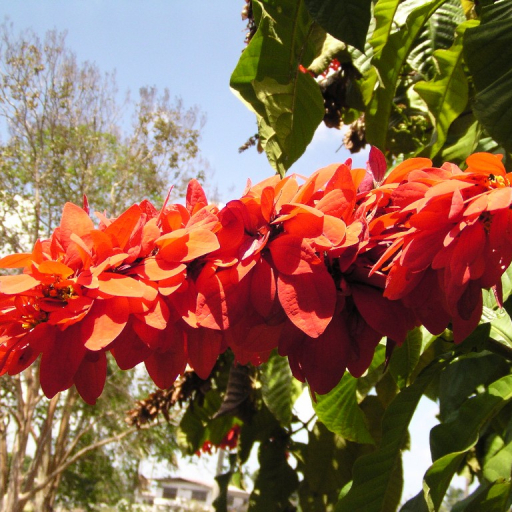
Known as the "Pride of Trinidad and Tobago," Warszewiczia coccinea is a showstopper that looks like it belongs in a tropical fever dream. Often called the Wild Poinsettia, it isn't actually a poinsettia at all, though its fiery red displays easily trick the eye. As the national flower of its Caribbean homeland, it symbolizes the vibrant energy and warmth of the tropics.
🔍 How to Identify
- 🚩 The Showy Bracts: The most striking feature isn't the flower, but the long, drooping clusters of brilliant crimson "leaves" called bracts. These can grow up to several inches long.
- 🌼 True Flowers: If you look closely at the base of the red bracts, you’ll find the actual flowers—tiny, inconspicuous yellow-orange blossoms that are easily overlooked.
- 🍃 Lush Foliage: The leaves are large, oval, and a deep emerald green with prominent veins, providing a high-contrast backdrop for the scarlet displays.
🏡 In Your Garden
- ☁️ Humidity is Key: This plant is a true child of the rainforest. It thrives in high-humidity environments and will quickly drop its leaves if the air becomes too dry or if it is exposed to cold drafts.
- 🧪 Soil Sensitivity: It prefers acidic, nutrient-rich soil that mimics the forest floor. Because it has a somewhat delicate root system, it dislikes being moved once established, so choose its permanent "forever home" carefully.
⚠️ Safety & Toxicity
- 🟢 General Safety: Warszewiczia coccinea is generally considered non-toxic to humans and common household pets. Unlike the true Poinsettia, it does not have a notoriously irritating milky sap.
- 👅 Mild Caution: While not poisonous, ingesting any ornamental plant can cause mild stomach upset in curious cats or dogs. It is always best to keep it out of reach of nibbling pets.
✨ Fun Fact
The plant was named in honor of Józef Warszewicz, a 19th-century Polish botanist and intrepid explorer who traveled through Central and South America collecting thousands of rare orchids and tropical species.

Detailed Care Instructions
Here are some tips to help you successfully grow Warszewiczia Coccinea, commonly known as the Scarlet Flame Bean plant:
- Climate and location: Scarlet Flame Bean plants thrive in tropical or subtropical climates. They require a warm environment with temperatures ranging between 60-90°F (15-32°C). Choose a well-lit location, preferably with partial shade to protect the plant from intense sun.
- Soil: These plants prefer well-draining, loamy soil. Ensure the soil is rich in organic matter and slightly acidic with a pH of 5.5-7.0. If your soil is heavy or clayey, amend it with sand and organic compost to improve drainage.
- Watering: Water your Scarlet Flame Bean plant regularly, keeping the soil evenly moist but not soaked. These plants require moderate watering, so monitor the moisture level and adjust as necessary. Avoid overwatering, as it can cause root rot.
- Fertilizer: Feed the plant with a balanced, slow-release fertilizer during the growing season (spring and summer). Follow the instructions on the packaging to avoid overfertilization. Additionally, enrich the soil with organic matter, such as compost, annually to maintain its fertility.
- Pruning: Prune your Scarlet Flame Bean plant to maintain its shape and promote healthy growth. Remove any dead, damaged, or diseased branches. Lightly prune after flowering to encourage new growth and maintain a compact and bushy shape.
- Propagation: One way to propagate Warszewiczia Coccinea is through seeds. Collect ripe, red or brown seeds and sow them in a well-drained seedling mix. Keep the soil consistently moist and provide warmth for germination. It may take several weeks or even months for the seeds to sprout.
- Pests and diseases: Scarlet Flame Bean plants are generally resistant to pests and diseases. However, occasional issues may include mealybugs, aphids, or spider mites. Regularly inspect the plant for any signs of infestation and treat it accordingly with organic or chemical-based insecticides.
Remember to research and adapt these guidelines based on your specific growing conditions and the needs of the plant.

Place in a window with dappled sun or a spot in the middle of a room. Or directly in a window facing west or east.

To water this plant, it is best to use room temperature or lukewarm water. It is important to ensure that the soil is completely dry before watering again, as overwatering can lead to root rot. When watering, it is important to drench the soil thoroughly to ensure that the roots receive enough water. It is recommended to water the plant once a week during the growing season, and to reduce watering frequency during the winter months. Additionally, it is important to ensure that the plant has adequate drainage to prevent water from sitting in the soil.
- Obtain a high-quality fertilizer with balanced macro and micronutrients
- Dilute the fertilizer to half strength, following package instructions
- Water the plant thoroughly before applying fertilizer
- Apply the diluted fertilizer to the soil around the base of the plant, taking care not to get any on the leaves or stem
- Repeat the fertilizing process once a month during the growing season (spring through fall)
- Avoid fertilizing during the winter months when the plant is dormant
- Monitor the plant for any signs of over-fertilization, such as burnt leaves or stunted growth. If necessary, reduce the amount and frequency of fertilization.
Warszewiczia coccinea plant prefers a soil that is well-draining and has good moisture retention. The soil should have a balanced pH level of around 6 to 7.5. It is best to use a soil mixture with equal parts of sand, loam, and peat moss to provide sufficient drainage and aeration. The addition of compost or organic matter will also help to enrich the soil and improve its structure. Avoid using heavy clay soils that can suffocate the roots and block drainage. It is essential to ensure that the soil is kept moist but not excessively wet to prevent root rot.
Propagation of this plant can be done easily using stem cuttings. Start by selecting a healthy, mature stem from the parent plant, ensuring that it has at least one node. Next, use a sharp and sterilized cutting tool to make a clean cut below the node. Remove any leaves from the bottom half of the stem.
Dip the base of the cutting in rooting hormone powder before planting it in a well-draining potting mix. Make sure the cutting is inserted at least one-inch deep into the soil, and keep it moist by misting it frequently.
Place the pot in a warm, bright location, but away from direct sunlight. In a few weeks, the plant should start showing signs of growth, which means that roots have developed. Once the plant has established its roots, it can be transplanted into a larger pot.
It is important to note that the plant prefers humid conditions and that it should be kept in a warm and consistently moist environment until it is well-established. With proper care, this plant will thrive and beautify any space.








