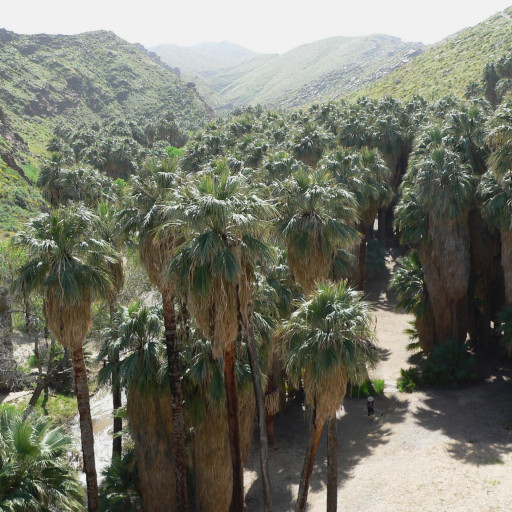
Plant Overview
The Washingtonia Filifera, famously known as the California Fan Palm or the "Petticoat Palm," is a majestic symbol of the American Southwest. As the only palm tree native to the Western United States, it creates the iconic silhouette of desert oases and Hollywood boulevards alike. In the wild, it forms lush "sky islands" where water meets the desert heat, providing a vital sanctuary for birds and wildlife.
🔍 How to Identify
- 🌿 The "Filaments": Look closely at the leaf segments; you’ll see thin, white, thread-like fibers peeling away from the edges. This "lint" is exactly why its species name is filifera (meaning "thread-bearing").
- 🖐️ Fan-Shaped Fronds: Unlike the "feather" fronds of a Date Palm, these leaves are shaped like massive circular fans, often reaching 6 to 8 feet across.
- 👗 The Shaggy Skirt: If left untrimmed, the dead brown fronds hang down against the trunk, creating a thick, protective "petticoat" or "hula skirt" that reaches all the way to the ground.
- 🐘 Massive Trunk: It features a very thick, barrel-shaped trunk that is significantly wider and more robust than its cousin, the Mexican Fan Palm.
🏡 In Your Garden
- ☀️ Sun-Seeker Nuance: While it is incredibly heat-tolerant, this palm is a "desert oasis" plant. In a garden setting, it thrives when its roots can reach a deep water source, even if the air is bone-dry.
- 🏗️ Space Planning: Never plant this close to a house or power lines. It grows fast and its trunk girth can become massive over time; it needs plenty of "elbow room" to reach its full 60-foot potential.
- 🌬️ Cold Hardiness: Among the desert palms, this is one of the toughest. It can survive temperatures as low as 15°F-18°F, making it a favorite for gardeners in slightly cooler Mediterranean climates.
⚠️ Safety & Toxicity
- ✅ Non-Toxic: Good news for pet owners—the California Fan Palm is considered non-toxic to dogs, cats, and horses.
- ⚔️ Saw-Toothed Stems: Use extreme caution when pruning. The edges of the leaf stems (petioles) are armed with sharp, curved teeth that can easily slice through skin or gardening gloves.
- 🔥 Fire Hazard: The "skirt" of dead fronds is highly flammable. If you live in a wildfire-prone area, it is highly recommended to keep the trunk "shaved" or trimmed to prevent a vertical fire ladder.
✨ Fun Fact
The Cahuilla people of the Colorado Desert considered this tree a "Tree of Life." They used the fronds for roofing and sandals, ate the small black fruits (which taste like sweetened dates), and ground the seeds into flour!

Detailed Care Instructions
| Humidity | Normal |
| Lighting | Part Sun |
| Difficulty | Medium |
| Hibernation | Cold Period |
| Temperature | 16°C - 27°C |
| Hardiness Zones | 7B - 11B |
To grow a Washingtonia filifera plant, also known as the California fan palm, you can follow these steps:
- Climate: Ensure that you live in a suitable climate for this plant. Washingtonia filifera is native to desert regions of southern California and is best grown in USDA hardiness zones 8a to 11b, where temperatures rarely drop below 10°F (-12°C).
- Location: Choose a sunny spot in your garden with well-draining soil. Washingtonia filifera prefers full sun but can tolerate some partial shade.
- Soil: Prepare the soil by adding organic matter such as compost to improve drainage and enrich the soil. The pH level should be slightly acidic to neutral.
- Planting: Dig a hole that is twice as wide and deep as the root ball of your Washingtonia filifera sapling. Place the sapling in the hole, ensuring the roots are spread out. Backfill the hole with soil and gently tamp it down to remove any air pockets.
- Watering: Immediately after planting, water the sapling thoroughly to settle the soil. Afterward, water Washingtonia filifera regularly during the first year to establish its roots. Once established, it is drought-tolerant and only requires occasional watering, especially during hot and dry periods.
- Mulching: Apply a layer of organic mulch, such as wood chips or bark, around the base of the palm to help retain moisture and suppress weeds. Avoid piling the mulch against the trunk, as this can encourage rot.
- Pruning: Remove any dead or yellowing fronds (leaves) as needed. Be cautious not to remove too many healthy fronds at once, as this can stress the plant.
- Fertilization: Washingtonia filifera generally doesn't require regular fertilization. However, if necessary, you can apply a slow-release palm fertilizer according to the manufacturer's instructions. Over-fertilizing can damage the plant.
- Protection: During severe frost events, protect young or newly planted Washingtonia filifera plants by covering them with a frost cloth or taking other measures to shield them from the cold.
- Patience: Growing Washingtonia filifera into a mature palm tree can take several years, as it is a slow-growing species. Be patient and provide proper care to help it thrive.
Remember to consult local gardening resources or professionals for specific advice tailored to your region's climate and soil conditions.

Place in a window with dappled sun or a spot in the middle of a room. Or directly in a window facing west or east.

To properly water this plant, it is important to first assess the soil moisture level. One way to do this is to stick your finger a few inches into the soil – if it feels dry, it's time to water. When watering, aim to saturate the soil around the base of the plant, avoiding wetting the foliage. Allow the water to soak in before watering again, and avoid overwatering to the point of soil saturation or standing water. This plant generally requires watering 1-2 times per week, depending on environmental factors like temperature and humidity.
- Choose a fertilizer with balanced NPK (nitrogen, phosphorus, and potassium) ratios designed for palms.
- Apply the fertilizer during the growing season (spring and summer), every 4 to 6 weeks.
- Avoid over-fertilization, as excessive nitrogen can cause salt buildup and damage the roots.
- Water the plant thoroughly before and after fertilization to prevent burning.
- Apply the fertilizer evenly around the base of the plant, following the manufacturer's recommended dosage and application method.
- Monitor the plant for signs of nutrient deficiency, such as yellowing leaves, and adjust the fertilizer accordingly.
- Keep a regular watering schedule and ensure proper drainage to maximize the effectiveness of the fertilizer.
The optimal soil for this particular plant is a well-draining soil with a slightly acidic to neutral pH. It should be composed of a mixture of sand, loam, and some organic matter. The soil should be able to hold moisture but also allow excess water to drain away from the roots. It is important to avoid using heavy soils that can become waterlogged and suffocate the roots of the plant. Additionally, it is recommended to fertilize the plant every few months with a slow-release fertilizer that is specific to palms.
To propagate this plant, you need to first have a healthy and mature specimen with ripe seeds. Once the seeds are obtained, they should be soaked in water for a few days to remove the fleshy pulp around them. The seeds should then be planted in a well-draining soil mix, about 1 inch deep, and kept in a warm and humid environment.
It is important to keep the soil consistently moist but not waterlogged. The seeds should germinate in about 2-3 weeks, at which point they can be transplanted to individual pots.
For vegetative propagation, the plant can be propagated through suckers or offsets that grow from the base of the parent plant. Use a sharp and sterile instrument to carefully separate the offshoots and plant in a well-draining soil mix. Water thoroughly and keep the soil consistently moist until the offshoot starts to establish roots.
Propagation through division of the parent plant's rhizomes is also possible but should be done with caution to avoid damaging the plant.
Regardless of the propagation method, the newly propagated plants should be placed in bright but indirect light and gradually acclimated to full sun once they have established roots and new growth.
Common pests of the california fan-palm include Scale insect, mealybugs, spider mites. Make a habit of checking your california fan-palm frequently for pests so that any infestations can be caught and managed early.








