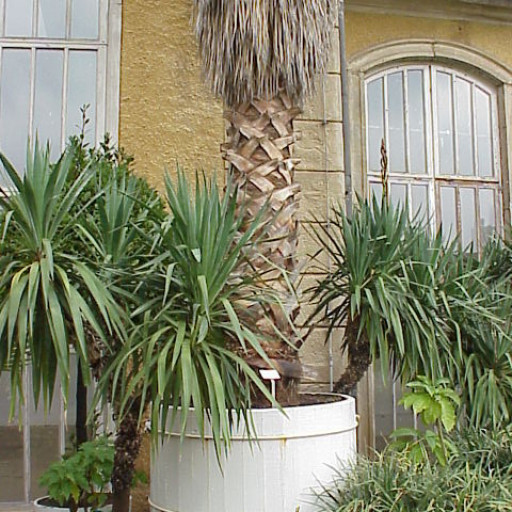
Plant Overview
Commonly known as the Mexican Fan Palm or the "Sky Duster," Washingtonia robusta is the quintessential silhouette of the Southern California and Mediterranean skyline. Native to the desert oases of northwestern Mexico, this palm is famous for its incredible height and slender profile. It is a fast-growing favorite for those who want a "tropical" look in record time, though it eventually reaches heights that dwarf most suburban homes.
🔍 How to Identify
- 🍃 The Fronds: Large, bright green, fan-shaped leaves (palmate) that can reach up to 5 feet across. Look for fine, thread-like fibers hanging between the leaf segments.
- 🌴 The Trunk: Unlike its "chunky" cousin (the California Fan Palm), the robusta has a very slender, tapering trunk that is dark brown and often has a distinctive reddish-brown patch near the base.
- 🪚 The Petioles: The leaf stalks are armed with fierce, curved "teeth" or spines along the edges. These are a primary identifier and can be quite sharp.
- 👗 The "Skirt": If not pruned, the dead old fronds will fold down against the trunk, creating a thick, brown "shag rug" or "hula skirt" that can reach all the way to the ground.
🏡 In Your Garden
- 🚀 Fast-Track Growth: This is one of the fastest-growing palms in the world. While it starts as a cute potted plant, it quickly demands space. It is highly resistant to salt spray and urban pollution, making it a "street-side hero."
- 💧 Water & Roots: While extremely drought-tolerant once established, it actually thrives with regular deep watering. It possesses a surprisingly compact root ball for its height, which makes it easier to transplant than many other large trees.
- ✂️ Maintenance Nuance: Homeowners often choose to "skin" the trunk (removing the leaf bases) to give it a smooth, cigar-like appearance. However, be wary of the "skirt" of dead leaves; if left unmanaged, it can become a fire hazard or a high-rise apartment for rodents and pigeons.
⚠️ Safety & Toxicity
- 🟢 Non-Toxic: The Mexican Fan Palm is generally considered non-toxic to dogs, cats, and humans.
- ⚔️ Physical Hazard: The primary danger lies in the "teeth" on the leaf stalks. These can cause painful punctures or scratches during pruning. Always wear heavy gloves and eye protection when handling fronds.
- 🧗 Height Risk: Because they grow so tall so quickly, DIY pruning becomes dangerous after a few years. Professional arborists are usually required to trim the upper canopy safely.
✨ Fun Fact
The Mexican Fan Palm can reach heights of nearly 100 feet (30 meters). It is often taller than the equipment of local fire departments, which is why you’ll often see very old specimens with unpruned "skirts" at the very top—they are simply too high for most ladders to reach!

Detailed Care Instructions
Mexican fan palms are very fast growers and can grow up to 3 feet per year. At their mature height, these palms can reach up to 100 feet tall.
How long can Mexican fan palms live?
Mexican fan palms can live hundreds of years. In fact, some have been known to live up to 500 years.
What’s the difference between Mexican fan palms and California fan palms?
These palms can be differentiated based on their size. Mexican fan palms reach up to 100 feet tall while their trunks measure only 2 feet wide at their widest point, and can taper down to 8 inches at their thinnest point. The California fan palm reaches up to 50 feet tall with a trunk up to 3 feet wide.
| Lighting | Full Sun |
| Hardiness Zones | 8A - 11 |
To grow a Washingtonia Robusta plant, also known as Mexican Fan Palm or Skyduster, you can follow these steps:
- Choose a suitable location: Washingtonia Robusta requires full sun to grow properly. Select a spot in your garden or yard that receives at least six to eight hours of direct sunlight each day. Ensure the area has well-draining soil.
- Planting: Dig a hole that is wider and deeper than the root ball of the plant. Gently loosen the roots before placing the palm in the hole. Ensure that the base of the trunk is level with or slightly above the ground. Backfill the hole with soil and firm it gently around the root ball.
- Watering: Initially, water the tree generously to help establish its roots. Water deeply and allow the soil to dry out between waterings. Once the tree is established, it is drought-tolerant and only requires occasional watering.
- Fertilizer: Apply a slow-release palm fertilizer in spring and summer to promote healthy growth. Follow the instructions on the fertilizer package for the correct application rate.
- Pruning: Remove any dead or dying fronds from the tree, but avoid pruning the green fronds unless necessary. Only remove green fronds if they are obstructing paths or other structures.
- Protection from extreme cold: Washingtonia Robusta is cold-hardy, but it may need protection from frost or freezing temperatures. Cover the tree with frost cloth or burlap during winter months if necessary.
- Mulching: Apply a layer of organic mulch, such as wood chips or compost, around the base of the palm tree to retain moisture and keep the roots cool. Avoid piling mulch against the trunk to prevent rot.
- Regular maintenance: Regularly inspect the tree for pests, such as spider mites or scale insects, and treat them accordingly. Watch for signs of nutrient deficiencies, yellowing leaves, or stunted growth, and adjust fertilizer application as needed.
Remember, Washingtonia Robusta plants can grow quite tall, sometimes reaching up to 80 feet (24 meters). Ensure you have enough vertical space to accommodate their growth.

Place in a window with dappled sun or a spot in the middle of a room. Or directly in a window facing west or east.

The Washingtonia Robusta plant should be watered deeply and thoroughly, allowing the soil to absorb the water before watering again. This plant requires consistent moisture but should not be overwatered as it can cause root rot. It is best to water slowly at the base of the plant to avoid getting the foliage wet. The frequency of watering will depend on the soil type, climate, and amount of sunlight the plant receives. It is important to maintain a consistent watering schedule to keep the plant healthy and thriving.
- In early spring or late winter, apply a slow-release fertilizer to the soil around the base of the plant.
- Fertilize every two months during the growing season (spring and summer) with a balanced fertilizer, containing equal amounts of nitrogen, phosphorus and potassium.
- Avoid over-fertilizing, as this can burn the plant and damage its roots.
- Water the plant well before and after fertilizing to ensure the nutrients are absorbed properly.
- Monitor the plant for signs of nutrient deficiencies, such as yellowing leaves, stunted growth, or poor fruit production.
- Adjust the fertilization schedule and type of fertilizer as needed based on the plant's needs and soil conditions.
The ideal soil for this plant is a well-draining soil mixture that is rich in nutrients. It should be a mixture of sand, perlite, and peat moss or coconut coir. A pH level of 6.0 to 7.5 is ideal for this plant. Avoid using heavy clay soils or soils that retain too much moisture, as this can lead to root rot. It is also important to ensure that the soil is kept moist but not waterlogged, as the plant requires consistent watering to thrive. Fertilize the plant with a balanced fertilizer every two weeks during the growing season for optimal growth.
To propagate the plant, you will need to obtain seeds from mature plants. Once you have obtained the seeds, plant them in a pot with well-draining soil, which should be kept moist but not waterlogged.
Keep the pot in a warm, sunny location and ensure that the soil remains moist at all times. You should see seedlings start to emerge within a few weeks.
As the seedlings grow, you may need to transplant them into larger pots to provide them with more space to grow. Once they have reached a suitable size, you can then transplant them into their final location in the garden or landscape.
Keep in mind that Washingtonia Robusta plants are slow-growing and can take several years to reach full maturity. However, with proper care and attention, they will eventually grow into beautiful, towering specimens that provide shade and beauty to your garden.
Common pests of the mexican fan palm include Scale insect, mealybugs, spider mites. Make a habit of checking your mexican fan palm frequently for pests so that any infestations can be caught and managed early.








