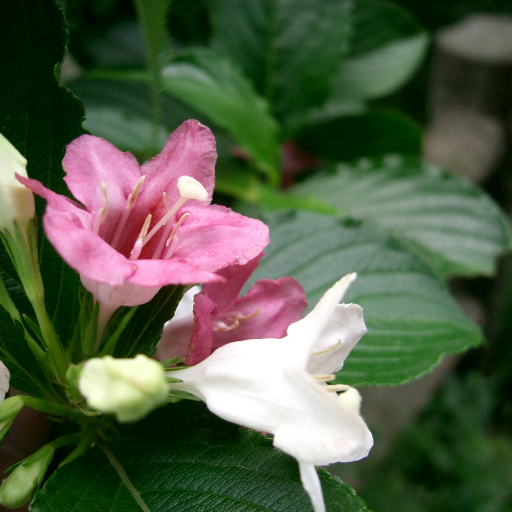
Plant Overview
Often called the "Jewel of the Garden," Weigela is a classic deciduous shrub beloved for its explosive spring displays. Originally hailing from the hillsides of East Asia, these hardy bushes have been a staple in cottage gardens for centuries. Their elegant, trumpet-shaped blossoms act as a natural dinner bell for pollinators, signaling the true arrival of the warm season.
🔍 How to Identify
- 🌸 The Blooms: Features masses of five-lobed, funnel-shaped flowers that appear in clusters. They range in color from creamy white and soft pink to deep, dramatic crimson.
- 🍃 The Foliage: Leaves are typically oval with pointed tips and finely serrated edges. While the classic species is green, modern varieties are famous for deep burgundy, lime-gold, or variegated white-and-green leaves.
- 🌿 Growth Habit: It is a multi-stemmed shrub with a naturally rounded or arching shape. Depending on the cultivar, it can stay as small as a foot or reach a towering 10 feet tall.
🏡 In Your Garden
- ✂️ Pruning Timing: The most important rule for Weigela is when to cut it. Because it blooms on "old wood" (stems from the previous year), you should only prune it immediately after the spring flowers fade. Pruning in winter will accidentally cut off all of next year's flower buds!
- ☀️ Sun for Color: While the plant is tough and can grow in partial shade, it needs full sun to produce its best colors. This is especially true for "purple-leaf" varieties, which will turn a muddy green if they don't get enough UV light.
- 🦋 Pollinator Paradise: Because of the deep, tubular shape of the flowers, Weigela is a favorite of hummingbirds and butterflies. Planting these near a porch or window provides a front-row seat to nature’s feeding frenzy.
⚠️ Safety & Toxicity
- ✅ Non-Toxic: Weigela is generally considered non-toxic to humans, dogs, and cats.
- 🐾 Pet Friendly: It is an excellent choice for "pet-scaping." While you should discourage your pets from chewing on the woody branches to avoid minor stomach upset, the plant does not contain systemic toxins that pose a threat to your furry friends.
✨ Fun Fact
The genus was named in honor of the German scientist Christian Ehrenfried Weigel, who was the personal physician to the Swedish royalty in the late 18th century! This "royal" plant has since traveled from the imperial gardens of the East to backyards all over the world.

Detailed Care Instructions
To successfully grow a Weigela plant, follow these steps:
- Choose the right location: Weigela plants prefer full sun to partial shade. Ensure that the planting location has well-drained soil.
- Prepare the soil: Before planting, loosen the soil and remove any weeds or grass from the area. Amend the soil with organic matter such as compost to improve its fertility and drainage.
- Planting: Dig a hole that is wider and slightly deeper than the root ball of the Weigela plant. Place the plant in the hole, ensuring that the top of the root ball is level with the ground. Fill the hole with soil and gently firm it around the base of the plant.
- Watering: Give the newly planted Weigela a thorough watering. Water deeply and regularly, especially during dry periods or hot weather. Avoid overwatering, as this can lead to root rot.
- Mulching: Apply a layer of mulch around the base of the plant to help conserve moisture, control weeds, and regulate soil temperature. Use organic mulch like wood chips or bark, and ensure that it does not touch the stem of the plant.
- Pruning: Weigelas benefit from regular pruning to maintain their shape and promote blooming. Prune immediately after flowering by removing dead, damaged, or crossing branches. This will stimulate new growth and improve the plant's overall health.
- Fertilizing: Apply a slow-release fertilizer in early spring to provide the necessary nutrients for healthy growth. Follow the instructions on the fertilizer packaging for the correct application rate.
- Pest and disease control: Monitor the plant for any signs of pests or diseases such as aphids or powdery mildew. If necessary, treat these issues promptly with appropriate insecticides or fungicides.
Remember to regularly check and care for the Weigela plant as it grows. Watering, pruning, and maintaining the right growing conditions will help ensure its successful growth.

Place in a bright room that is sun drenched almost all day. Or directly in a south-facing window.

To water this plant, you should first inspect the soil to determine if it's dry. Stick your finger about an inch into the soil to gauge its moisture level. If it feels dry, it's time to water. Use a watering can or hose with a gentle spray attachment to water the roots directly, avoiding getting water on the leaves or flowers. Water the plant until the soil is thoroughly soaked and water begins to drain out of the bottom of the pot or onto the ground. Avoid overwatering, as this can cause root rot. Depending on the climate and conditions, watering may be necessary once a week or every 2-3 days. Adjust the frequency of watering based on the moisture level of the soil. Finally, be sure to provide plenty of drainage to prevent water from accumulating around the roots.
To nourish this bush, apply a slow-release fertilizer in early spring. Spread a layer of compost or well-rotted manure over the soil around its base. Water thoroughly after applying fertilizer. Repeat the process again in mid-summer for best results. Avoid fertilizing too late in the growing season as it can encourage new growth that may not have time to harden off before winter.
When planting a certain shrub species, it is essential to use soil that is rich in organic matter and well-draining. This will ensure that the roots receive enough oxygen and nutrients to thrive. Additionally, the soil pH should be slightly acidic to neutral, with a range of 6.0-7.0.
It is recommended to amend the soil with compost or peat moss prior to planting, to help retain moisture and provide nutrients. When planting, dig a hole twice as wide and deep as the root ball, and backfill with soil mixture, ensuring that the plant is planted at the same depth as it was in the nursery container. Water regularly and mulch around the base of the plant to help retain moisture and prevent weed growth.
Weigela plant can be propagated through various techniques, including stem cuttings, layering, and seed germination. One method is stem cutting propagation, which involves selecting healthy stems from the parent plant during the dormant season. Cuttings should be approximately 4-6 inches in length with a few leaves attached. Remove the bottom leaves and dip the cut end in rooting hormone before planting in soil or a rooting medium. Keep the cuttings moist and warm in a shaded area, and they should begin to grow roots within a few weeks. Once established, the new plants can be transplanted into larger containers or the garden. Layering involves bending a low-hanging branch of the parent plant and burying a section of the stem in soil until it roots, which can take several months. Finally, seed germination can be done by harvesting mature seed pods from the parent plant and sowing them in moist, well-draining soil in the fall or early spring.







