Plant Overview
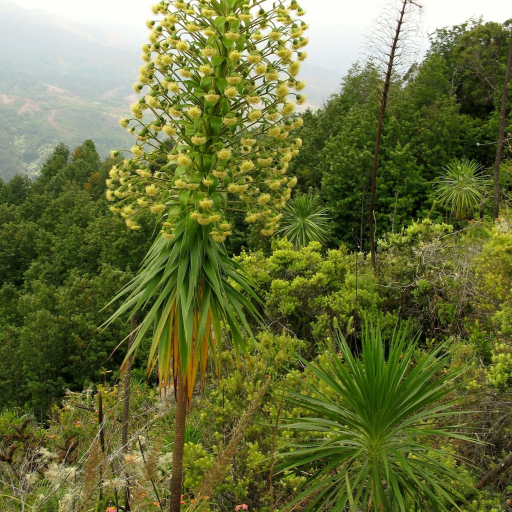
The Iliau is often described as a "pom-pom on a stick," a striking architectural wonder found nowhere else on Earth except the dry ridges of Kauaʻi, Hawaii. A close relative of the famous Silversword, this plant is a master of island evolution, having adapted to survive on steep, volcanic slopes. It spends years as a solitary rosette before ending its life in a spectacular explosion of golden blossoms.
🔍 How to Identify
- 🌿 The Rosette: Long, narrow, grass-like leaves form a dense, circular tuft at the top of a slender, woody stem.
- 📏 The Stature: While the main stem is thin, it can grow up to 12 feet tall, lifting its crown of leaves high above the surrounding scrubland.
- 🌼 The Bloom: When mature, it produces a massive, branched flower spike (inflorescence) covered in hundreds of small, yellow, daisy-like flower heads.
- 🍂 Post-Bloom Appearance: After its single flowering event, the entire plant turns brown and dries out, standing as a skeletal "ghost" on the hillside.
🏡 In Your Garden
- 🌱 The Ultimate Specialist: This is not a typical houseplant or garden specimen. It is highly specialized to the volcanic soils and specific moisture levels of the Waimea Canyon region. It is rarely seen in private gardens because it is extremely sensitive to changes in humidity and drainage.
- ⏳ A One-Time Show: Like its Silversword cousins, the Iliau is monocarpic. This means it grows for many years (usually 7 to 10), blooms exactly once, and then dies. It pours all its life energy into that final, breathtaking floral display to ensure the next generation of seeds.
⚠️ Safety & Toxicity
- ✅ Safe for All: The Iliau is not known to be toxic to humans, dogs, or cats. It is a gentle giant of the plant world.
- 🛑 Conservation Status: Because it is endemic only to Kauaʻi and has a very limited range, the biggest safety concern is for the plant itself. Touching the leaves can disturb the delicate "bloom" (a waxy coating) that protects it from the intense tropical sun.
✨ Fun Fact
The Iliau is part of what scientists call the "Silversword Alliance." Genetic testing revealed that this tall, woody shrub and its high-altitude cousins evolved from a single, small ancestor—a California Tarweed—that somehow hitched a ride to Hawaii millions of years ago!

Detailed Care Instructions
To grow Wilkesia gymnoxiphium, also known as the Haleakala silversword, you can follow these steps:
- Obtain seeds or seedlings: Obtain seeds or seedlings from a reputable source such as a nursery specializing in native or rare plants. This plant is endemic to the island of Maui in Hawaii and may require permission or special permits to obtain.
- Choose the right location: Wilkesia gymnoxiphium prefers a sunny location with well-draining soil. It is adapted to high elevations, so it needs cool temperatures and good air circulation.
- Prepare the soil: Ensure the soil is well-draining by adding organic matter like compost or well-rotted manure. Mix it into the soil before planting to improve fertility and drainage.
- Plant the seeds or seedlings: Follow the instructions provided with the seeds or seedlings. If using seeds, scatter them over the prepared soil and gently press them into the ground. If using seedlings, dig a hole slightly larger than the root ball and place the seedling in it, backfilling with soil.
- Watering: Keep the soil consistently moist but not waterlogged. Wilkesia gymnoxiphium requires regular watering, especially during dry periods or when first establishing. Avoid overwatering, as it can lead to root rot.
- Mulching: Apply a layer of organic mulch around the plant to help retain moisture, prevent weed growth, and maintain a cool root system.
- Pruning and care: Wilkesia gymnoxiphium does not require much pruning. However, remove any dead, damaged, or diseased leaves or stems. Regularly monitor for pests and diseases and take appropriate action if necessary.
- Fertilizing: While Wilkesia gymnoxiphium grows well without fertilization in its native habitat, you can apply a slow-release, organic fertilizer once or twice a year during the growing season to provide some extra nutrients.
- Protection from extreme weather: Protect the plant from extreme weather conditions, such as freezing temperatures or excessive heat. Consider providing a frost cover or moving containers indoors during winter.
- Be patient: Growing Wilkesia gymnoxiphium from seeds can be a slow process, sometimes taking several years to see significant growth. Be patient and provide consistent care to ensure the plant's long-term health and success.
Note: Wilkesia gymnoxiphium is a threatened species and may have legal protections or restrictions on propagation or cultivation. Make sure to obtain it from legal and ethical sources and follow any local regulations or guidelines.

Wilkesia Gymnoxiphium needs to be watered on a regular basis, but it is important not to overwater it as it is susceptible to root rot. Check the soil moisture level frequently, and water only when the top inch or so of the soil feels dry to the touch. When watering, be sure to saturate the soil thoroughly, and avoid getting water on the leaves as it can contribute to fungal growth. During the winter months, when the plant is dormant, reduce watering to once every two weeks. It is also important to use well-draining soil and a pot with drainage holes to ensure excess water can escape.
To fertilize this plant, use a balanced fertilizer with equal amounts of nitrogen, phosphorus, and potassium. Apply the fertilizer once a month during the growing season, which is typically from spring to fall. Make sure to follow the manufacturer's instructions for proper dilution and application rates. Avoid fertilizing during the winter months, as the plant is not actively growing and does not require nutrients. Additionally, ensure that the soil is moist before and after fertilization to prevent root burn.
Wilkesia Gymnoxiphium plant requires a well-draining soil mix that is rich in organic materials. The soil should have good water retention capabilities while also allowing for proper drainage to prevent waterlogging. It is important to use a soil mix that is slightly acidic in nature with a pH range of 5.5 to 6.0. The soil mix should also be free of any harmful chemicals or fertilizers that could harm the plant. It is recommended to use a combination of peat moss, perlite, and sand to create the ideal soil mix for Wilkesia Gymnoxiphium plant. The peat moss helps to retain moisture while the perlite and sand improve drainage and aeration. Additionally, adding compost or organic fertilizers to the soil mix can help provide essential nutrients to the plant.
Wilkesia gymnoxiphium is a flowering plant that belongs to the family Asteraceae. To propagate this plant, first, you need to collect a mature and healthy stem cutting from the parent plant. The cutting should be taken from the top of the plant and should be around 6-8 inches long. Once the cutting is collected, remove any leaves from the lower half of the stem.
Next, prepare a potting mix by combining equal parts of perlite, peat moss, and sand. Fill a small pot with the potting mix and make a hole in the center. Dip the lower end of the cutting in rooting hormone powder and place it in the hole. Gently press the soil around the cutting to hold it in place.
Water the cutting thoroughly so that the soil is moist but not waterlogged. Cover the pot with a plastic bag to create a humid environment. Keep the pot in a warm, bright location but away from direct sunlight.
Check the cutting regularly and mist it with water if the soil appears dry. After a few weeks, the cutting should start to produce roots. Once the new roots are visible, gently remove the plastic bag and place the pot in a location where it will receive bright, indirect light.
Continue to water the cutting regularly, keeping the soil moist but not waterlogged. After a few months, the cutting should have established enough roots to be transplanted into a larger pot or directly into the ground. With proper care, the new plant should grow into a healthy, mature Wilkesia gymnoxiphium plant.








