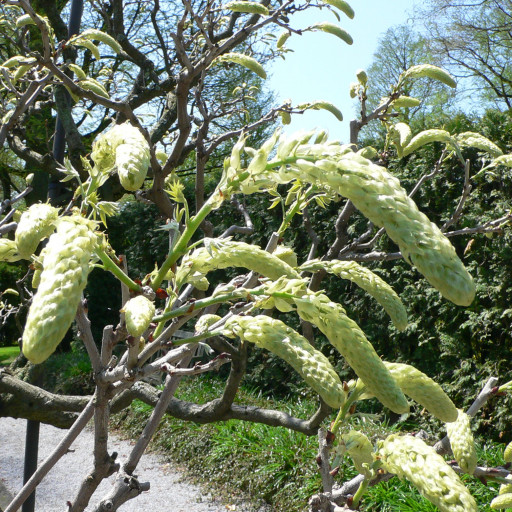
Plant Overview
Often referred to as the "Queen of Climbers," Wisteria floribunda creates a romantic, dream-like atmosphere with its cascading purple blooms. Originating from Japan, this woody vine is famous for its "flower curtains" that look like they've been plucked straight from a fairy tale. Unlike its Chinese cousin, the Japanese Wisteria is prized for having the longest and most fragrant flower racemes in the entire genus.
🔍 How to Identify
- 🌸 Flowering Racemes: It produces spectacular, pendulous clusters of pea-like flowers that can reach up to 3 feet (1 meter) in length, usually in shades of violet, blue, or white.
- 🌿 Leaf Structure: It features alternate, pinnate leaves with 13 to 19 leaflets, giving the foliage a delicate, feathery appearance that provides great shade.
- 🌀 Twining Habit: Look closely at the trunk; the woody stems of the Japanese species always twine clockwise around their support, a key feature that distinguishes them from Chinese Wisteria.
🏡 In Your Garden
- 🏗️ Structural Support: Because these vines become incredibly heavy and "muscle-bound" with age, they require a very sturdy arbor, pergola, or stone wall. Avoid flimsy plastic or thin wood lattices, as the vine can easily crush them.
- ✂️ Pruning Requirements: This plant is a "vigorous" grower, which is a polite way of saying it wants to take over your house. Regular pruning twice a year is essential—once in summer to control runners and once in winter to encourage those iconic flower buds.
- ☀️ Blooming Patience: If your Wisteria isn't blooming, it likely needs more sunlight or a hit of phosphorus. Plants grown from seed can take over a decade to flower, so most gardeners prefer grafted plants for immediate results.
⚠️ Safety & Toxicity
- 🚫 Toxicity Status: All parts of the Wisteria plant are considered toxic to humans, dogs, cats, and horses.
- 🌰 The Danger Zone: The seeds and seed pods are the most poisonous parts of the plant, containing a glycoside called wisterin. Ingestion can cause severe stomach upset, vomiting, and collapse. Always pick up fallen pods if you have curious pets or small children.
✨ Fun Fact
The Great Wisteria at Ashikaga Flower Park in Japan is roughly 150 years old and covers nearly 2,000 square meters. Its branches are so heavy that they are supported by hundreds of hand-carved wooden pillars, creating a literal "sky" of purple flowers for visitors to walk under.

Detailed Care Instructions
| Color | Blue To Violet, Pink, White |
| Soil Ph | Acidic |
| Humidity | Normal |
| Lighting | Full Sun |
| Toxicity | Toxic |
| Soil Type | Average Soil With Good Drainage |
| Bloom Time | May |
| Difficulty | Medium |
| Plant Type | Vine |
| Hibernation | Cold Period |
| Mature Size | 4 To 8 Ft. Wide, 10 To 25 Ft. Tall |
| Native Area | Japan |
| Sun Exposure | Full Sun |
| Hardiness Zones | 4-9 |
Here are some tips on how to grow Wisteria Floribunda plant:
- Choose the right location: Wisteria plants thrive in full sun exposure, so select a spot that receives at least 6-8 hours of direct sunlight daily.
- Soil preparation: Wisterias prefer well-draining soil that is slightly acidic. Amend the soil with organic matter such as compost or well-rotted manure to improve drainage and fertility.
- Planting: Dig a hole twice as wide and deep as the root ball of your wisteria plant. Place the plant in the hole and backfill with soil, firming gently. Water the plant thoroughly after planting.
- Watering: Wisteria plants require regular watering, especially during dry periods. The soil should be kept evenly moist but not waterlogged. Provide a deep watering at least once a week.
- Mulching: Apply a layer of organic mulch around the base of the plant to help retain soil moisture and prevent weed growth. Avoid piling up the mulch against the stem, as it can lead to root rot.
- Pruning: Wisterias benefit from regular pruning to control their growth and promote flowering. Prune in late winter or early spring when the plant is dormant. Remove any dead or damaged wood and cut back excessive growth to maintain the desired shape and size.
- Support structure: Wisterias are vigorous climbers and require a sturdy support structure like a trellis, arbor, or pergola. Make sure the structure is strong enough to handle the weight of the mature plant.
- Fertilization: Apply a balanced fertilizer in early spring or late winter to provide nutrients to the plant. Follow the package instructions for proper dosage and application.
- Pest and disease control: Keep an eye out for common pests like aphids, leafhoppers, and spider mites. Regularly inspect the plant for signs of disease, such as powdery mildew or root rot, and take appropriate measures to control them.
- Patience: Wisterias can take a few years to start flowering. Be patient and continue to provide proper care and maintenance, and eventually, you will be rewarded with beautiful cascades of flowers.
Remember to check the specific care requirements for your particular variety of Wisteria Floribunda, as they may have slight variations.

Place in a bright room that is sun drenched almost all day. Or directly in a south-facing window.

When watering this plant, it is important to make sure that the soil is moist but not waterlogged. One way to do this is to water deeply once a week, allowing the water to penetrate down to the root zone. It is also important to avoid getting water on the leaves and flowers, as this can promote fungal diseases. In addition, during periods of hot, dry weather, it may be necessary to water more frequently to prevent the plant from becoming stressed. Overall, taking care to water this plant properly can help it thrive and produce beautiful blooms.
To fertilize this plant, use a balanced fertilizer containing nitrogen, phosphorus, and potassium. Apply the fertilizer in the early spring and again in mid-summer. Be sure to water the plant thoroughly after fertilizing. Avoid over-fertilizing, as this can lead to excessive foliage growth and reduced blooming.
The ideal soil for Wisteria Floribunda should have a good drainage system. It should be rich in organic matter and have a slightly acidic pH level, ideally between 6.0 and 7.0. The soil should also be able to retain moisture while also allowing for proper airflow. Avoid using heavy soils that are dense and compact, as this may hinder root growth and oxygenation. Instead, opt for a lightweight, well-draining soil that will allow for optimal root development and plant growth. To ensure your Wisteria Floribunda thrives, it is important to regularly fertilize the soil with a high-quality organic fertilizer and make sure it is watered adequately.
To propagate this plant, you will need a healthy specimen with strong roots and stems. Choose a healthy stem and make a cut just below a leaf node. Dip the cut end in rooting hormone and plant it in a mixture of sand and potting soil. Place the cutting in a warm, bright location, and keep the soil moist. In a few weeks, new roots should start to grow. Once the roots are established, you can transplant the cutting to a larger container or directly into the soil in a sunny location. Water regularly and fertilize with a balanced fertilizer to encourage healthy growth.








