Plant Overview
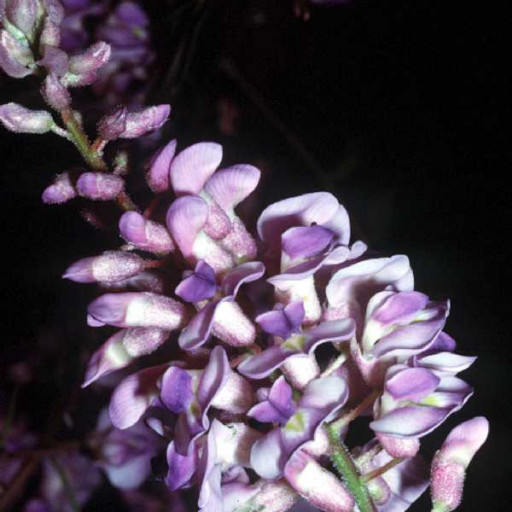
Known as the "polite" relative of the wisteria family, Wisteria frutescens, or American Wisteria, is a stunning woody vine native to the United States. Unlike its aggressive Asian cousins that can tear down porches, this variety is far more well-behaved, making it a favorite for home gardeners who want the romantic look of cascading purple blooms without the structural damage. Often called the "Amethyst Falls" (after its most popular cultivar), it brings a touch of Southern charm and a sweet, musky fragrance to any trellis or arbor.
🔍 How to Identify
- 💜 The Blooms: Look for compact, drooping clusters (racemes) of lilac-purple flowers that are about 4 to 6 inches long. They look slightly "plumper" and shorter than the long, trailing fringe of Chinese wisteria.
- 🌿 The Foliage: The leaves are compound, meaning one stem holds 9 to 15 smooth, dark green leaflets. These usually emerge before the flowers, providing a lush green backdrop for the purple clusters.
- 🌀 The Twine: If you look closely at the vine, it climbs by twining in a counter-clockwise direction. The bark is smooth and grey-brown, becoming more rugged and "muscular" as the plant ages.
🏡 In Your Garden
- 🦋 A Pollinator Party: Because it is a native species, it is a vital host plant for several butterfly species, including the Long-tailed Skipper and the Silver-spotted Skipper.
- ✂️ Manageable Growth: While it is a vigorous grower, it won't "strangle" your garden. It is much easier to prune and keep in check than invasive varieties, making it ideal for smaller urban gardens or large containers.
- ☀️ Bloom Patience: This plant prefers full sun to produce the best flowers. Unlike some vines that flower in the shade, American Wisteria needs that sunlight to fuel its late-spring display.
⚠️ Safety & Toxicity
- 🚫 Status: Toxic to humans and pets.
- 🐾 Details: All parts of the plant contain wisterin (a glycoside) and a toxic resin. The seeds and seed pods are the most dangerous part. If ingested by dogs, cats, or children, it can cause severe gastrointestinal distress, including vomiting and stomach pain. Always wear gloves when pruning if you have sensitive skin, as the sap can occasionally cause mild irritation.
✨ Fun Fact
Unlike the Chinese and Japanese varieties that bloom on "old wood" in early spring, the American Wisteria blooms on "new wood" in late spring and early summer. This means even if a late frost hits your garden, you won't lose your flowers for the year!

Detailed Care Instructions
| Color | Blue, Purple, White |
| Soil Ph | Acidic, Neutral |
| Humidity | High |
| Lighting | Full Sun |
| Toxicity | Poisonous |
| Soil Type | Moist But Well-Drained |
| Bloom Time | Spring, Summer |
| Difficulty | Medium |
| Plant Type | Vine |
| Hibernation | Cold Period |
| Mature Size | 20 To 30 Ft. Long |
| Native Area | North America |
| Temperature | 21°C - 30°C |
| Sun Exposure | Full, Partial |
| Hardiness Zones | 5-9 |
To grow Wisteria frutescens, also known as American Wisteria, you can follow these steps:
- Select a suitable location: Choose a spot with full sun to partial shade (at least 6-8 hours of direct sunlight). Make sure the soil is well-draining and has good fertility.
- Planting: Wisteria frutescens can be grown from seeds, cuttings, or container-grown plants. If using seeds or cuttings, sow them in containers in early spring or fall. If using container-grown plants, dig a hole twice the size of the root ball and place the plant inside. Fill the hole with soil, firm it gently, and water thoroughly.
- Support structure: Wisteria plants are climbing vines, so they need a sturdy support structure. Install a trellis, pergola, or arbor in the planting area before or after planting.
- Watering: Wisterias prefer evenly moist soil, so water them deeply once or twice a week, depending on rainfall and temperature. Avoid overwatering as it can lead to root rot.
- Fertilization: Apply a balanced slow-release fertilizer in early spring and again in mid-summer. Follow the package instructions for proper dosage.
- Pruning: Wisteria frutescens blooms primarily on new growth, so it benefits from regular pruning. Prune in late winter or early spring to control its size and shape. Remove any dead, damaged, or diseased wood. Cut back long shoots to encourage branching and increased flowering.
- Training: As the plant grows, gently train it along the support structure, redirecting new growth as necessary. You can use ties or twine to secure the branches until they are firmly attached.
- Pest and disease control: Monitor for pests like aphids, scale insects, and caterpillars. Treat infestations accordingly and use organic or chemical insecticides as needed. Watch out for diseases such as powdery mildew and leaf spot, which can be treated with appropriate fungicides.
- Patience: Wisteria plants can take several years to reach maturity and start blooming profusely. Be patient and provide consistent care and maintenance.
By following these steps, you should be able to successfully grow Wisteria frutescens and enjoy its beautiful cascading blooms.

Place in a bright room that is sun drenched almost all day. Or directly in a south-facing window.

To water this plant, make sure to keep the soil moist but not too wet. Water deeply once a week, allowing the water to soak in fully before watering again. Avoid getting water on the foliage of the plant as this may lead to fungal diseases. Additionally, make sure to plant it in a well-drained soil as it does not tolerate waterlogged conditions.
To ensure healthy growth of this plant, use a balanced fertilizer with equal amounts of nitrogen, phosphorous, and potassium. Apply the fertilizer in early spring, before new growth appears. Apply the fertilizer again in early summer, after the plant has finished blooming. Water the plant after fertilizing to help distribute the nutrients evenly. Avoid over-fertilizing, as this can lead to excessive foliage growth at the expense of blooming.
The ideal soil for this plant should be well-draining and rich in organic matter. It should have a pH range of 6.0 to 8.0, which is slightly acidic to slightly alkaline. The soil should also be moist but not waterlogged. It is important to avoid compacted or heavy clay soils, as they can lead to poor root growth and drainage issues. Adding compost, leaf litter, or peat moss can help to improve soil quality and provide nutrients for the plant. Additionally, adding sand to the soil can improve drainage and prevent waterlogging. Overall, the best soil for this plant is one that is loose, well-draining, and rich in organic matter.
To propagate this plant, take semi-ripe cuttings in the summer and root them in a well-draining soil mix. Make sure to remove any leaves on the bottom half of the cutting and dip it in a rooting hormone before planting it in the soil. Keep the soil moist and the cutting in a bright, but indirect light. Once the cutting has rooted and has new growth, it can be transplanted into a larger container or into the ground.








