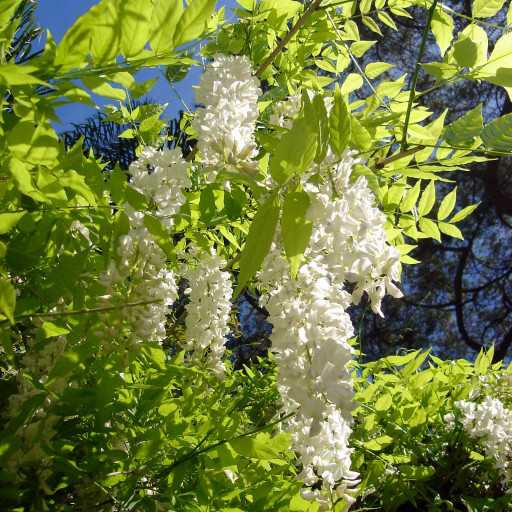
Plant Overview
Often called the "Purple Rain" of the gardening world, Wisteria sinensis is a legendary woody climber that drapes landscapes in romantic, fragrant cascades. Originating from China, this vine has been a staple of eastern art and poetry for centuries, symbolizing longevity and the grace of a life well-lived. Its twisting, muscular trunk can transform a simple backyard fence into a spectacular floral theater every spring.
🔍 How to Identify
- 💜 The Blooms: It produces massive, drooping clusters (racemes) of pea-like flowers, typically in shades of lavender, violet, or white, which famously burst into bloom before the leaves fully emerge.
- 🌀 The Counter-Clockwise Twist: You can distinguish Chinese Wisteria from its Japanese cousin by the way it climbs; the woody vines of Wisteria sinensis always twin in a counter-clockwise direction around their support.
- 🍃 The Foliage: The leaves are "pinnate," meaning they look like green feathers made up of 7 to 13 individual oval leaflets that turn a subtle gold in the autumn.
🏡 In Your Garden
- 🏗️ Structural Strength: This is not a plant for flimsy plastic trellises. As it matures, the vine becomes immensely heavy and powerful; it is known to crush gutters, lift shingles, and snap weak wood, so provide a heavy-duty metal or stone support.
- ✂️ The Pruning Ritual: To prevent your Wisteria from becoming a "vine that ate the house," you must be a disciplined pruner. Cutting it back twice a year (once in summer and once in winter) is the secret to encouraging flower buds rather than just aggressive green growth.
⚠️ Safety & Toxicity
- 🚫 Toxic Status: High. All parts of the plant contain wisterin (a glycoside) and a toxic resin, with the seeds and pods being the most dangerous parts.
- 🐾 Pets & Children: If ingested, the bean-like seeds can cause severe gastrointestinal distress, including vomiting, stomach pain, and dehydration. It is best to plant it in areas where fallen pods can be easily cleared away from curious pets.
✨ Fun Fact
Wisteria is a member of the Fabaceae (legume) family, making it a distant relative of the common garden pea! Despite its delicate appearance, it is incredibly long-lived; some specimens in China are documented to be several centuries old.

Detailed Care Instructions
| Color | Bluish-Purple, Mauve, White |
| Soil Ph | Slightly Acidic |
| Humidity | Normal |
| Lighting | Part Sun |
| Soil Type | Humusy, Medium Moisture, Well-Draining |
| Bloom Time | May To June |
| Difficulty | Medium |
| Plant Type | Vine |
| Hibernation | Cold Period |
| Mature Size | 10 To 25 Feet Long With A 4- To 8-Foot Spread |
| Native Area | China |
| Sun Exposure | Full Sun To Part Sun |
| Hardiness Zones | 5-8 |
To grow Wisteria Sinensis plant, also known as Chinese Wisteria, you can follow these steps:
- Plant Selection: Choose a healthy, well-established Wisteria Sinensis plant from a reputable nursery or garden center. Look for a plant with strong, green leaves and a well-developed root system.
- Location: Wisteria plants prefer a sunny location with at least six hours of direct sunlight every day. Make sure the soil is well-draining, as Wisterias do not tolerate soggy conditions.
- Planting: Dig a hole that is twice as wide and equally deep as the plant's root ball. Place the plant in the hole and backfill with soil, ensuring that the crown of the plant (where the stem meets the roots) is level with the ground. Gently firm the soil around the roots.
- Support Structure: Install a sturdy support structure, such as a trellis or pergola, for the Wisteria to climb on. The support structure should be able to withstand the weight of the mature vines.
- Watering: Water the plant thoroughly after planting and keep the soil evenly moist until the plant becomes established. Once established, Wisteria plants are moderately drought-tolerant but still benefit from regular watering during dry periods.
- Pruning: Prune the plant in late winter or early spring to control its size and shape. Remove any dead or damaged wood, and cut back excessive growth to maintain a desired size.
- Fertilizing: Wisteria plants generally do not require heavy fertilization. However, you can apply a balanced slow-release fertilizer in early spring to promote healthy growth.
- Pests and Diseases: Keep an eye out for common pests such as aphids and spider mites, and treat accordingly if necessary. Wisterias are generally resilient plants, but they can be susceptible to diseases such as powdery mildew. Ensure good air circulation around the plant and consider using appropriate treatments if needed.
- Patience: Wisteria plants can take several years to bloom, so be patient and provide proper care and maintenance during this time. Once established and mature, the plant will reward you with beautiful, cascading clusters of flowers.
Remember that Wisteria Sinensis is a vigorous climber and can become invasive if not properly maintained. Regular pruning and monitoring will help keep it under control and allow for optimal growth.

Place in a bright room that is sun drenched almost all day. Or directly in a south-facing window.

To water this plant, fill a watering can with fresh water and bring it to the plant. Ensure that the soil is dry to the touch before watering to avoid overwatering. Place the spout of the watering can close to the base of the plant and pour slowly, allowing the water to soak into the soil. Be careful not to get any water on the leaves or flowers, as this can cause damage or disease. Water the plant regularly, but do not let the soil become waterlogged. Adjust the frequency of watering depending on the temperature and humidity levels in the plant's environment.
To promote the growth of a certain plant species, you may fertilize it with balanced or low-nitrogen fertilizer in spring. Use a slow-release fertilizer following the instructions on the package, and avoid over-fertilizing, as this can damage the plant's roots. Additionally, avoid placing the fertilizer too close to the base of the plant, as this can also cause harm.
When choosing soil for the plant with the scientific name Wisteria Sinensis, it is important to consider its growing requirements. The soil should be well-draining and fertile, with a pH between 6 and 7.5. It should be rich in organic matter and nutrients, but not overly dense or compacted.
To ensure good drainage, a mixture of garden loam, sand, and perlite can be used. The sand and perlite will help to keep the soil loose and aerated, while the garden loam will provide a source of nutrients.
It is also important to consider the location of the plant when deciding on soil. If the plant will be grown in a container, a potting mix specifically formulated for woody plants may be more appropriate. If the plant is being planted directly in the ground, the existing soil may need to be tested and amended with organic matter and nutrients as needed.
Overall, choosing the right soil for Wisteria Sinensis is crucial for the health and growth of this beautiful plant.
To propagate this plant, first select a healthy stem cutting that has two or three leaves, and make a clean cut just below a node. Remove the lowest leaf from the cutting, leaving at least one leaf on the stem.
Next, dip the cut end of the stem into rooting hormone powder to encourage root growth. Insert the cutting into moist potting soil, making sure that the soil covers the node where the leaf was removed. Water the cutting well, and cover it with a clear plastic bag to create a humid environment.
Keep the cutting in a warm, bright location, but out of direct sunlight. Check the soil regularly to ensure that it stays moist, but not water-logged. After a few weeks, roots should start to form and new growth will appear.
Once the plant has established roots, it can be moved to a larger pot or planted in the ground. Wisteria Sinensis prefers well-draining soil and partial to full sunlight. With proper care, the propagated plant should grow into a beautiful, flowering vine.








