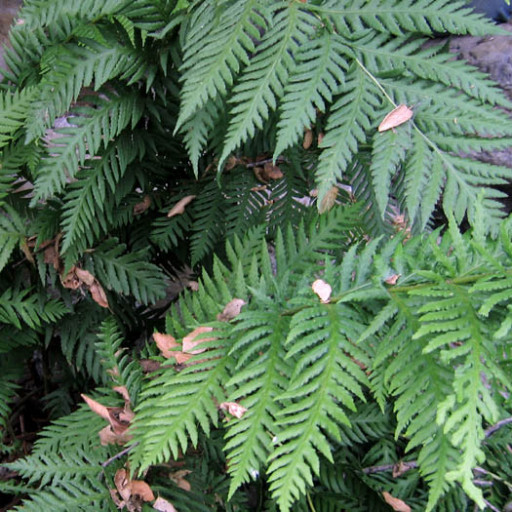
Plant Overview
Known as the "Giant Chain Fern," Woodwardia fimbriata is the undisputed titan of North American ferns. These prehistoric-looking giants evoke a sense of ancient Jurassic forests, often reaching heights that can actually dwarf a human. Primarily found along the Pacific coast, they are beloved by gardeners for their architectural elegance and their ability to transform a damp, shady corner into a lush, evergreen sanctuary.
🔍 How to Identify
- 🌿 The Fronds: Massive, arching, leathery fronds that can grow up to 9 feet long in ideal conditions. They are bipinnate (divided twice), giving them a dense, feathery appearance.
- 🔗 The "Chain" Sori: On the underside of the leaves, look for the spore cases (sori). They are uniquely arranged in neat, oblong rows that look exactly like the links of a heavy metal chain.
- 🪴 Growth Habit: This fern grows in a majestic, vase-like clump from a stout, woody base, rather than spreading wildly like some of its smaller cousins.
🏡 In Your Garden
- 💧 Thirst for Moisture: Because its natural habitat involves stream banks and coastal seeps, this fern hates "dry feet." It is the perfect choice for low spots in the yard or areas with heavy clay soil that stays damp.
- 🌲 Shadow Dweller: It thrives in deep to partial shade. While it can handle some morning sun, the intense afternoon heat will scorch its massive fronds, turning the edges a crispy brown.
⚠️ Safety & Toxicity
- ✅ Safe for All: Woodwardia fimbriata is widely considered non-toxic to humans, cats, and dogs.
- 🧤 Texture Warning: While not poisonous, the stems (stipes) are very stiff and covered in brown scales. When pruning old fronds, it is a good idea to wear gloves to avoid minor skin scrapes or "paper cuts" from the tough foliage.
✨ Fun Fact
The Giant Chain Fern holds deep cultural significance; many Indigenous tribes of the Pacific Northwest used the strong, reddish-brown fibers from the fern’s stems to create intricate patterns in traditional basketry and even used the fronds as floor coverings in temporary shelters.

Detailed Care Instructions
To grow Woodwardia fimbriata, also known as giant chain fern or giant fern, you can follow these steps:
- Choose the right location: Giant chain fern prefers partial shade or filtered sunlight. Select a location in your garden that receives dappled sunlight or morning sun and afternoon shade.
- Soil preparation: The plant grows well in moist, well-drained soil rich in organic matter. Amend the soil with compost or well-rotted manure to improve moisture retention.
- Watering: Giant ferns require consistent moisture. Water the plant regularly, aiming to keep the soil evenly moist but not waterlogged. Avoid allowing the soil to dry out completely.
- Mulching: Apply a layer of organic mulch around the base of the plant to help retain moisture in the soil and prevent weed growth. This is particularly important during hot summer months.
- Fertilization: Use a balanced, slow-release fertilizer to provide essential nutrients to the fern. Apply the fertilizer according to the package instructions during the growing season.
- Pruning: Although not mandatory, you may consider pruning the plant to remove any damaged or dead fronds. This will encourage new growth and maintain a tidy appearance.
- Winter care: Woodwardia fimbriata is partially evergreen and can tolerate mild frosts. However, if you live in an area with harsh winters, you can protect the fern by providing a layer of mulch around the base or covering it with burlap during extreme cold spells.
- Propagation: You can propagate giant chain ferns through spore propagation. Collect spores from mature fronds and sow them in a sterile seed-starting mix. Keep the soil consistently moist and maintain high humidity until the spores germinate.
By following these steps, you should be able to successfully grow Woodwardia fimbriata in your garden.

Place in a window with dappled sun or a spot in the middle of a room. Or directly in a window facing west or east.

When watering this plant, it is important to keep the soil evenly moist but not water-logged. It prefers well-draining soil that does not retain excess moisture. When watering, use room temperature water and saturate the soil until water begins to flow out of the bottom of the pot or container. It is important to avoid getting water on the foliage of the plant as this can lead to fungal diseases. Additionally, ensure that the plant is not placed in direct sunlight or overly dry conditions, as this can cause the leaves to wilt or brown. If the plant shows signs of dehydration or wilting, increase watering frequency until it recovers.
To fertilize this species of plant, use a balanced fertilizer in early spring, summer, and fall. Apply the fertilizer at a rate recommended on the label. Avoid over-fertilizing as this can damage the plant. Always water the plant after fertilizing to prevent any burning of the roots.
The ideal soil for the plant in question should be a well-draining, fertile soil that is high in organic matter. It should be slightly acidic, with a pH range of 5.5-7.0, and have good moisture retention. Sandy loam or loamy soils are ideal for these plants. The soil should also be rich in nutrients such as nitrogen, phosphorus, and potassium. It is recommended to amend the soil with compost or well-rotted manure to improve its fertility and structure. Avoid using heavy, clay-based soils as they tend to hold too much moisture and can lead to root rot. Additionally, it is important to ensure that the soil is free of any contaminants such as industrial waste or pollutants, as they can harm the plant's health.
Propagation of this plant can be achieved through spores or divisions. To propagate through spores, collect spores from mature fronds and sow them into a well-draining soil mixture in a humid environment. Once the spores have germinated, the resulting gametophytes can be transferred to pots or containers.
To propagate through divisions, carefully separate the plant’s root system into smaller pieces, making sure each piece has several fronds and a healthy root system. These smaller pieces can be planted in new pots or locations and given proper care and attention to encourage growth and establishment.
Common pests of the giant chain fern include Mealybugs, spider mites, aphids. Make a habit of checking your giant chain fern frequently for pests so that any infestations can be caught and managed early.








