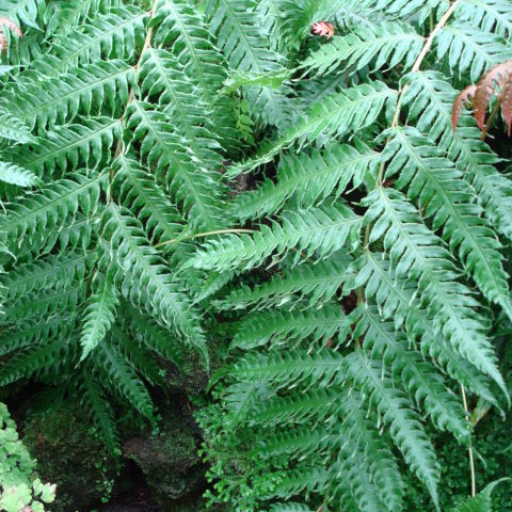
Plant Overview
Meet the "Jeweled Chain Fern," a prehistoric-looking giant that brings a touch of Jurassic elegance to any shaded corner. Known for its spectacular, arching fronds that can span several feet, this fern is famous for its "jewels"—tiny baby plantlets that grow directly on the tips of its leaves. It is the perfect choice for gardeners who want a lush, tropical atmosphere without living in the deep tropics.
🔍 How to Identify
- 🌿 The "Chain" Sori: If you flip a mature leaf over, you will see spore cases (sori) arranged in neat, recessed lines that look exactly like the links of a delicate jeweler's chain.
- 💎 The Single Jewel: This fern gets its name from the single, fuzzy brown bud (bulbil) found near the tip of its long fronds, which eventually grows into a miniature clone of the parent.
- 🎨 Coppery New Growth: Unlike many ferns that emerge bright green, the new fronds of the Jeweled Chain Fern often unfurl in a stunning shade of coppery pink or bronze.
🏡 In Your Garden
- 🏗️ Dramatic Architecture: Because the fronds are heavy and arch downward, this plant looks its best when planted on a slope, a retaining wall, or in a large raised bed where the leaves can "weep" naturally toward the ground.
- 💧 Humidity is Key: This species hails from the damp forests of the Himalayas and East Asia. It hates dry air and parched soil; it thrives best in "drip zones" or near water features where the air remains cool and moist.
- 🍂 Self-Propagating: If the tip of a frond touches moist soil, the "jewel" bud will take root. Over time, the fern can "walk" across a garden bed, creating a beautiful, interconnected colony.
⚠️ Safety & Toxicity
- ✅ Safe Status: Woodwardia unigemmata is generally considered non-toxic to humans, cats, and dogs.
- 🧤 Physical Handling: While not poisonous, the mature stems (stipes) are very tough and wiry. Use sharp shears rather than pulling by hand when grooming the plant to avoid damaging the crown or getting a "rope burn" from the stems.
✨ Fun Fact
The Jeweled Chain Fern is a master of the "long game." In the wild, it often grows on steep cliffs. By producing a plantlet at the very tip of its long leaf, it can reach out and "grab" a foothold on a distant ledge that its roots couldn't otherwise reach!

Detailed Care Instructions
To successfully grow Woodwardia unigemmata (Congest) plants, follow these steps:
- Climate and Sunlight:
- Woodwardia unigemmata prefers warm and humid environments.
- Plant them in an area that receives partial to full shade. They cannot tolerate direct sunlight.
- Woodwardia unigemmata prefers warm and humid environments.
- Soil type and moisture:
- Choose a well-draining soil that is slightly acidic to neutral pH.
- Ensure the soil remains consistently moist during the growing season.
- Add organic matter like compost or peat moss to improve soil fertility and retain moisture.
- Choose a well-draining soil that is slightly acidic to neutral pH.
- Planting:
- Select a suitable location or a container with enough space for the plant to grow.
- Dig a hole slightly larger than the root ball.
- Place the plant in the hole and backfill gently, ensuring the plant is sitting at the same level as it was in the nursery pot.
- Water thoroughly after planting to settle the soil.
- Select a suitable location or a container with enough space for the plant to grow.
- Watering and Humidity:
- Woodwardia unigemmata requires regular watering to keep the soil consistently moist.
- Avoid overwatering or letting the soil dry out completely.
- Use lukewarm water to avoid shocking the plant.
- High humidity levels are essential for healthy growth, so mist the leaves regularly or place a tray of water nearby to increase humidity.
- Woodwardia unigemmata requires regular watering to keep the soil consistently moist.
- Fertilization:
- Apply a balanced slow-release fertilizer in spring to provide necessary nutrients.
- Follow the package instructions for the appropriate amount of fertilizer to use.
- Avoid over-fertilizing, as it can lead to leaf burn or nutrient toxicity.
- Apply a balanced slow-release fertilizer in spring to provide necessary nutrients.
- Mulching:
- Apply a layer of organic mulch, like shredded bark or compost, around the base of the plant.
- Mulching helps retain moisture, suppress weeds, and maintain a cool root environment.
- Apply a layer of organic mulch, like shredded bark or compost, around the base of the plant.
- Pruning:
- Regular pruning is not required for Woodwardia unigemmata. However, remove any dead or damaged fronds as needed.
- Regular pruning is not required for Woodwardia unigemmata. However, remove any dead or damaged fronds as needed.
- Winter Care:
- If you live in an area with winters that dip below freezing, provide protection for the plant.
- Mulch the base of the plant heavily with straw, leaves, or wood chips to insulate the roots.
- Use burlap or a frost blanket to cover the plant during cold snaps.
By following these guidelines, you can successfully grow Woodwardia unigemmata indoors or in suitable outdoor conditions.
- If you live in an area with winters that dip below freezing, provide protection for the plant.

Place in a window with dappled sun or a spot in the middle of a room. Or directly in a window facing west or east.
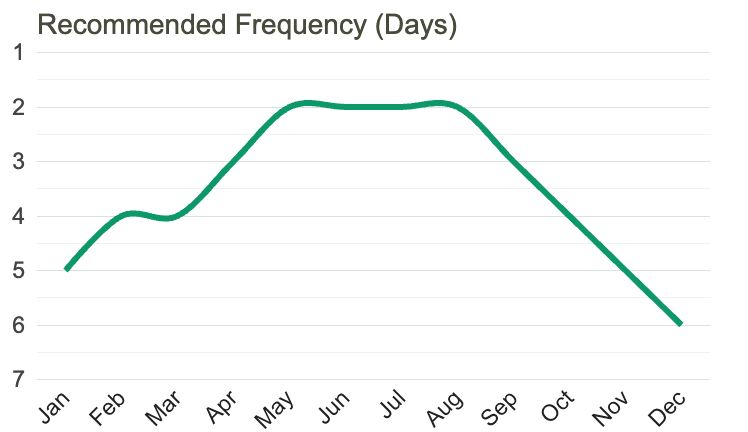
This plant should be watered regularly to maintain adequate moisture levels. However, care should be taken not to overwater as this could lead to root rot. It is important to ensure that the soil is well-draining and not water-logged. When watering, it is best to water the soil directly rather than the leaves. This helps prevent any moisture buildup on the leaves, which could increase the risk of fungal diseases. In addition to regular watering, this plant can benefit from occasional misting to increase the humidity levels around the plant. Overall, the key is to maintain consistent moisture levels in the soil and avoid allowing it to dry out completely or become water-logged.
To effectively fertilize Woodwardia Unigemmata, you will need to follow these instructions:
- Choose a balanced water-soluble fertilizer with equal amounts of nitrogen, phosphorus, and potassium. A ratio of 10-10-10 or 20-20-20 is suitable.
- Dilute the fertilizer according to the instructions on the package, usually 1 tablespoon per gallon of water.
- Water the plant thoroughly before applying fertilizer to ensure the soil is moist.
- Use a watering can or sprayer to evenly apply the diluted fertilizer to the soil around the base of the plant, avoiding direct contact with the foliage.
- Apply the fertilizer every 2-4 weeks during the growing season, which is typically from spring to early fall.
- Adjust the frequency of fertilization based on the plant's response and growth rate. If the plant shows signs of overfertilization, such as burnt leaves or stunted growth, reduce the frequency or dilute the fertilizer further.
- Avoid fertilizing during the winter months when the plant enters a period of dormancy.
- Regularly monitor the soil moisture and adjust watering accordingly to prevent over or under-watering.
- Consider supplementing the fertilizer application with organic matter, such as compost, to improve soil fertility and support long-term plant health.
- Lastly, always follow the specific instructions provided by the fertilizer manufacturer as different products may have varying guidelines for application and dosage.
To ensure optimal growth for the plant Woodwardia Unigemmata, it is recommended to use a soil that is rich in nutrients and has good drainage properties. The soil should be moist but not waterlogged, as excess water can lead to root rot and stunted growth. A well-draining potting mix that contains a mix of organic matter such as compost, peat moss, and sand can be used. Adding perlite or vermiculite to the soil can also improve drainage. It is important to avoid using heavy soils or soils that are too compacted, as they can restrict root growth and cause nutrient deficiencies. Overall, the soil used for Woodwardia Unigemmata should be loose, light, and allow for adequate air circulation to encourage healthy plant growth.
Woodwardia unigemmata is a perennial fern belonging to the Blechnaceae family. Propagating this fern can be achieved through various methods, including spore propagation and division of established plants. Here's a detailed guide on how to propagate Woodwardia unigemmata:
- Spore propagation:
- Start by identifying mature fronds that have developed spores. These can usually be found on the undersides of the fronds.
- Prepare a clean, sterile container filled with a suitable growing medium, such as a mixture of peat moss and perlite.
- Gently remove the mature fronds from the plant and place them on a clean surface or paper towel.
- Allow the fronds to dry for a couple of days until the spores are fully matured.
- Once dry, hold the fronds over the container and gently shake or tap them, allowing the spores to fall onto the growing medium.
- Cover the container with a clear plastic lid or plastic wrap to create a humid environment.
- Place the container in a warm and well-lit location, but avoid direct sunlight.
- Mist the growing medium regularly to maintain a moist environment, ensuring it doesn't dry out.
- The spores will germinate and develop into small fern plants called gametophytes.
- After a few months, healthy gametophytes can be transplanted into individual containers or a prepared planting area.
- Start by identifying mature fronds that have developed spores. These can usually be found on the undersides of the fronds.
- Division:
- Choose a mature Woodwardia unigemmata plant with multiple crowns or clumps.
- Carefully dig up the plant, ensuring you do not damage the root system.
- Gently separate the plant into individual clumps by teasing the roots apart. You may need to use a sharp and sterile tool, such as a garden knife or pruners.
- Each separated clump should have its own set of roots and at least one emerging frond.
- Fill new pots or a prepared planting area with a suitable growing medium, such as a mix of well-draining soil and organic matter.
- Plant each clump, making sure the roots are well covered but the rhizomes or crowns are slightly exposed above the soil surface.
- Water the newly divided plants thoroughly to settle the soil and provide necessary moisture.
- Place the pots or planted divisions in a partially shaded area to reduce stress and aid in establishment.
- Regularly water the newly propagated plants, keeping the soil consistently moist but not waterlogged.
- Over time, the divisions will establish their root systems and develop into mature plants.
These propagation methods can be effective in reproducing Woodwardia unigemmata plants, allowing you to expand your fern collection or share them with other gardening enthusiasts.
- Choose a mature Woodwardia unigemmata plant with multiple crowns or clumps.








