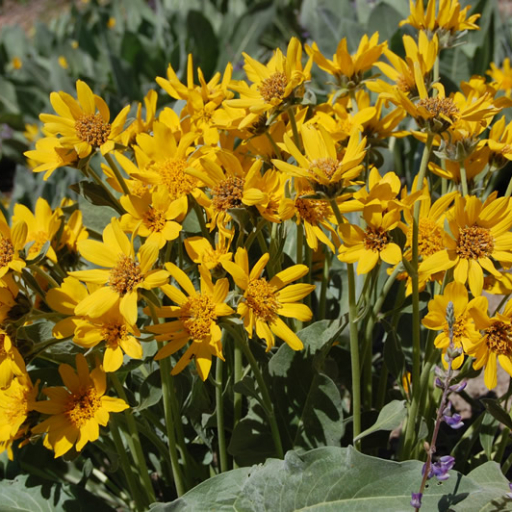
Plant Overview
Often called the Woolly Mule's Ears, Wyethia mollis is a stunning, silver-clothed perennial that blankets the mountain meadows of the Sierra Nevada and southern Cascades. Its nickname comes from its large, upright leaves that look remarkably like the ears of a mule, while its "woolly" coat gives it a ghostly, luminous glow under the mountain sun. Historically, various Native American tribes valued this plant for its medicinal properties and nutritious seeds.
🔍 How to Identify
- 🐘 Velvety Foliage: The most striking feature is its large, lance-shaped leaves covered in dense, white, felt-like hairs. This "fuzz" gives the plant a distinct silvery-gray or sage-green color.
- 🌻 Sunny Blooms: It produces bright yellow, sunflower-like flower heads that sit atop sturdy stems. Each flower has a dark golden center surrounded by petal-like ray florets.
- 🌱 Low Clumping Habit: The plant grows in robust, dense clumps, usually reaching about 1 to 3 feet in height. Before it flowers, it looks like a cluster of soft, upright ears emerging from the soil.
🏡 In Your Garden
- 🏜️ The Taproot Secret: This plant is incredibly drought-tolerant because it grows a massive, deep taproot. Because of this, it is notoriously difficult to transplant once established; choose its permanent "forever home" carefully in a sunny, well-draining spot.
- ☀️ Built-in Sunscreen: Those soft hairs aren't just for show—they act as a natural sunscreen and windbreak, reflecting intense mountain UV rays and trapping moisture against the leaf. This makes it a perfect "low-water" hero for rock gardens or native landscapes.
⚠️ Safety & Toxicity
- ✅ Generally Safe: Wyethia mollis is not considered toxic to humans or common household pets. In fact, it was a traditional food source for some indigenous groups.
- 🧶 Mechanical Irritation: While not chemically toxic, the tiny "wool" hairs on the leaves can occasionally irritate sensitive skin or cause a "scratchy" feeling if handled excessively or if the dust from dry leaves is inhaled.
✨ Fun Fact
The thick, woolly hairs on the leaves are so effective at insulating the plant that it can survive late-spring snowstorms in the high mountains. When the snow melts, the "Mule's Ears" often pop out looking perfectly preserved, while less-hairy plants might have withered from the frost!

Detailed Care Instructions

Place in a bright room that is sun drenched almost all day. Or directly in a south-facing window.

Some plants require more regular watering than others, which should be done every few days. It's critical to maintain the soil moist all of the time. The water requirements of the same plant placed in pots with varying sizes will differ. Because the water in the smaller pot evaporates faster than the water in the larger pot, it will require more watering. Regardless of pot size, the surface should constantly be maintained moist.








