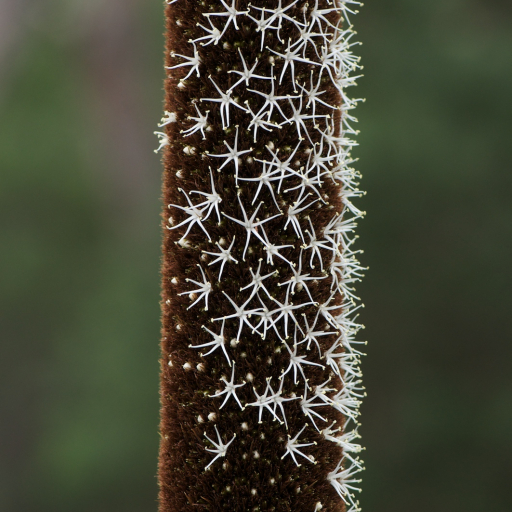
Plant Overview
Commonly known as the Austral Grass Tree, this iconic Australian native is a true "living fossil" that brings a prehistoric look to any landscape. Despite its name, it is neither a grass nor a tree, but a long-lived monocot that can survive for several centuries. These plants are famous for their incredibly slow growth—often taking ten years just to form a trunk—and their remarkable ability to thrive in the wake of intense bushfires.
🔍 How to Identify
- 🍃 The Crown: Features a dense, fountain-like explosion of stiff, needle-shaped leaves. These leaves are blue-grey to green and are roughly diamond-shaped in cross-section.
- 🪵 The Trunk: A thick, blackened "trunk" formed by the accumulation of old leaf bases held together by a natural waterproof resin. It often appears charred, a testament to its fire-adapted nature.
- 🚀 The Spear: When mature, it produces a spectacular, woody flower spike that can tower up to 3 meters high, eventually covered in tiny, nectar-rich creamy blossoms.
🏡 In Your Garden
- 🏜️ Drainage is Vital: The biggest threat to an Austral Grass Tree is "wet feet." They are highly susceptible to root rot (Phytophthora), so they must be planted in sandy, free-draining soil with plenty of airflow.
- 🍄 The Fungal Bond: These plants have a "soulmate" in the form of beneficial soil fungi (mycorrhizae) that help them pull nutrients from poor soil. Because of this delicate relationship, they hate being moved; transplanting a Grass Tree is very risky and often leads to the plant failing.
- 🌞 Patience is a Virtue: Because they grow as slowly as 1cm to 2cm per year, buying a specimen with a visible trunk means you are adopting a plant that is likely decades, if not a century, old.
⚠️ Safety & Toxicity
- ✅ Status: Non-toxic to humans, dogs, and cats.
- ⚔️ Sharp Edges: While not chemically toxic, the leaves are stiff and come to a sharp point. Avoid planting them directly next to narrow paths where the "needles" might poke passersby or curious pets in the eye.
✨ Fun Fact
Indigenous Australians traditionally used the resin from the trunk as a powerful "super glue" to fasten stone tool heads to wooden handles. Additionally, the dried flower spikes were used as light-weight spear shafts, and the nectar from the flowers was soaked in water to create a sweet, energy-boosting drink.

Detailed Care Instructions
To grow Xanthorrhoea Australis, also known as the Austral Grass Tree or Black boy, you can follow these steps:
- Choose a suitable location: Xanthorrhoea Australis requires a sunny location with well-draining soil. It prefers slightly acidic to neutral soil.
- Prepare the soil: Ensure the soil is well-draining and fertile. If the soil is heavy clay, amend it with organic matter like compost or sand to improve drainage.
- Planting: Dig a hole twice as wide and deep as the root ball of the plant. Place the plant in the hole, ensuring that the crown of the plant (where the leaves emerge) is at ground level. Backfill the hole with soil, gently firming it around the roots.
- Watering: Water the plant thoroughly after planting and continue to water regularly, especially during dry spells or the first year of growth. Xanthorrhoea Australis is a drought-tolerant plant but needs regular watering in the initial stages.
- Mulching: Apply a layer of organic mulch around the base of the plant, leaving a gap around the crown to prevent rot. Mulching helps retain moisture, moderates soil temperature, and suppresses weed growth.
- Pruning: Xanthorrhoea Australis does not require regular pruning. However, you can remove any dead or damaged leaves by cutting them back to the trunk. Avoid cutting the trunk itself as it will not regenerate.
- Fertilizing: Young plants can benefit from a balanced slow-release fertilizer applied according to the instructions. Once established, Xanthorrhoea Australis does not typically require additional fertilization.
- Protect from frost: In colder climates, protect the plant from freezing temperatures by covering it with frost cloth or moving potted plants indoors during winter.
- Patience: Xanthorrhoea Australis is a slow-growing plant, requiring several years to reach its full size. Be patient and enjoy watching it grow gradually.
- Maintenance: Keep the area around the plant free of weeds to reduce competition for nutrients and water. Regularly inspect the plant for signs of pests or diseases and take appropriate action if necessary.
Remember to check with local nurseries or gardening centers for specific care instructions based on your location and regional climate.

Place in a bright room that is sun drenched almost all day. Or directly in a south-facing window.

The X plant should be watered deeply but infrequently, allowing the soil to dry out completely between watering sessions. Watering should be done at the base of the plant rather than from above, as this will help to prevent rot and disease. When watering, pour water slowly and evenly around the base of the plant, making sure to saturate the soil thoroughly. Avoiding getting any water on the plant's foliage or stem. In general, the plant prefers well-draining soil that is low in nutrients. Overwatering can lead to root rot and other problems, so it is important to be mindful of how much water the plant is receiving.
To fertilize this plant, you should use a slow-release fertilizer that is specifically designed for Australian native plants. Apply the fertilizer in early spring and again in late summer by lightly scattering it around the base of the plant. Make sure to water the plant well after applying the fertilizer and avoid getting any on the leaves or trunk. It's important not to over-fertilize this plant, as it can cause damage to the roots.
Xanthorrhoea Australis is a plant that prefers a well-draining soil mix that is rich in nutrients to promote healthy growth. The soil should be comprised of a mixture of equal parts of sand, perlite or vermiculite, and peat moss or coir. This will provide the plant with excellent drainage to prevent root rot and adequate aeration. The soil mix should be slightly acidic with a pH level of 5.5 to 6.5. It is also important to ensure that the soil is not too compacted, as this can prevent the roots from growing and accessing the nutrients they need. When planting or repotting the Xanthorrhoea Australis plant, it is crucial to provide it with fresh soil that is free from any pests or diseases that could harm the plant.
To propagate this plant, first, locate mature individuals that have produced seed pods. Harvest the seeds when they are mature and dry. Then, sterilize the seeds by washing them in a diluted disinfectant solution to prevent fungal and bacterial infections.
Prepare a well-draining potting soil mix composed of equal parts perlite, sterile potting soil, and sand. Fill the seed tray with this mixture and moisten the soil. Sow the seeds at a depth of 2 to 3 times the diameter of the seed.
Cover the seed tray with a plastic lid or transparent polythene to create a humid environment. Place the tray in a warm location that receives indirect light. Water the tray regularly to keep the soil moist but not waterlogged.
The seeds will germinate within two to four weeks, and after about six months, the seedlings will form a taproot and their first set of leaves. Carefully transplant the seedlings into individual small pots, and continue to care for them until they are mature enough to be planted in the ground.
Common pests of the austral grass tree include Spider mites, aphids, thrips. Make a habit of checking your austral grass tree frequently for pests so that any infestations can be caught and managed early.








