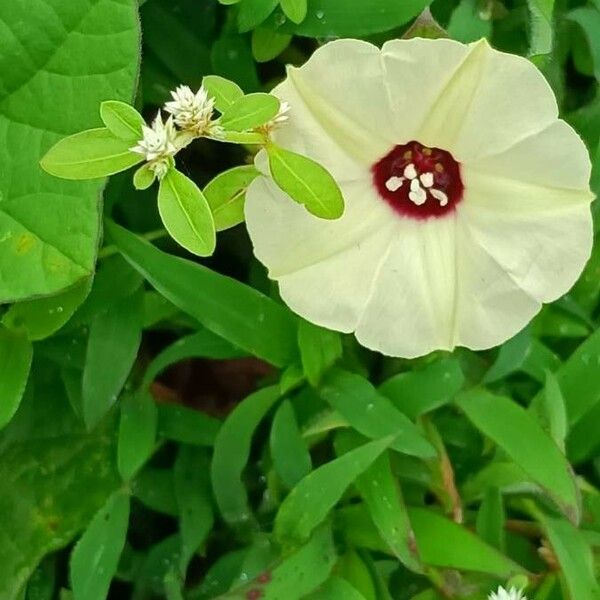
Plant Overview
Known as the Arrow-leaf Morning Glory or simply the "Trident Vine," Xenostegia tridentata is a delicate, sprawling creeper that blankets the ground in tropical landscapes. While it shares a family tree with the common Morning Glory, this species is much more understated, often found weaving through grasses in wild meadows or sandy coastal areas. In many cultures across Africa and Asia, it is admired not just for its dainty blooms but for its resilience in poor, rocky soils.
🔍 How to Identify
- 🌿 The "Trident" Leaf: Its most iconic feature is the narrow, elongated leaf that looks like an arrowhead with three distinct teeth or lobes at the base, giving it the name tridentata.
- 🌼 Dark-Centered Blooms: The flowers are small, funnel-shaped, and usually creamy yellow or pale white, featuring a striking deep maroon or chocolate-colored "eye" at the very center.
- 🌱 Prostrate Habit: This plant rarely climbs high; instead, it prefers to trail along the ground, forming thin, wiry stems that can create a dense green mat over time.
🏡 In Your Garden
- ☀️ Sun Seeker: Unlike some delicate vines, this plant thrives in full, harsh sunlight. If it is kept in too much shade, the iconic dark centers of the flowers will appear faded, and the stems will become "leggy."
- 🏜️ Drainage is Key: It is highly adapted to sandy or gravelly substrates. In a garden setting, it hates "wet feet," so ensure your soil is well-draining or use it as a groundcover in rock gardens where other plants might struggle with heat.
⚠️ Safety & Toxicity
- 🐾 Pet Caution: While not famously deadly, many members of the Convolvulaceae (Morning Glory) family contain alkaloids that can cause digestive upset or lethargy if ingested by dogs or cats.
- 👶 Kid Friendly: Generally safe to touch, but the seeds should never be consumed as they may contain compounds that cause nausea or discomfort.
✨ Fun Fact
In traditional Ayurvedic medicine, this plant is known as Prasarini and has been used for centuries in herbal oils to treat joint pain and inflammation, thanks to its purported "flowing" energy that mimics its crawling growth habit.

Detailed Care Instructions

Place in a bright room that is sun drenched almost all day. Or directly in a south-facing window.

Some plants require more regular watering than others, which should be done every few days. It's critical to maintain the soil moist all of the time. The water requirements of the same plant placed in pots with varying sizes will differ. Because the water in the smaller pot evaporates faster than the water in the larger pot, it will require more watering. Regardless of pot size, the surface should constantly be maintained moist.








